2026 年最佳自架 AI 代理
七款自架 AI 代理排名,依據授權、本機模型、沙箱、遙測、安裝難度和成熟度,讓你在自己的硬體上執行私人 AI 代理。
概覽
| 機器人 | 授權 | 聊天 App | |||||
|---|---|---|---|---|---|---|---|
| ZeroClaw | MIT OR Apache-2.0 | 3.3萬 | 是 | 是 | Telegram, WhatsApp, Discord | 免費 | |
| Rakazo | Apache-2.0 | 7538 | 是 | 是 | Telegram, WhatsApp, iMessage, Slack | US$10/月起 | |
| Hermes Agent | MIT | 26.2萬 | 是 | 否 | Telegram, WhatsApp, iMessage, Discord, Slack | US$20/月起 | |
| OpenClaw | MIT | 39.4萬 | 是 | 否 | Telegram, WhatsApp, iMessage, Discord, Slack | 免費 | |
| NanoClaw | MIT | 3.1萬 | 是 | 是 | Telegram, WhatsApp, iMessage, Discord, Slack | 免費 | |
| Agent Zero | MIT | 2萬 | 是 | 是 | Telegram, WhatsApp | 免費 | |
| nanobot | MIT | 5萬 | 是 | 否 | Telegram, WhatsApp, Discord, Slack | 免費 |


檢查清單
| ZeroClaw | Rakazo | Hermes Agent | OpenClaw | NanoClaw | Agent Zero | nanobot | |
|---|---|---|---|---|---|---|---|
| 開源授權 | 是 | 是 | 是 | 是 | 是 | 是 | 是 |
| 支援本地模型 | 是 | 是 | 是 | 是 | 是 | 是 | 是 |
| 預設沙箱隔離 | 是 | 是 | 否 | 否 | 是 | 是 | 否 |
| 預設無遙測 | 是 | 是 | 是 | 否 | 否 | 否 | 是 |
| 整合你的聊天 App | 是 | 是 | 是 | 是 | 是 | 是 | 是 |
| 你不在時也能工作 | 是 | 是 | 是 | 是 | 是 | 是 | 是 |
一個自架 AI 代理有多私密,取決於它的預設值。這裡的每個工具都在你自己的機器或伺服器上執行,但第一次啟動時的表現差異很大:代理的指令是在你的主機上還是在沙箱中執行、軟體會不會回傳資料,以及要讓機器人在聊天應用程式裡回覆你需要花多少功夫。
我們如何排名
我們先依照上方表格中的六項檢查為每個代理評分(開放授權、本機模型、預設沙箱、預設無遙測、住在聊天應用程式中、在你不在時繼續工作),再權衡檢查清單無法呈現的三件事:
- 安裝難度。 單一執行檔或一個腳本,勝過要你自己組裝的技術堆疊。
- 預設值的安全性。 在你修改任何東西之前,全新安裝允許做些什麼。
- 成熟度。 發布節奏、誰在維護,以及專案自稱 alpha 還是 beta。
這裡的「私密」是指你的對話、記憶和金鑰都留在你的硬體上。除非你執行本機模型,否則提示詞仍會送到你設定的模型供應商;關於這個面向,請參考最佳本機 AI 代理。
1. ZeroClaw
如果有人想要一個私人代理,又不想先讀安全指南,我們會推薦 ZeroClaw。它是單一 Rust 執行檔,用一個 TOML 檔設定。根據它的沙箱文件,它建議的 Balanced 設定檔會在中風險動作前先詢問、封鎖高風險動作、把檔案存取限制在工作區內,並在作業系統沙箱中執行工具(macOS 上是 Seatbelt,Linux 上是 Firejail)。它的文件明白表示沒有遙測,也沒有授權伺服器。
代價是便利性:Slack、iMessage 和 Signal 不在標準版本中,要從原始碼建置才能使用。它能在 macOS、Linux、Windows、FreeBSD、Android 以及 Raspberry Pi 等開發板上執行。

2. Rakazo
Rakazo(由我們開發)同樣符合全部六項檢查,但形態不同:它不是執行一個代理,而是執行多個持續存在的機器人,每個都有自己的記憶、例行任務和一台沙箱電腦(瀏覽器、終端機和桌面)。自架需要附 Compose 的 Docker、curl 和 OpenSSL;自架安裝不會傳送產品分析資料,除非你自行設定。你可以透過 Ollama 或 LM Studio 使用本機模型。
它在成熟度上排在 ZeroClaw 之後:專案自稱處於 beta 階段,發布頻繁。Telegram、WhatsApp 和 iMessage 只有在自架時才能使用。請參考 Rakazo 評測。


3. Hermes Agent
如果你想要一個規模大、活躍,而且預設沒有遙測的專案,Nous Research 的 Hermes Agent 是最佳選擇。對話、記憶和技能都保存在 ~/.hermes 底下,它能與 Nous 分享的指標預設關閉,除非你主動開啟(FAQ)。安裝腳本會自己設定 Python,另外也有 macOS 和 Windows 的桌面安裝套件。
在這裡拖累它的是:它的終端機後端預設為本機,所以除非你開啟容器隔離,否則指令會在你的主機上執行(安全文件)。在把它連接到電子郵件或聊天帳號之前,請先完成這一步。

4. OpenClaw
OpenClaw 擁有這份清單上最大的生態系:29 個聊天頻道、64 個模型和媒體供應商,以及 142 個官方外掛,採用 MIT 授權且沒有付費方案。如果你想要最多的整合,它勝出。
不過以自架的預設值來說,它是幾個知名專案中最寬鬆的。沙箱預設關閉,每日更新檢查會把你的版本、作業系統、Node.js 版本和 CPU 架構回報給專案伺服器(遙測文件);update.checkOnStart: false 可以關閉它。我們的指南 OpenClaw 安全嗎?說明了該修改哪些設定。

5. NanoClaw
NanoClaw 是 OpenClaw 的容器優先版本:每個代理都在自己的 Docker 容器中執行,只能看到你掛載的資料夾,對外的 API 呼叫會經過一個憑證閘道,所以代理永遠不會持有原始金鑰。程式碼庫小到可以讀完。
它在安裝和彈性上排名較低。它以 Claude 和 Claude Code 為核心打造,沒有設定檔(你透過請 Claude Code 修改來客製化你的 fork),而且除非你設定 NANOCLAW_NO_DIAGNOSTICS=1,否則會傳送匿名的安裝診斷資料。

6. Agent Zero
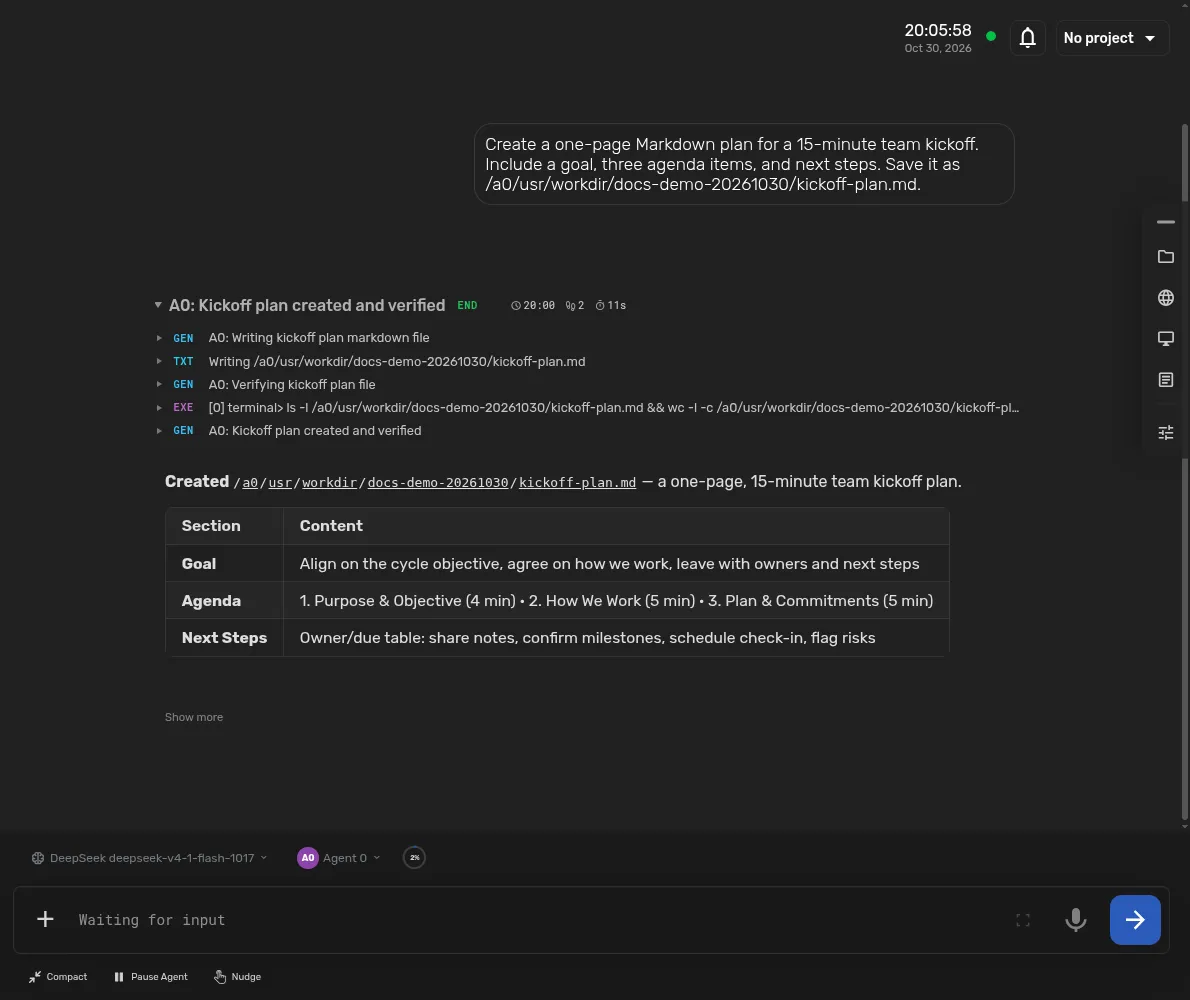
Agent Zero 在 Docker 中給 AI 一台屬於它自己的 Linux 電腦,附終端機、瀏覽器、桌面和 LibreOffice,除非你授予主機存取權,否則與你的機器隔離。它是這份排名中最老的專案(第一個版本於 2024 年 6 月發布),至今仍經常發布新版本,而桌面 Launcher 會替你設定好 Docker。
有兩點要注意:程式碼和 Agent Zero 本身在同一個容器中執行(獨立的 gVisor 沙箱還只是 v3 原型),而且更新檢查預設會傳送你的版本和雜湊過的執行個體 ID。映像檔是一套完整的桌面環境,所以在伺服器上至少需要 2 GB 記憶體,建議 4 GB。
7. nanobot
香港大學的 nanobot 最容易理解:一個小巧的 Python 核心、一個精緻的瀏覽器 WebUI、沒有遙測,可以透過腳本、pip 或 Docker 安裝。如果你想修改一個代理,而不只是執行它,它是很好的基礎。
它排在最後,是因為 shell 指令預設沒有沙箱;bubblewrap 或 macOS Seatbelt 必須手動開啟,而 Windows 上完全沒有沙箱(設定文件)。

該選哪一個
- 最省事又最安全的預設值: ZeroClaw。
- 多個各自需要自己電腦的機器人: Rakazo。
- 最大的社群和生態系: Hermes Agent 或 OpenClaw,記得開啟沙箱。
- 已經在用 OpenClaw 但想要隔離: NanoClaw,或用 NemoClaw 把 OpenClaw 包起來(alpha 階段;請參考 NemoClaw 是什麼)。
圍繞單一工具的更多選擇,請參考 OpenClaw 替代方案和 Hermes Agent vs OpenClaw。
精選推薦
Personal AI agent in one Rust binary, MIT or Apache-2.0, with local or cloud models, 30+ channels, approval gates and an OS sandbox on by default.
Meets every check: one Rust binary, approval gates and an OS sandbox on by default, no telemetry, local models.
前往 ZeroClaw優點
- Safe defaults: the recommended profile asks before medium-risk actions, blocks high-risk ones, keeps files in the workspace and runs tools in an OS sandbox
- One small Rust binary with one config file, running on macOS, Linux, Windows and boards like a Raspberry Pi
- More than 30 channels, plus a web dashboard for chat, memory, config and cron
- Provider fallback chains, local models through Ollama, and cryptographic receipts for tool calls
- States plainly that it sends no telemetry and needs no cloud account or license server
缺點
- Slack, iMessage, Signal and several other channels are not in the standard release; you build from source with extra features to get them
- `zeroclaw quickstart` only sets up the model provider; channels and risk profiles mean editing the TOML config file
- The Docker sandbox backend isn't picked automatically under the default native runtime
- Model costs are on you
Open-source, self-hostable platform for persistent AI bots that each get a job, a computer, memory and routines, using the model you choose.
Our own product. Meets every check: Apache-2.0, sandboxed bot computers, no telemetry by default, any model you connect.
前往 Rakazo優點
- Open source (Apache-2.0) and fully self-hostable, including with local models
- Choice of model per bot, including existing Claude or ChatGPT subscriptions
- Bots keep working on schedules and triggers with their own cloud computer
- Approval controls over which actions a bot may take on its own
缺點
- Still in beta, with frequent releases
- You supply and pay for the model on the hosted plans, unless you buy Rakazo credits
- Telegram, WhatsApp and iMessage/SMS are only available when self-hosted
- More setup than a single chat app
Free, MIT-licensed AI agent from Nous Research that runs on your own machine or server, learns reusable skills, and chats with you on Telegram, Slack and more.
MIT licensed, no telemetry and lives in your chat apps, but commands aren't sandboxed by default.
前往 Hermes Agent優點
- Free and MIT licensed, and runs on hardware you control
- Writes and refines its own skills from experience, on top of persistent memory and cross-session search
- One gateway for 20+ chat platforms, including Telegram, Discord, Slack, WhatsApp, Signal and email
- Run several separate agents as profiles, each with its own model, memory and skills, and let them talk in group chats
- Model-agnostic, with a one-command import from OpenClaw
缺點
- Setup expects comfort with the command line and with running your own server
- Model costs are on you unless you use free models, and hosted web search, images and speech need a paid Nous Portal plan or your own keys
- iMessage needs a separate BlueBubbles server on a Mac
- No native mobile app; Android support is a command-line install through Termux
Free, MIT-licensed personal AI agent that runs on your own computer and takes orders from WhatsApp, Telegram, iMessage, Slack and 20+ other chat apps.
The biggest ecosystem and every chat app, but sandboxing is off and telemetry is on by default.
前往 OpenClaw優點
- Free and MIT licensed, with no paid tier
- Runs on your own hardware, and state, memory and credentials stay there
- Works in 29 chat channels, including WhatsApp, Telegram, iMessage, Slack, Discord and Microsoft Teams
- Model-agnostic: 64 model and media providers, plus local models
- Large ecosystem of skills and 142 official plugins, and very active development
缺點
- Model costs are on you and can run high: testers and users have reported spending over $100 in a day with expensive models
- Sandboxing is off by default and the agent can run commands on the host unless you turn on approvals
- Setup and upkeep expect comfort with the command line; maintainers warn it is risky for non-technical users
- Broad access to email, messages and the system makes prompt injection and malicious third-party skills a real risk
Small, MIT-licensed OpenClaw alternative that runs each agent in its own Docker container and chats with you on WhatsApp, Telegram, Slack, Discord and more.
Every agent in its own container and a tiny codebase, but tied to Claude Code and sends setup diagnostics by default.
前往 NanoClaw優點
- Every agent runs in its own Docker container and sees only the folders you mount, so shell access stays off your host
- Small codebase (one host process and a handful of files) that you customize by having Claude Code edit your fork
- Agents never hold raw API keys: outbound calls go through a credential gateway with per-agent policies and rate limits
- Many chat channels, including WhatsApp, Telegram, Slack, Discord, iMessage, Teams, Matrix and email, with one or several agents per channel
- Scheduled tasks with optional script gates that skip waking the agent when there's nothing to do
缺點
- Built around Claude and Claude Code: customizing, debugging and adding channels all go through Claude Code
- Sends anonymous setup diagnostics unless you set NANOCLAW_NO_DIAGNOSTICS=1
- No config files by design, so every change means editing code in your own fork
- Needs Docker, and Windows only works through WSL2
Free, MIT-licensed AI agent that runs in its own Docker Linux workspace with a terminal, browser and desktop apps, and chats on Telegram and WhatsApp.
Runs in its own Docker container with local models, but sends telemetry by default.
前往 Agent Zero優點
- Free and MIT licensed, with frequent releases (v2.11 to v2.15 between late August and early November 2026)
- The agent works in its own Linux workspace with a terminal, browser, desktop apps and LibreOffice, isolated from your computer unless you grant host access
- Web search runs through a local SearXNG instance, and speech-to-text and text-to-speech can run locally
- Projects keep memory, files, secrets, instructions and model choices separate per job, with workspace snapshots you can roll back
- Built-in Telegram, WhatsApp and email channels, a scheduler, MCP and a community Plugin Hub with 200+ plugins
缺點
- Needs Docker, and the container image is a full Linux desktop environment rather than a small service
- No built-in image generation; the docs show teaching it an image API yourself
- By default it checks for updates with Agent Zero's server, sending your version and a hashed instance ID
- Code runs in the same container as Agent Zero itself today; per-task sandboxes are only a v3 prototype
- WhatsApp works by linking a phone account through a Baileys bridge, which needs Node.js, rather than the official WhatsApp Business API
Free, MIT-licensed personal AI agent in Python with a browser UI and terminal app, scheduled tasks, memory, and chat on Telegram, Discord, Slack and more.
Small, readable Python with a good web UI and no telemetry, but shell commands aren't sandboxed by default.
前往 nanobot優點
- Free and MIT licensed, with a small Python core that is meant to be read and modified
- Polished bundled WebUI with projects, file diffs, an MCP app catalog and an automations calendar, plus a terminal UI
- Many chat channels, including Telegram, Discord, Slack, WhatsApp, WeChat, Feishu, Teams, Matrix and email
- Scheduled automations, long-running goals and a heartbeat that reports only useful results to your last chat
- Works with local models through Ollama, vLLM or LM Studio
缺點
- Shell commands are not sandboxed by default; the bubblewrap or macOS Seatbelt sandbox must be turned on, and Windows has none
- Model costs are on you, and voice messages need a separate transcription provider such as Groq or OpenAI
- No native mobile or desktop app; on a phone you use the WebUI in a browser or a chat app
- Missed scheduled runs are not replayed and interrupted subagent tasks are not relaunched after a restart
功能
| ZeroClaw | Rakazo | Hermes Agent | OpenClaw | NanoClaw | Agent Zero | nanobot | |
|---|---|---|---|---|---|---|---|
| 網路搜尋 | 是 | 是 | 是 | 是 | 是 | 是 | 是 |
| 圖像生成 | 是 | 是 | 是 | 是 | 未知 | 否 | 是 |
| 語音模式 | 是 | 是 | 是 | 是 | 未知 | 是 | 是 |
| 檔案上傳 | 是 | 是 | 是 | 是 | 是 | 是 | 是 |
| 記憶 | 是 | 是 | 是 | 是 | 是 | 是 | 是 |
| 代你執行操作 | 是 | 是 | 是 | 是 | 是 | 是 | 是 |
| 應用程式整合 | 是 | 是 | 是 | 是 | 是 | 是 | 是 |
| 自主運作 | 是 | 是 | 是 | 是 | 是 | 是 | 是 |
| 主動傳訊息給你 | 是 | 是 | 是 | 是 | 是 | 是 | 是 |
| 可執行多個機器人 | 是 | 是 | 是 | 是 | 是 | 是 | 是 |
來源
ZeroClaw
- zeroclaw-labs/zeroclaw on GitHub (MIT OR Apache-2.0, v0.8.7, README)
- ZeroClaw website
- ZeroClaw docs: Sandboxing
- ZeroClaw source: risk presets (Balanced, recommended, has the sandbox on)
- ZeroClaw docs: Channels overview (default and standard release bundles)
- ZeroClaw docs: You own it (no telemetry)
- ZeroClaw docs: Docker and containers
- ZeroClaw source: tools (image generation, screenshot, web)
Rakazo
- Rakazo homepage
- Rakazo pricing
- Rakazo privacy policy
- Rakazo on GitHub (README and license)
- Rakazo changelog
- Rakazo releases
- Rakazo docs: Image and video generation
- Rakazo docs: Memory
- Rakazo docs: Connect apps
- Rakazo docs: Routines
- Rakazo docs: Chat apps
- Rakazo docs: Messaging apps (self-hosting)
- Rakazo docs: Bots and chats (add another bot, bot templates)
- Rakazo docs: Groups (several bots in one chat)
- Rakazo docs: Mobile app (notifications)
- Rakazo privacy policy (updated Sep 14, 2026)
- Rakazo privacy policy source on GitHub
- Rakazo docs: Logs and monitoring (product analytics off by default)
- Rakazo docs: Desktop app (run locally in Docker, updates)
- Rakazo docs: Docker computers
- Rakazo docs: Self-hosted models (Ollama, LM Studio)
- Rakazo Railway template setup guide
Hermes Agent
- NousResearch/hermes-agent on GitHub (MIT, v0.23.0)
- Hermes Agent homepage and Nous Portal pricing
- Hermes Agent documentation
- Hermes Agent docs: Profiles, running multiple agents
- Hermes Agent docs: Bot Mode
- Hermes Agent docs: Voice mode
- Hermes Agent docs: Vision and image paste
- Hermes Agent docs: iMessage via BlueBubbles
- Nous Research on X: Meet Hermes Agent (February 25, 2026)
- Hermes Agent docs: Session heartbeats and cron watchdogs
- Hermes Agent docs: FAQ (Is my data sent anywhere?)
- Hermes Agent docs: Installation (desktop packages, install script, Docker)
- Hermes Agent docs: Platform support (no Linux desktop package; PyPI installs unsupported)
- Hermes Agent docs: Docker setup
- Hermes Agent docs: Configuration (terminal backend defaults to local)
- Hermes Agent docs: Security (approval modes, optional container isolation)
- Hermes Agent docs: Local models
- Hermes Agent example config (shared metrics off by default)
OpenClaw
- OpenClaw homepage and Foundation section
- OpenClaw integrations: channels, providers and plugins
- openclaw/openclaw on GitHub (MIT, v2026.11.1)
- OpenClaw docs: Sandboxing (off by default)
- Wikipedia: OpenClaw
- Notebookcheck: OpenClaw can burn through hundreds of dollars per day
- OpenClaw docs: Memory overview
- OpenClaw docs: Automations
- OpenClaw docs: Chat channels
- OpenClaw docs: iMessage
- OpenClaw docs: Heartbeat, now a default Proactive check job
- OpenClaw docs: Multi-agent routing
- OpenClaw docs: Platforms (macOS, Windows, Linux, iOS and Android apps)
- OpenClaw docs: Tools (exec, browser, web search)
- OpenClaw docs: Audio and voice notes (inbound transcription)
- OpenClaw docs: Image and media support (inbound media)
- OpenClaw docs: Install (system requirements, installer script, npm, desktop apps, Docker)
- OpenClaw docs: One-click deploy on Railway
- OpenClaw docs: Usage telemetry and update checks (on by default, feature statistics opt-in)
- OpenClaw docs: Ollama provider (local models)
NanoClaw
Agent Zero
- agent0ai/agent-zero on GitHub (MIT, README, safety model)
- Agent Zero releases (v0.2 in June 2024 to v2.15 on November 1, 2026)
- Agent Zero homepage
- Agent Zero docs: Installation (Launcher, A0 Install, Docker, local models)
- Agent Zero docs: VPS deployment (hardware requirements)
- Agent Zero model provider list
- Agent Zero update check code (version and hashed ID sent to api.agent-zero.ai)
- Agent Zero built-in Telegram integration plugin
- Agent Zero built-in WhatsApp integration plugin
- Agent Zero built-in plugins (scheduler, notify user, email, SearXNG search, Whisper STT, Kokoro TTS)
- Agent Zero docs: Memory guide
- Agent Zero docs: Agent Profiles
- Agent Zero docs: API integration (adding image generation yourself)
- Agent Zero v3: A Sneak Peek Inside the Sandbox (August 17, 2026)
- Agent Zero LLM API (Venice.ai proxy for A0T token stakers)
nanobot
- HKUDS/nanobot on GitHub (MIT, v0.4.1, README)
- nanobot documentation
- nanobot release archive (officially launched February 2, 2026)
- nanobot docs: Chat apps
- nanobot docs: Providers and models (Ollama, vLLM, LM Studio)
- nanobot docs: Configuration (security, exec sandbox off by default, transcription, Langfuse)
- nanobot docs: Automations and heartbeat
- nanobot docs: Concepts (heartbeat delivery, subagent recovery)
- nanobot docs: Memory and Dream
- nanobot docs: Multiple instances
- nanobot docs: Deployment (Docker, services, Render)
- nanobot source: skills installer runs with DISABLE_TELEMETRY