最佳本機 AI 代理:在你自己的硬體上執行 AI 助理
七款本機 AI 代理排名,依據它們搭配 Ollama、vLLM、LM Studio 或 llama.cpp 的表現,以及有多少資料能留在你自己的機器上。
概覽
| 機器人 | 授權 | 聊天 App | |||||
|---|---|---|---|---|---|---|---|
| Agent Zero | MIT | 2萬 | 是 | 是 | Telegram, WhatsApp | 免費 | |
| QwenPaw | Apache-2.0 | 3.7萬 | 是 | 否 | Telegram, iMessage, Discord, Slack | 免費 | |
| ZeroClaw | MIT OR Apache-2.0 | 3.3萬 | 是 | 是 | Telegram, WhatsApp, Discord | 免費 | |
| nanobot | MIT | 5萬 | 是 | 否 | Telegram, WhatsApp, Discord, Slack | 免費 | |
| Khoj | AGPL-3.0 | 3.8萬 | 是 | 是 | 無 | 免費 | |
| Rakazo | Apache-2.0 | 7538 | 是 | 是 | Telegram, WhatsApp, iMessage, Slack | US$10/月起 | |
| OpenClaw | MIT | 39.4萬 | 是 | 否 | Telegram, WhatsApp, iMessage, Discord, Slack | 免費 |


檢查清單
我們列出的每個代理都能和本機模型溝通。但這不代表它就是好的本機 AI 代理。使用託管模型時,你的提示詞、檔案和記憶片段每一輪都會離開你的機器。完全在本機執行,意味著模型、搜尋、語音和記憶全都在你自己的硬體上運作,而能完全做到這一點的代理非常少。
我們如何排名
這份清單把本機運作看得比什麼都重要:
- 支援的本機執行環境。 Ollama、vLLM、LM Studio、llama.cpp。選項越多,越能配合你現有的硬體。
- 還有哪些東西留在本機。 網頁搜尋、語音轉文字、文字轉語音和嵌入向量。一個在本機執行模型、卻把每次搜尋都送到雲端 API 的代理,仍然會洩漏你正在做的事。
- 沒有遙測,並且有沙箱,依據上方表格中的檢查清單,因為重視本機優先的使用者通常兩者都在意。
- 安裝難度與成熟度。
關於硬體的說明:代理本身都很輕量。需要記憶體和 GPU 的是模型,而一個夠用的本機模型,需求遠比清單上任何代理都大。請先確認你的機器能執行哪個模型,再挑選代理。
1. Agent Zero
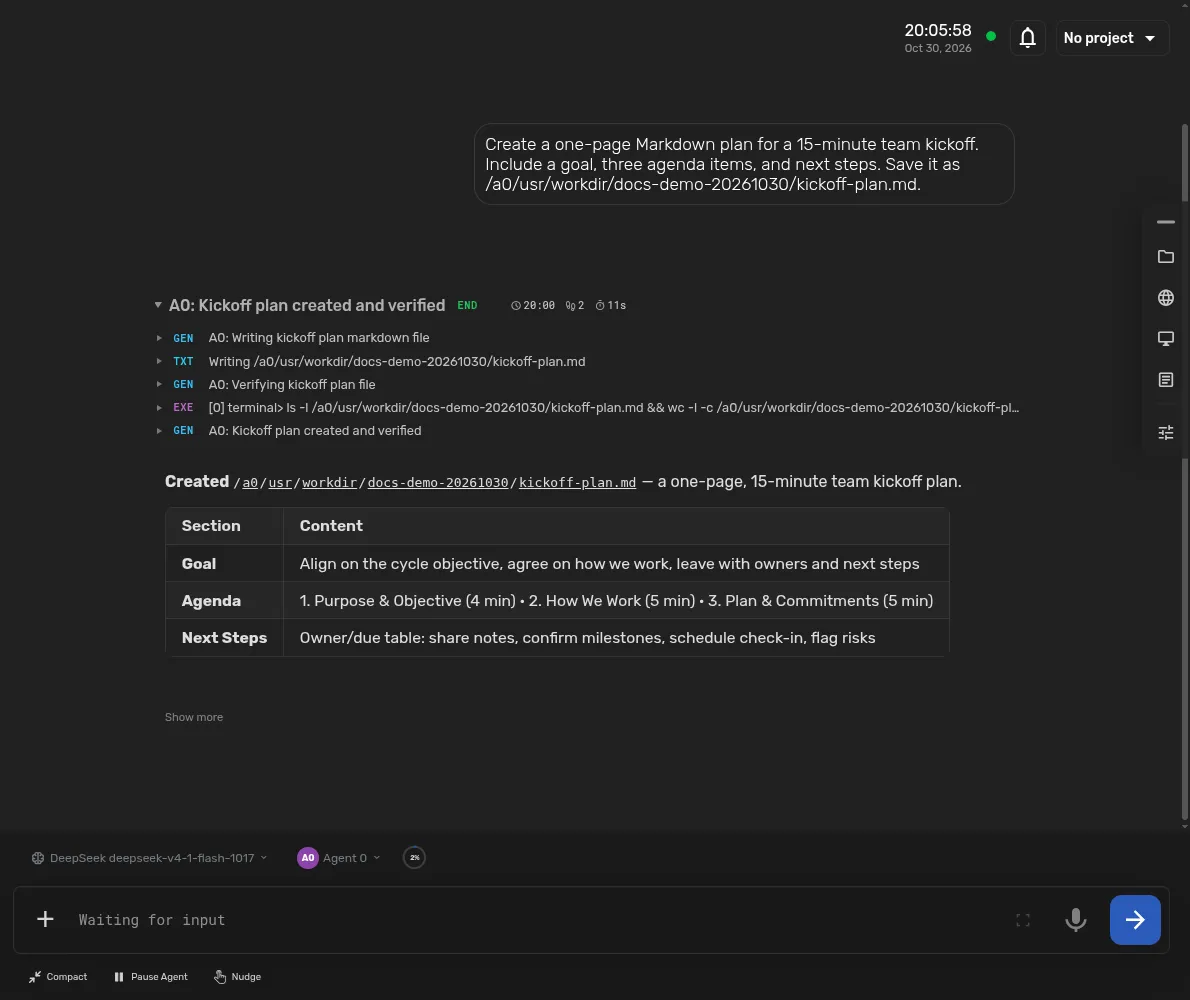
Agent Zero 在完全本機化方面走得最遠。它支援 Ollama、LM Studio、llama.cpp、vLLM 和 oMLX(安裝文件),網頁搜尋透過內建的 SearXNG 執行個體完成,而不是呼叫搜尋 API,語音轉文字和文字轉語音也能透過內建的 Whisper 和 Kokoro 外掛在本機執行(外掛)。代理在自己的 Docker 容器中工作,除非你授權,否則與你的電腦隔離。
它唯一的遙測是一個更新檢查,會傳送你的版本和雜湊過的執行個體 ID;你可以在設定中關閉。Agent Zero 本身至少需要 2 GB 記憶體,還不包括模型。
2. QwenPaw
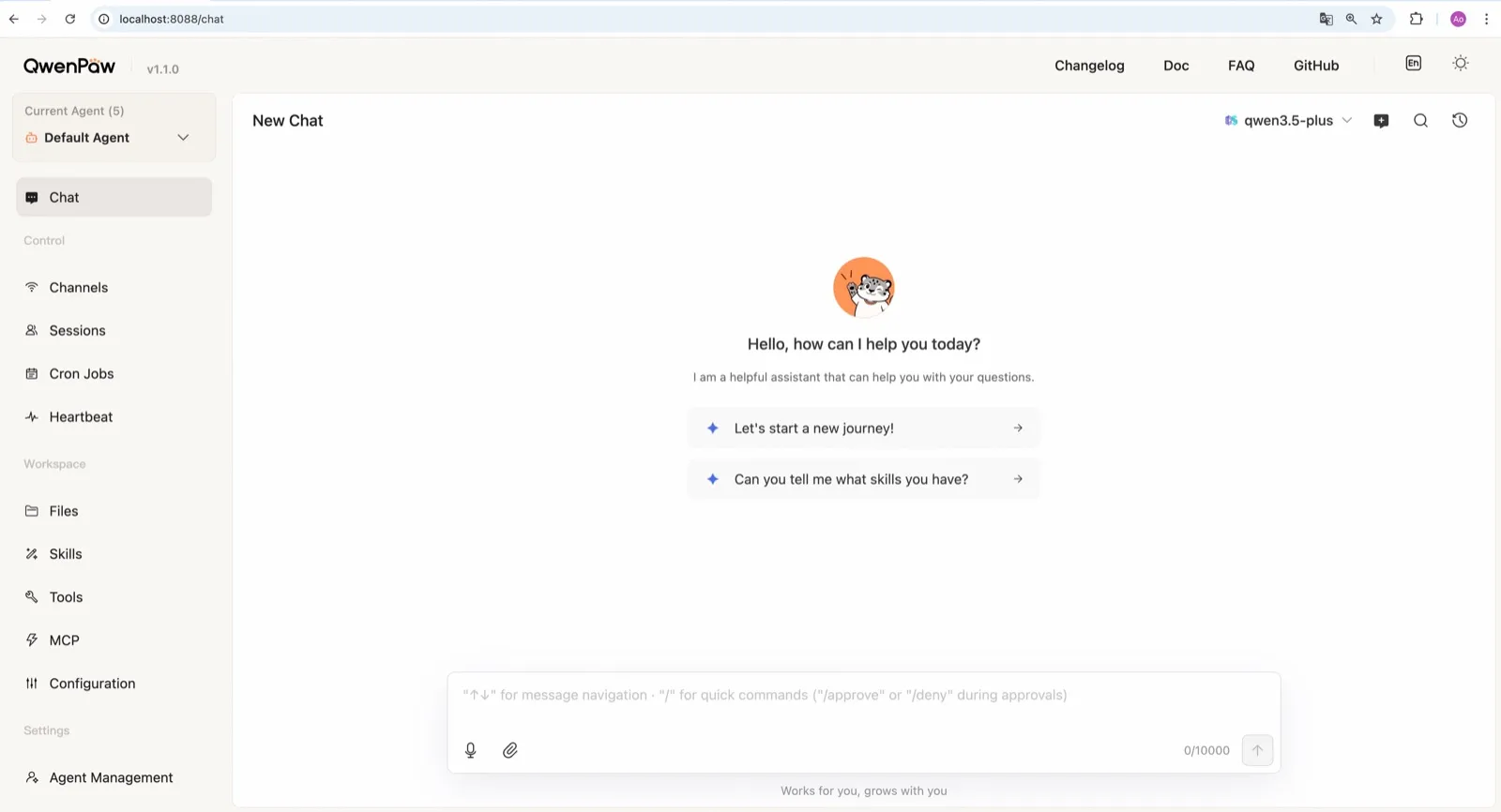
QwenPaw 出自阿里巴巴的 AgentScope 團隊,內建自己的 llama.cpp 執行環境,因此可以完全離線執行,不需要 API 金鑰,也不需要另外安裝 Ollama(模型文件)。團隊也發布了專為代理任務訓練的小型 QwenPaw-Flash 模型。Ollama 和 LM Studio 也能用。
它在安全預設上排在 Agent Zero 之後:指令沙箱預設關閉,而文件中的快速入門指令 qwenpaw init --defaults 會自動接受匿名安裝遙測。請改用互動式的 qwenpaw init 來拒絕。
3. ZeroClaw
如果你已經在執行 Ollama 或其他相容 OpenAI 的模型伺服器,ZeroClaw 是最乾淨的選擇。它沒有遙測,作業系統沙箱預設開啟,還有供應商備援鏈,所以本機模型可以排在第一順位,後面接一個託管模型,或者後面什麼都不接。作為單一 Rust 執行檔,它能在 Raspberry Pi 這類小型開發板上執行,搭配另一台較大機器上的模型伺服器。

4. nanobot
nanobot 開箱即支援 Ollama、vLLM 和 LM Studio(供應商),不傳送遙測,並以純 Markdown 檔案把記憶保存在 ~/.nanobot,方便檢視和備份。它的 WebUI 讓本機設定用起來很舒服。在讓本機模型執行 shell 指令之前,請先開啟它的 bubblewrap 或 Seatbelt 沙箱;它預設是關閉的。

5. Khoj
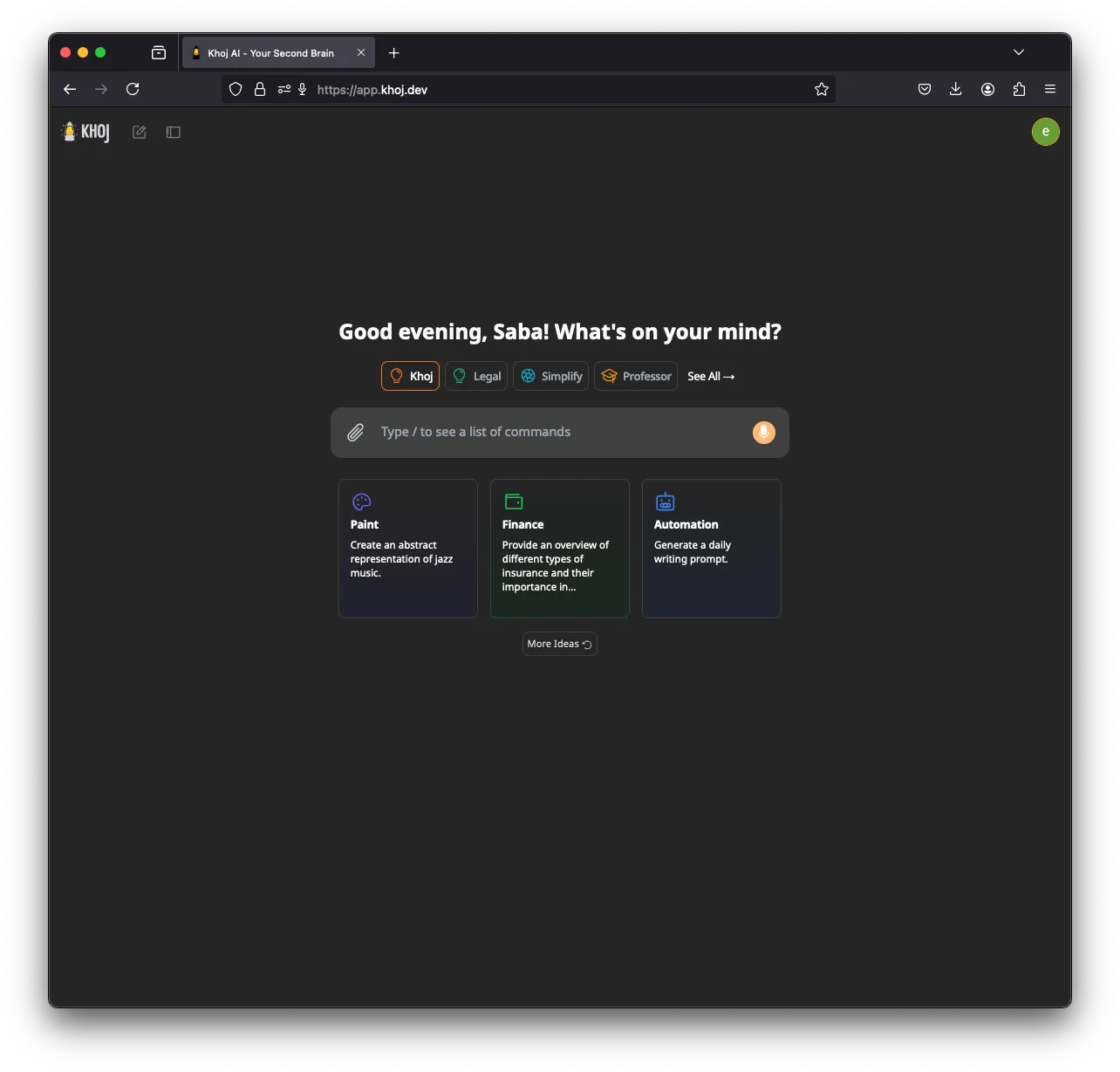
Khoj 是專才:一個會為你的筆記和文件建立索引並據以回答的 AI 第二大腦。它可以完全離線執行,透過 llama.cpp 使用 GGUF 模型,嵌入向量也在你的機器上產生,同時也支援 Ollama、LM Studio 和 vLLM(安裝)。有 GPU(CUDA、ROCm、Vulkan 或 Apple Metal)會有幫助。
它排第五,是因為開發已經放緩(自 2026 年 3 月以來沒有新版本)、沒有聊天應用程式頻道,而且在你設定 KHOJ_TELEMETRY_DISABLE=True 之前會傳送匿名化的使用遙測。
6. Rakazo
Rakazo(由我們開發)透過 Ollama 或 LM Studio 執行本機模型(自架模型),自架安裝不傳送產品分析資料,並為每個機器人提供一台沙箱電腦。它排在這裡,是因為它的本機支援比 Agent Zero 或 QwenPaw 窄:只有兩種本機執行環境,而且沒有內建任何一種。它也還在 beta 階段。請參考 Rakazo 評測。


7. OpenClaw
OpenClaw 支援 Ollama、LM Studio 和 vLLM(Ollama 供應商),所以任何本機清單都少不了它,而它龐大的外掛生態系也是選擇它的理由。但對本機優先的使用者來說,它的預設值方向不對:每日更新檢查預設開啟(update.checkOnStart: false 可以停止),而且在你開啟沙箱之前,指令都在你的主機上執行。如果你想要有本機推論和嚴格沙箱的 OpenClaw,NemoClaw 會把它包起來,並提供 Ollama、vLLM 或 NVIDIA NIM 路由,代價是 8 GB 記憶體和 alpha 標籤。

把代理和模型放在不同機器上執行
PicoClaw 展示了一種實用的模式。它的代理只需要 10 MB 的可用記憶體,能在 10 美元的開發板和舊手機上執行,但仍需要網路連線來存取模型(硬體文件)。把它或 ZeroClaw 指向一台有 GPU 的桌機上的 Ollama 或 vLLM 伺服器,你就能在小小的裝置上擁有全天候運作的代理,而所有推論都在你自己的網路內完成。PicoClaw 沒有列入排名,因為專案表示在 v1.0 之前不要用於正式環境。
想看更全面的介紹,請參考最佳自架 AI 代理。
精選推薦
Free, MIT-licensed AI agent that runs in its own Docker Linux workspace with a terminal, browser and desktop apps, and chats on Telegram and WhatsApp.
Runs in its own Docker container with local models, but sends telemetry by default.
前往 Agent Zero優點
- Free and MIT licensed, with frequent releases (v2.11 to v2.15 between late August and early November 2026)
- The agent works in its own Linux workspace with a terminal, browser, desktop apps and LibreOffice, isolated from your computer unless you grant host access
- Web search runs through a local SearXNG instance, and speech-to-text and text-to-speech can run locally
- Projects keep memory, files, secrets, instructions and model choices separate per job, with workspace snapshots you can roll back
- Built-in Telegram, WhatsApp and email channels, a scheduler, MCP and a community Plugin Hub with 200+ plugins
缺點
- Needs Docker, and the container image is a full Linux desktop environment rather than a small service
- No built-in image generation; the docs show teaching it an image API yourself
- By default it checks for updates with Agent Zero's server, sending your version and a hashed instance ID
- Code runs in the same container as Agent Zero itself today; per-task sandboxes are only a v3 prototype
- WhatsApp works by linking a phone account through a Baileys bridge, which needs Node.js, rather than the official WhatsApp Business API
Free, Apache-licensed personal AI agent from Alibaba's AgentScope team, formerly CoPaw, with a web console, memory, multiple agents and many chat apps.
Many chat apps and local models, but no sandbox and telemetry on by default.
前往 QwenPaw優點
- Runs fully offline with a built-in llama.cpp runtime and purpose-trained QwenPaw-Flash models, no API key needed
- Several independent agents, each with its own memory, skills and heartbeat, that can work together
- Layered security: Tool Guard, File Guard, skill scanning, access policies and an optional kernel-level sandbox
- Broad chat coverage, especially for Chinese platforms such as DingTalk, Feishu, WeChat and QQ, alongside Telegram, Discord, Slack and iMessage
- Well-documented web console for channels, cron jobs, heartbeat, skills, MCP and files
缺點
- The command sandbox is off by default, and inside Docker it falls back to no isolation
- The recommended setup command accepts anonymous install telemetry automatically
- No WhatsApp channel, and iMessage works only on a Mac with a third-party helper and Full Disk Access
- Desktop apps are still in beta, and the project moves fast, with frequent beta releases
Personal AI agent in one Rust binary, MIT or Apache-2.0, with local or cloud models, 30+ channels, approval gates and an OS sandbox on by default.
Meets every check: one Rust binary, approval gates and an OS sandbox on by default, no telemetry, local models.
前往 ZeroClaw優點
- Safe defaults: the recommended profile asks before medium-risk actions, blocks high-risk ones, keeps files in the workspace and runs tools in an OS sandbox
- One small Rust binary with one config file, running on macOS, Linux, Windows and boards like a Raspberry Pi
- More than 30 channels, plus a web dashboard for chat, memory, config and cron
- Provider fallback chains, local models through Ollama, and cryptographic receipts for tool calls
- States plainly that it sends no telemetry and needs no cloud account or license server
缺點
- Slack, iMessage, Signal and several other channels are not in the standard release; you build from source with extra features to get them
- `zeroclaw quickstart` only sets up the model provider; channels and risk profiles mean editing the TOML config file
- The Docker sandbox backend isn't picked automatically under the default native runtime
- Model costs are on you
Free, MIT-licensed personal AI agent in Python with a browser UI and terminal app, scheduled tasks, memory, and chat on Telegram, Discord, Slack and more.
Small, readable Python with a good web UI and no telemetry, but shell commands aren't sandboxed by default.
前往 nanobot優點
- Free and MIT licensed, with a small Python core that is meant to be read and modified
- Polished bundled WebUI with projects, file diffs, an MCP app catalog and an automations calendar, plus a terminal UI
- Many chat channels, including Telegram, Discord, Slack, WhatsApp, WeChat, Feishu, Teams, Matrix and email
- Scheduled automations, long-running goals and a heartbeat that reports only useful results to your last chat
- Works with local models through Ollama, vLLM or LM Studio
缺點
- Shell commands are not sandboxed by default; the bubblewrap or macOS Seatbelt sandbox must be turned on, and Windows has none
- Model costs are on you, and voice messages need a separate transcription provider such as Groq or OpenAI
- No native mobile or desktop app; on a phone you use the WebUI in a browser or a chat app
- Missed scheduled runs are not replayed and interrupted subagent tasks are not relaunched after a restart
AGPL-licensed, self-hosted AI second brain that chats over your notes and documents with web search, custom agents and scheduled research emails.
Good at chatting over your own notes and documents, but development has slowed, it has no chat-app channels and telemetry is on by default.
前往 Khoj優點
- Searches and chats over your own notes and documents, including Markdown, Org-mode, PDF, Word, Notion and GitHub
- Works with local models through Ollama, LM Studio, vLLM or offline llama.cpp, and generates embeddings on your machine
- Custom agents with their own persona, knowledge, chat model and tools
- Automations run a query on a schedule and email you the result
- Generated code runs in a local Terrarium sandbox that the Docker Compose setup starts for you
缺點
- Development has slowed: no release since March 26, 2026, the last commit was on August 2, 2026, and the team now focuses on other products
- The hosted Khoj Cloud, and with it the WhatsApp bot, shut down on April 15, 2026, so self-hosting is the only way to use it
- AGPL-3.0 requires you to share your changes if you offer a modified version to others over a network
- Sends anonymized usage telemetry by default until you set KHOJ_TELEMETRY_DISABLE
- Scheduled emails need Resend and authentication set up when self-hosting, and no chat apps such as Telegram or Slack are supported
Open-source, self-hostable platform for persistent AI bots that each get a job, a computer, memory and routines, using the model you choose.
Our own product. Meets every check: Apache-2.0, sandboxed bot computers, no telemetry by default, any model you connect.
前往 Rakazo優點
- Open source (Apache-2.0) and fully self-hostable, including with local models
- Choice of model per bot, including existing Claude or ChatGPT subscriptions
- Bots keep working on schedules and triggers with their own cloud computer
- Approval controls over which actions a bot may take on its own
缺點
- Still in beta, with frequent releases
- You supply and pay for the model on the hosted plans, unless you buy Rakazo credits
- Telegram, WhatsApp and iMessage/SMS are only available when self-hosted
- More setup than a single chat app
Free, MIT-licensed personal AI agent that runs on your own computer and takes orders from WhatsApp, Telegram, iMessage, Slack and 20+ other chat apps.
The biggest ecosystem and every chat app, but sandboxing is off and telemetry is on by default.
前往 OpenClaw優點
- Free and MIT licensed, with no paid tier
- Runs on your own hardware, and state, memory and credentials stay there
- Works in 29 chat channels, including WhatsApp, Telegram, iMessage, Slack, Discord and Microsoft Teams
- Model-agnostic: 64 model and media providers, plus local models
- Large ecosystem of skills and 142 official plugins, and very active development
缺點
- Model costs are on you and can run high: testers and users have reported spending over $100 in a day with expensive models
- Sandboxing is off by default and the agent can run commands on the host unless you turn on approvals
- Setup and upkeep expect comfort with the command line; maintainers warn it is risky for non-technical users
- Broad access to email, messages and the system makes prompt injection and malicious third-party skills a real risk
功能
來源
Agent Zero
- agent0ai/agent-zero on GitHub (MIT, README, safety model)
- Agent Zero releases (v0.2 in June 2024 to v2.15 on November 1, 2026)
- Agent Zero homepage
- Agent Zero docs: Installation (Launcher, A0 Install, Docker, local models)
- Agent Zero docs: VPS deployment (hardware requirements)
- Agent Zero model provider list
- Agent Zero update check code (version and hashed ID sent to api.agent-zero.ai)
- Agent Zero built-in Telegram integration plugin
- Agent Zero built-in WhatsApp integration plugin
- Agent Zero built-in plugins (scheduler, notify user, email, SearXNG search, Whisper STT, Kokoro TTS)
- Agent Zero docs: Memory guide
- Agent Zero docs: Agent Profiles
- Agent Zero docs: API integration (adding image generation yourself)
- Agent Zero v3: A Sneak Peek Inside the Sandbox (August 17, 2026)
- Agent Zero LLM API (Venice.ai proxy for A0T token stakers)
QwenPaw
- agentscope-ai/QwenPaw on GitHub (Apache-2.0, README with install options and telemetry)
- QwenPaw documentation
- QwenPaw v1.1.0 release notes: CoPaw rebrands to QwenPaw
- copaw on PyPI (first release February 2026)
- QwenPaw docs: Channels
- QwenPaw docs: Models (cloud providers, llama.cpp, Ollama, LM Studio)
- QwenPaw docs: Security (Tool Guard, File Guard, sandbox)
- QwenPaw source: security.sandbox_enabled defaults to off
- QwenPaw docs: Heartbeat
- QwenPaw docs: Multi-agent
- QwenPaw docs: Comparison (voice and video interaction)
- QwenPaw docs: Desktop application (beta)
- QwenPaw docs: Plugins (GPT Image 2 image generation plugin)
- QwenPaw Qwen-Image tool plugin (image generation and editing)
ZeroClaw
- zeroclaw-labs/zeroclaw on GitHub (MIT OR Apache-2.0, v0.8.7, README)
- ZeroClaw website
- ZeroClaw docs: Sandboxing
- ZeroClaw source: risk presets (Balanced, recommended, has the sandbox on)
- ZeroClaw docs: Channels overview (default and standard release bundles)
- ZeroClaw docs: You own it (no telemetry)
- ZeroClaw docs: Docker and containers
- ZeroClaw source: tools (image generation, screenshot, web)
nanobot
- HKUDS/nanobot on GitHub (MIT, v0.4.1, README)
- nanobot documentation
- nanobot release archive (officially launched February 2, 2026)
- nanobot docs: Chat apps
- nanobot docs: Providers and models (Ollama, vLLM, LM Studio)
- nanobot docs: Configuration (security, exec sandbox off by default, transcription, Langfuse)
- nanobot docs: Automations and heartbeat
- nanobot docs: Concepts (heartbeat delivery, subagent recovery)
- nanobot docs: Memory and Dream
- nanobot docs: Multiple instances
- nanobot docs: Deployment (Docker, services, Render)
- nanobot source: skills installer runs with DISABLE_TELEMETRY
Khoj
- khoj-ai/khoj on GitHub (AGPL-3.0, README)
- Khoj releases (latest 2.0.0-beta.28, March 26, 2026)
- Khoj commit history (last commit August 2, 2026)
- Khoj Cloud Has Been Sunset (April 15, 2026)
- Khoj homepage (Open Paper, Pipali and the Khoj app)
- khoj-assistant on PyPI (first release 0.1.0, August 2, 2022)
- Khoj docs: Self-host setup (Docker, pip, model providers)
- Khoj docs: Ollama
- Khoj docs: Telemetry
- Khoj docs: Privacy
- Stop sending client IP in telemetry so it matches the privacy docs (#1382)
- Khoj docs: Automations
- Khoj docs: Code execution (Terrarium sandbox)
- Khoj docs: Agents
- Khoj docs: Image generation
- Khoj docs: Voice
- Khoj docs: WhatsApp (bot tied to Khoj Cloud)
- Khoj server settings (memory feature enabled and on by default)
Rakazo
- Rakazo homepage
- Rakazo pricing
- Rakazo privacy policy
- Rakazo on GitHub (README and license)
- Rakazo changelog
- Rakazo releases
- Rakazo docs: Image and video generation
- Rakazo docs: Memory
- Rakazo docs: Connect apps
- Rakazo docs: Routines
- Rakazo docs: Chat apps
- Rakazo docs: Messaging apps (self-hosting)
- Rakazo docs: Bots and chats (add another bot, bot templates)
- Rakazo docs: Groups (several bots in one chat)
- Rakazo docs: Mobile app (notifications)
- Rakazo privacy policy (updated Sep 14, 2026)
- Rakazo privacy policy source on GitHub
- Rakazo docs: Logs and monitoring (product analytics off by default)
- Rakazo docs: Desktop app (run locally in Docker, updates)
- Rakazo docs: Docker computers
- Rakazo docs: Self-hosted models (Ollama, LM Studio)
- Rakazo Railway template setup guide
OpenClaw
- OpenClaw homepage and Foundation section
- OpenClaw integrations: channels, providers and plugins
- openclaw/openclaw on GitHub (MIT, v2026.11.1)
- OpenClaw docs: Sandboxing (off by default)
- Wikipedia: OpenClaw
- Notebookcheck: OpenClaw can burn through hundreds of dollars per day
- OpenClaw docs: Memory overview
- OpenClaw docs: Automations
- OpenClaw docs: Chat channels
- OpenClaw docs: iMessage
- OpenClaw docs: Heartbeat, now a default Proactive check job
- OpenClaw docs: Multi-agent routing
- OpenClaw docs: Platforms (macOS, Windows, Linux, iOS and Android apps)
- OpenClaw docs: Tools (exec, browser, web search)
- OpenClaw docs: Audio and voice notes (inbound transcription)
- OpenClaw docs: Image and media support (inbound media)
- OpenClaw docs: Install (system requirements, installer script, npm, desktop apps, Docker)
- OpenClaw docs: One-click deploy on Railway
- OpenClaw docs: Usage telemetry and update checks (on by default, feature statistics opt-in)
- OpenClaw docs: Ollama provider (local models)