Les meilleurs agents IA locaux : un assistant IA sur votre propre matériel
Sept agents IA locaux classés selon leur fonctionnement avec Ollama, vLLM, LM Studio ou llama.cpp, et la part de vos données qui reste sur votre machine.
En bref
| Bot | Licence | Messageries | |||||
|---|---|---|---|---|---|---|---|
| Agent Zero | MIT | 19,8 k | Oui | Oui | Telegram, WhatsApp | Gratuit | |
| QwenPaw | Apache-2.0 | 37,5 k | Oui | Non | Telegram, iMessage, Discord, Slack | Gratuit | |
| ZeroClaw | MIT OR Apache-2.0 | 33,3 k | Oui | Oui | Telegram, WhatsApp, Discord | Gratuit | |
| nanobot | MIT | 49,9 k | Oui | Non | Telegram, WhatsApp, Discord, Slack | Gratuit | |
| Khoj | AGPL-3.0 | 38,1 k | Oui | Oui | Aucun | Gratuit | |
| Rakazo | Apache-2.0 | 7,5 k | Oui | Oui | Telegram, WhatsApp, iMessage, Slack | À partir de 10 $US/mois | |
| OpenClaw | MIT | 394,2 k | Oui | Non | Telegram, WhatsApp, iMessage, Discord, Slack | Gratuit |


Checklist
| Agent Zero | QwenPaw | ZeroClaw | nanobot | Khoj | Rakazo | OpenClaw | |
|---|---|---|---|---|---|---|---|
| Licence open source | Oui | Oui | Oui | Oui | Oui | Oui | Oui |
| Fonctionne avec des modèles locaux | Oui | Oui | Oui | Oui | Oui | Oui | Oui |
| Sandbox par défaut | Oui | Non | Oui | Non | Oui | Oui | Non |
| Pas de télémétrie par défaut | Non | Non | Oui | Oui | Non | Oui | Non |
| Vit dans vos messageries | Oui | Oui | Oui | Oui | Non | Oui | Oui |
| Travaille pendant votre absence | Oui | Oui | Oui | Oui | Oui | Oui | Oui |
Tous les agents que nous recensons peuvent dialoguer avec un modèle local. Ce n’est pas la même chose qu’être un bon agent IA local. Avec un modèle hébergé, vos prompts, vos fichiers et des extraits de mémoire quittent votre machine à chaque échange. Passer entièrement en local signifie que le modèle, la recherche, la voix et la mémoire tournent tous sur du matériel qui vous appartient, et très peu d’agents vous permettent d’aller jusqu’au bout.
Notre méthode de classement
Cette liste fait primer le fonctionnement local sur tout le reste :
- Runtimes locaux pris en charge. Ollama, vLLM, LM Studio, llama.cpp. Plus il y a d’options, plus l’agent s’adapte au matériel que vous avez déjà.
- Ce qui reste local en plus. Recherche web, reconnaissance vocale, synthèse vocale et embeddings. Un agent qui exécute le modèle en local mais envoie chaque recherche à une API cloud laisse quand même filtrer ce sur quoi vous travaillez.
- Aucune télémétrie et un sandbox, d’après la checklist du tableau ci-dessus, car les utilisateurs qui privilégient le local tiennent généralement aux deux.
- Effort d’installation et maturité.
Un mot sur le matériel : les agents eux-mêmes sont légers. C’est le modèle qui a besoin de RAM et d’un GPU, et un modèle local performant est une exigence bien plus lourde que n’importe quel agent de cette liste. Commencez par vérifier quel modèle votre machine peut faire tourner, puis choisissez l’agent.
1. Agent Zero
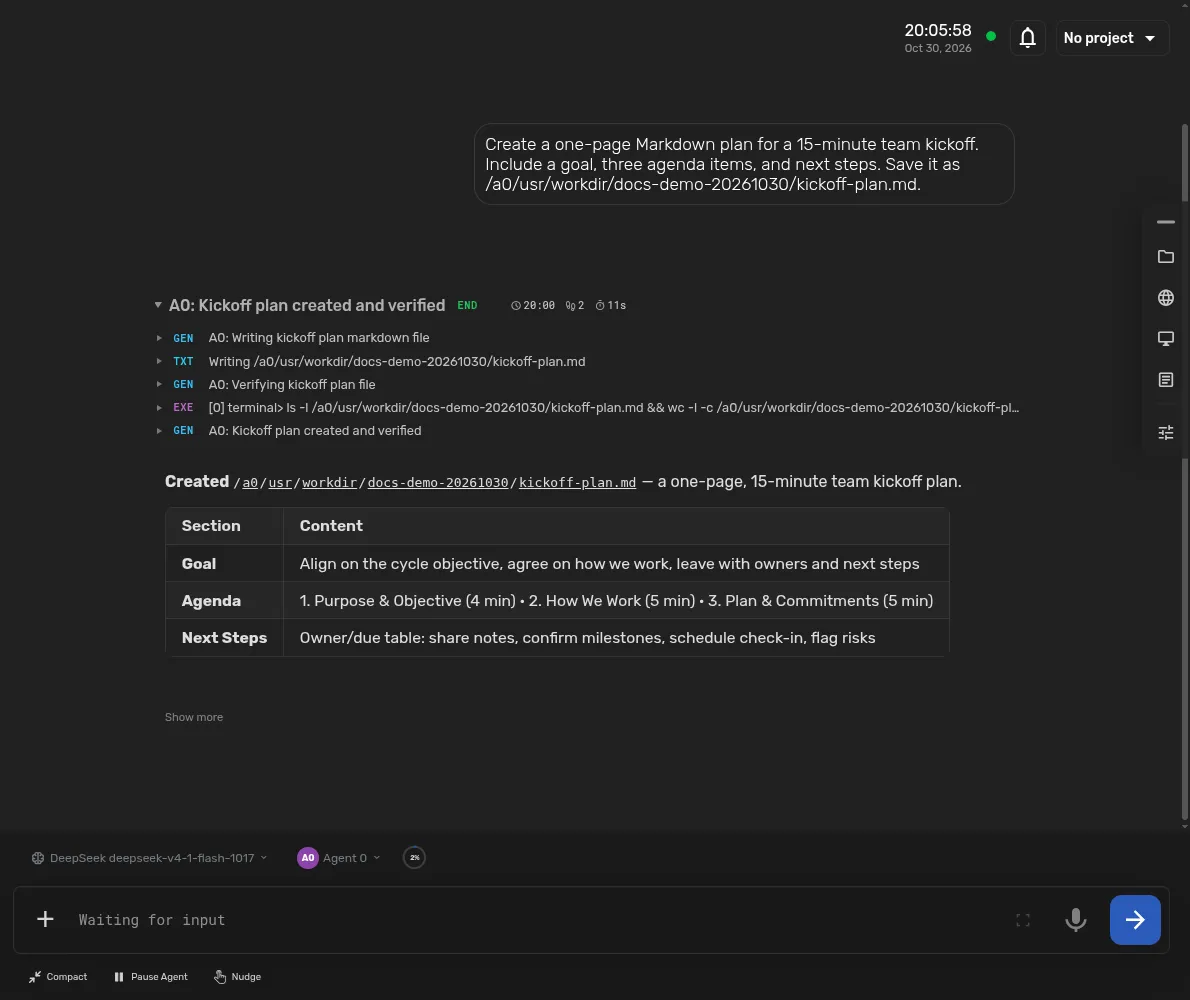
Agent Zero va le plus loin vers une configuration entièrement locale. Il prend en charge Ollama, LM Studio, llama.cpp, vLLM et oMLX (documentation d’installation), la recherche web passe par une instance SearXNG intégrée au lieu d’une API de recherche, et la reconnaissance et la synthèse vocales peuvent tourner en local via les plugins intégrés Whisper et Kokoro (plugins). L’agent travaille dans son propre conteneur Docker, isolé de votre ordinateur sauf si vous lui accordez l’accès.
Sa seule télémétrie est une vérification de mises à jour qui envoie votre version et un identifiant d’instance hashé ; vous pouvez la désactiver dans les réglages. Prévoyez au moins 2 Go de RAM pour Agent Zero lui-même, avant le modèle.
2. QwenPaw
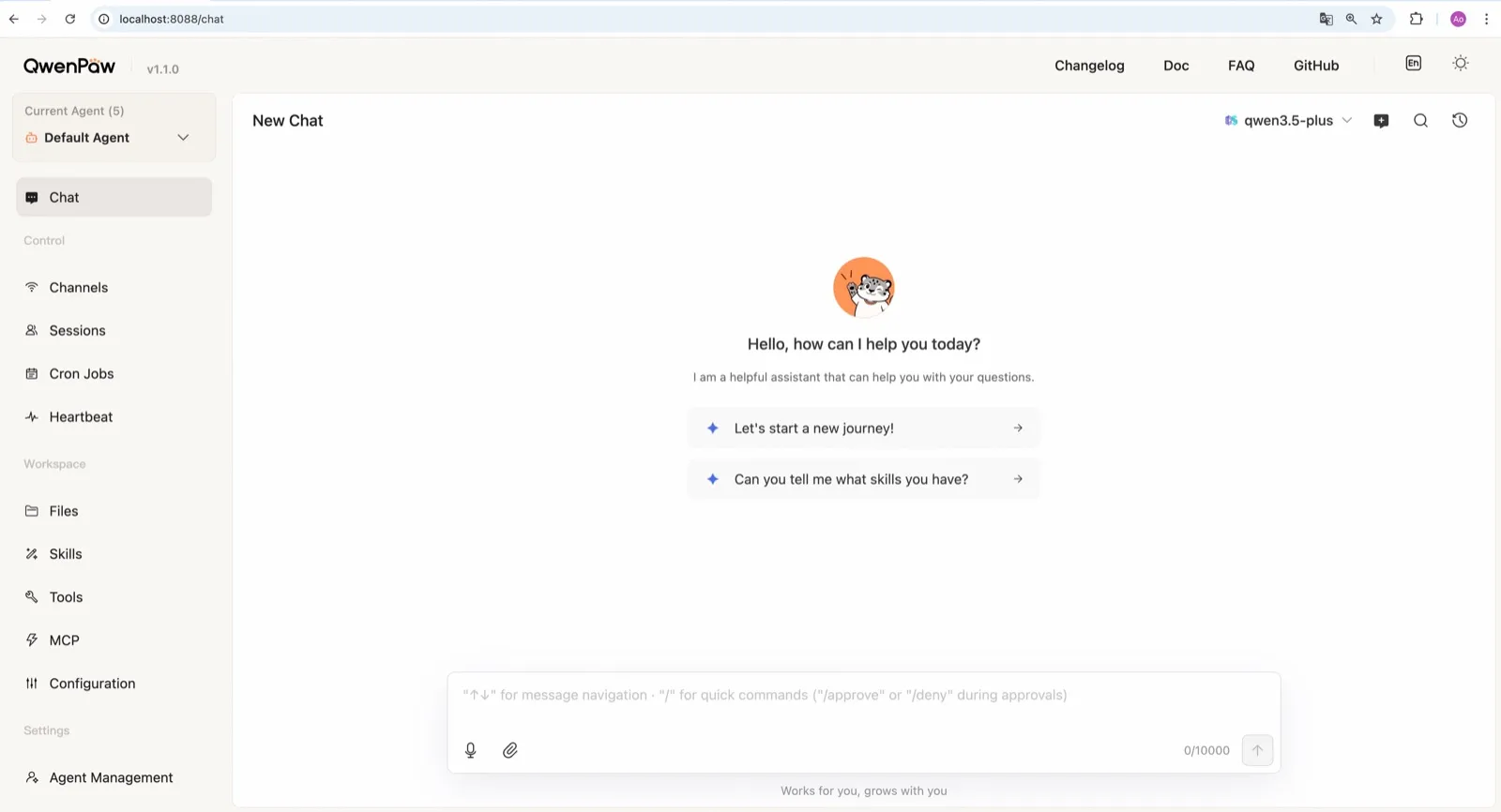
QwenPaw, de l’équipe AgentScope d’Alibaba, embarque son propre runtime llama.cpp : il peut donc tourner entièrement hors ligne sans clé d’API ni installation séparée d’Ollama (documentation des modèles). L’équipe publie aussi de petits modèles QwenPaw-Flash entraînés pour les tâches d’agent. Ollama et LM Studio fonctionnent également.
Il se classe derrière Agent Zero sur la sécurité par défaut : le sandbox des commandes est désactivé, et la commande de démarrage rapide documentée qwenpaw init --defaults accepte automatiquement la télémétrie d’installation anonyme. Lancez plutôt qwenpaw init en mode interactif pour la refuser.
3. ZeroClaw
ZeroClaw est le choix le plus propre si vous faites déjà tourner Ollama ou un autre serveur de modèles compatible OpenAI. Il n’a aucune télémétrie, un sandbox de l’OS activé par défaut et des chaînes de repli entre fournisseurs : un modèle local peut passer en premier avec un modèle hébergé derrière, ou sans rien derrière du tout. En tant que binaire Rust unique, il tourne sur de petites cartes comme un Raspberry Pi, à côté d’un serveur de modèles installé sur une machine plus puissante.

4. nanobot
nanobot prend en charge Ollama, vLLM et LM Studio d’emblée (fournisseurs), n’envoie aucune télémétrie et conserve sa mémoire sous forme de simples fichiers Markdown dans ~/.nanobot, faciles à inspecter et à sauvegarder. Sa WebUI rend une configuration locale agréable à utiliser. Activez son sandbox bubblewrap ou Seatbelt avant de laisser un modèle local exécuter des commandes shell ; il est désactivé par défaut.

5. Khoj
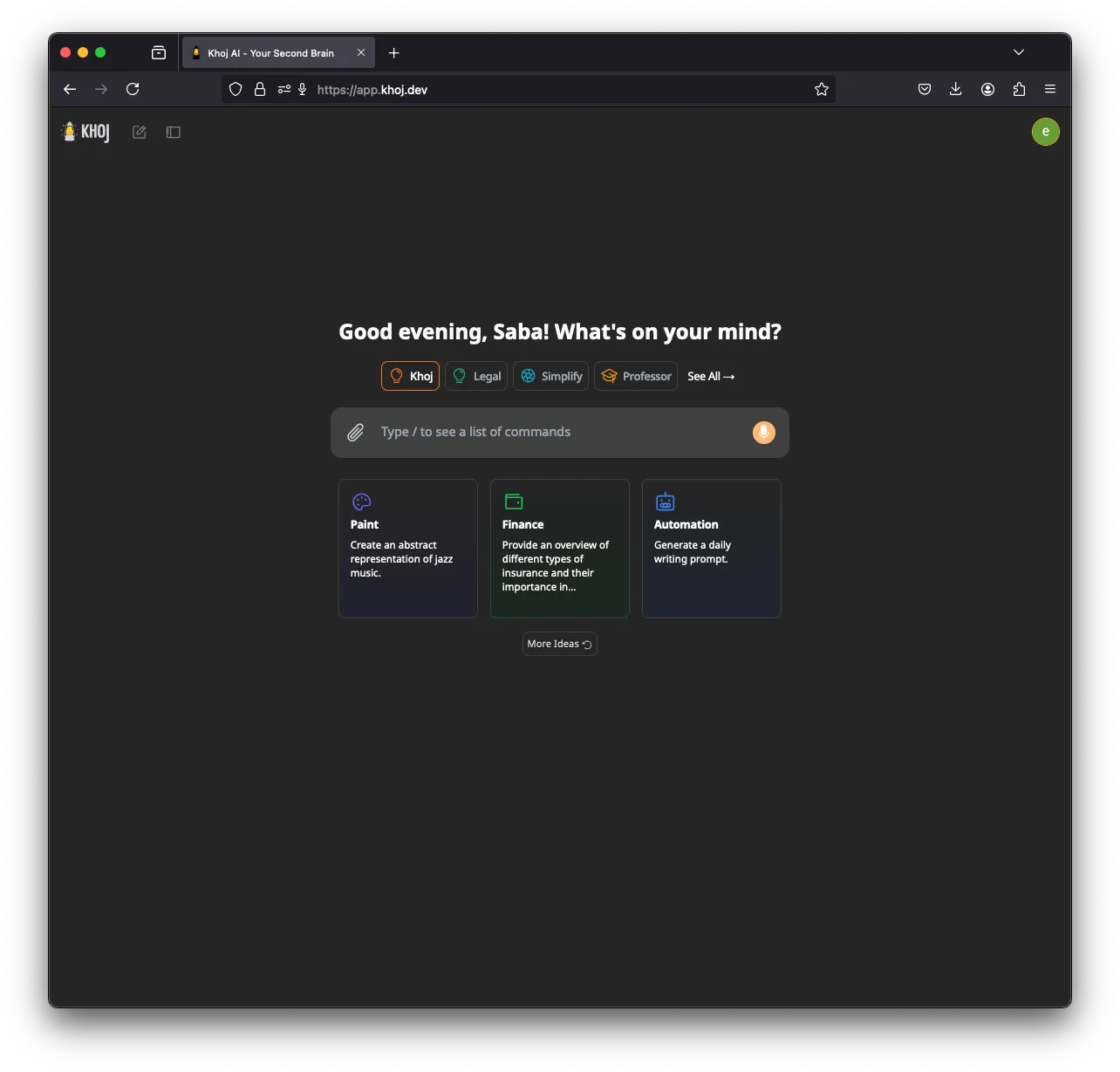
Khoj est le spécialiste : un second cerveau IA qui indexe vos notes et documents et répond à partir d’eux. Il peut tourner entièrement hors ligne, avec des modèles GGUF via llama.cpp et des embeddings générés sur votre machine, et il prend aussi en charge Ollama, LM Studio et vLLM (installation). Un GPU (CUDA, ROCm, Vulkan ou Apple Metal) aide.
Il se classe cinquième car son développement a ralenti (aucune version depuis mars 2026), il n’a aucun canal de messagerie, et il envoie de la télémétrie d’usage anonymisée tant que vous n’avez pas défini KHOJ_TELEMETRY_DISABLE=True.
6. Rakazo
Rakazo, que nous développons, exécute des modèles locaux via Ollama ou LM Studio (modèles auto-hébergés), n’envoie aucune analytique produit depuis une installation auto-hébergée, et donne à chaque bot un ordinateur isolé. Il se classe ici car sa prise en charge locale est plus étroite que celle d’Agent Zero ou de QwenPaw : deux runtimes locaux, et aucun intégré. Il est aussi en bêta. Voir le test de Rakazo.


7. OpenClaw
OpenClaw fonctionne avec Ollama, LM Studio et vLLM (fournisseur Ollama) : il a donc sa place dans toute liste d’agents locaux, et son immense écosystème de plugins est une raison de le choisir. Mais pour les utilisateurs qui privilégient le local, les réglages par défaut vont dans le mauvais sens : une vérification quotidienne des mises à jour est activée (update.checkOnStart: false l’arrête) et les commandes s’exécutent sur votre hôte tant que vous n’activez pas le sandboxing. Si vous voulez OpenClaw avec une inférence locale et un sandbox verrouillé, NemoClaw l’enveloppe avec un routage vers Ollama, vLLM ou NVIDIA NIM, au prix de 8 Go de RAM et d’un statut alpha.

Faire tourner l’agent et le modèle sur des machines différentes
PicoClaw illustre un schéma utile. Son agent ne demande que 10 Mo de RAM libre et tourne sur des cartes à 10 $ et de vieux téléphones, mais il a tout de même besoin d’un accès réseau pour joindre le modèle (documentation matérielle). Pointez-le, ou ZeroClaw, vers un serveur Ollama ou vLLM sur un ordinateur de bureau doté d’un GPU, et vous obtenez un agent toujours actif sur un minuscule appareil, avec toute l’inférence sur votre propre réseau. PicoClaw n’est pas entré dans le classement car le projet déconseille de l’utiliser en production avant la v1.0.
Pour une vue plus large, consultez les meilleurs agents IA auto-hébergés.
Meilleurs choix
Free, MIT-licensed AI agent that runs in its own Docker Linux workspace with a terminal, browser and desktop apps, and chats on Telegram and WhatsApp.
Runs in its own Docker container with local models, but sends telemetry by default.
Aller sur Agent ZeroPoints forts
- Free and MIT licensed, with frequent releases (v2.11 to v2.15 between late August and early November 2026)
- The agent works in its own Linux workspace with a terminal, browser, desktop apps and LibreOffice, isolated from your computer unless you grant host access
- Web search runs through a local SearXNG instance, and speech-to-text and text-to-speech can run locally
- Projects keep memory, files, secrets, instructions and model choices separate per job, with workspace snapshots you can roll back
- Built-in Telegram, WhatsApp and email channels, a scheduler, MCP and a community Plugin Hub with 200+ plugins
Points faibles
- Needs Docker, and the container image is a full Linux desktop environment rather than a small service
- No built-in image generation; the docs show teaching it an image API yourself
- By default it checks for updates with Agent Zero's server, sending your version and a hashed instance ID
- Code runs in the same container as Agent Zero itself today; per-task sandboxes are only a v3 prototype
- WhatsApp works by linking a phone account through a Baileys bridge, which needs Node.js, rather than the official WhatsApp Business API
Free, Apache-licensed personal AI agent from Alibaba's AgentScope team, formerly CoPaw, with a web console, memory, multiple agents and many chat apps.
Many chat apps and local models, but no sandbox and telemetry on by default.
Aller sur QwenPawPoints forts
- Runs fully offline with a built-in llama.cpp runtime and purpose-trained QwenPaw-Flash models, no API key needed
- Several independent agents, each with its own memory, skills and heartbeat, that can work together
- Layered security: Tool Guard, File Guard, skill scanning, access policies and an optional kernel-level sandbox
- Broad chat coverage, especially for Chinese platforms such as DingTalk, Feishu, WeChat and QQ, alongside Telegram, Discord, Slack and iMessage
- Well-documented web console for channels, cron jobs, heartbeat, skills, MCP and files
Points faibles
- The command sandbox is off by default, and inside Docker it falls back to no isolation
- The recommended setup command accepts anonymous install telemetry automatically
- No WhatsApp channel, and iMessage works only on a Mac with a third-party helper and Full Disk Access
- Desktop apps are still in beta, and the project moves fast, with frequent beta releases
Personal AI agent in one Rust binary, MIT or Apache-2.0, with local or cloud models, 30+ channels, approval gates and an OS sandbox on by default.
Meets every check: one Rust binary, approval gates and an OS sandbox on by default, no telemetry, local models.
Aller sur ZeroClawPoints forts
- Safe defaults: the recommended profile asks before medium-risk actions, blocks high-risk ones, keeps files in the workspace and runs tools in an OS sandbox
- One small Rust binary with one config file, running on macOS, Linux, Windows and boards like a Raspberry Pi
- More than 30 channels, plus a web dashboard for chat, memory, config and cron
- Provider fallback chains, local models through Ollama, and cryptographic receipts for tool calls
- States plainly that it sends no telemetry and needs no cloud account or license server
Points faibles
- Slack, iMessage, Signal and several other channels are not in the standard release; you build from source with extra features to get them
- `zeroclaw quickstart` only sets up the model provider; channels and risk profiles mean editing the TOML config file
- The Docker sandbox backend isn't picked automatically under the default native runtime
- Model costs are on you
Free, MIT-licensed personal AI agent in Python with a browser UI and terminal app, scheduled tasks, memory, and chat on Telegram, Discord, Slack and more.
Small, readable Python with a good web UI and no telemetry, but shell commands aren't sandboxed by default.
Aller sur nanobotPoints forts
- Free and MIT licensed, with a small Python core that is meant to be read and modified
- Polished bundled WebUI with projects, file diffs, an MCP app catalog and an automations calendar, plus a terminal UI
- Many chat channels, including Telegram, Discord, Slack, WhatsApp, WeChat, Feishu, Teams, Matrix and email
- Scheduled automations, long-running goals and a heartbeat that reports only useful results to your last chat
- Works with local models through Ollama, vLLM or LM Studio
Points faibles
- Shell commands are not sandboxed by default; the bubblewrap or macOS Seatbelt sandbox must be turned on, and Windows has none
- Model costs are on you, and voice messages need a separate transcription provider such as Groq or OpenAI
- No native mobile or desktop app; on a phone you use the WebUI in a browser or a chat app
- Missed scheduled runs are not replayed and interrupted subagent tasks are not relaunched after a restart
AGPL-licensed, self-hosted AI second brain that chats over your notes and documents with web search, custom agents and scheduled research emails.
Good at chatting over your own notes and documents, but development has slowed, it has no chat-app channels and telemetry is on by default.
Aller sur KhojPoints forts
- Searches and chats over your own notes and documents, including Markdown, Org-mode, PDF, Word, Notion and GitHub
- Works with local models through Ollama, LM Studio, vLLM or offline llama.cpp, and generates embeddings on your machine
- Custom agents with their own persona, knowledge, chat model and tools
- Automations run a query on a schedule and email you the result
- Generated code runs in a local Terrarium sandbox that the Docker Compose setup starts for you
Points faibles
- Development has slowed: no release since March 26, 2026, the last commit was on August 2, 2026, and the team now focuses on other products
- The hosted Khoj Cloud, and with it the WhatsApp bot, shut down on April 15, 2026, so self-hosting is the only way to use it
- AGPL-3.0 requires you to share your changes if you offer a modified version to others over a network
- Sends anonymized usage telemetry by default until you set KHOJ_TELEMETRY_DISABLE
- Scheduled emails need Resend and authentication set up when self-hosting, and no chat apps such as Telegram or Slack are supported
Open-source, self-hostable platform for persistent AI bots that each get a job, a computer, memory and routines, using the model you choose.
Our own product. Meets every check: Apache-2.0, sandboxed bot computers, no telemetry by default, any model you connect.
Aller sur RakazoPoints forts
- Open source (Apache-2.0) and fully self-hostable, including with local models
- Choice of model per bot, including existing Claude or ChatGPT subscriptions
- Bots keep working on schedules and triggers with their own cloud computer
- Approval controls over which actions a bot may take on its own
Points faibles
- Still in beta, with frequent releases
- You supply and pay for the model on the hosted plans, unless you buy Rakazo credits
- Telegram, WhatsApp and iMessage/SMS are only available when self-hosted
- More setup than a single chat app
Free, MIT-licensed personal AI agent that runs on your own computer and takes orders from WhatsApp, Telegram, iMessage, Slack and 20+ other chat apps.
The biggest ecosystem and every chat app, but sandboxing is off and telemetry is on by default.
Aller sur OpenClawPoints forts
- Free and MIT licensed, with no paid tier
- Runs on your own hardware, and state, memory and credentials stay there
- Works in 29 chat channels, including WhatsApp, Telegram, iMessage, Slack, Discord and Microsoft Teams
- Model-agnostic: 64 model and media providers, plus local models
- Large ecosystem of skills and 142 official plugins, and very active development
Points faibles
- Model costs are on you and can run high: testers and users have reported spending over $100 in a day with expensive models
- Sandboxing is off by default and the agent can run commands on the host unless you turn on approvals
- Setup and upkeep expect comfort with the command line; maintainers warn it is risky for non-technical users
- Broad access to email, messages and the system makes prompt injection and malicious third-party skills a real risk
Fonctionnalités
| Agent Zero | QwenPaw | ZeroClaw | nanobot | Khoj | Rakazo | OpenClaw | |
|---|---|---|---|---|---|---|---|
| Recherche web | Oui | Oui | Oui | Oui | Oui | Oui | Oui |
| Génération d'images | Non | Oui | Oui | Oui | Oui | Oui | Oui |
| Mode vocal | Oui | Oui | Oui | Oui | Oui | Oui | Oui |
| Envoi de fichiers | Oui | Oui | Oui | Oui | Oui | Oui | Oui |
| Mémoire | Oui | Oui | Oui | Oui | Oui | Oui | Oui |
| Agit à votre place | Oui | Oui | Oui | Oui | Oui | Oui | Oui |
| Intégrations d'apps | Oui | Oui | Oui | Oui | Oui | Oui | Oui |
| Travaille en autonomie | Oui | Oui | Oui | Oui | Oui | Oui | Oui |
| Vous écrit en premier | Oui | Oui | Oui | Oui | Oui | Oui | Oui |
| Plusieurs bots | Oui | Oui | Oui | Oui | Oui | Oui | Oui |
Sources
Agent Zero
- agent0ai/agent-zero on GitHub (MIT, README, safety model)
- Agent Zero releases (v0.2 in June 2024 to v2.15 on November 1, 2026)
- Agent Zero homepage
- Agent Zero docs: Installation (Launcher, A0 Install, Docker, local models)
- Agent Zero docs: VPS deployment (hardware requirements)
- Agent Zero model provider list
- Agent Zero update check code (version and hashed ID sent to api.agent-zero.ai)
- Agent Zero built-in Telegram integration plugin
- Agent Zero built-in WhatsApp integration plugin
- Agent Zero built-in plugins (scheduler, notify user, email, SearXNG search, Whisper STT, Kokoro TTS)
- Agent Zero docs: Memory guide
- Agent Zero docs: Agent Profiles
- Agent Zero docs: API integration (adding image generation yourself)
- Agent Zero v3: A Sneak Peek Inside the Sandbox (August 17, 2026)
- Agent Zero LLM API (Venice.ai proxy for A0T token stakers)
QwenPaw
- agentscope-ai/QwenPaw on GitHub (Apache-2.0, README with install options and telemetry)
- QwenPaw documentation
- QwenPaw v1.1.0 release notes: CoPaw rebrands to QwenPaw
- copaw on PyPI (first release February 2026)
- QwenPaw docs: Channels
- QwenPaw docs: Models (cloud providers, llama.cpp, Ollama, LM Studio)
- QwenPaw docs: Security (Tool Guard, File Guard, sandbox)
- QwenPaw source: security.sandbox_enabled defaults to off
- QwenPaw docs: Heartbeat
- QwenPaw docs: Multi-agent
- QwenPaw docs: Comparison (voice and video interaction)
- QwenPaw docs: Desktop application (beta)
- QwenPaw docs: Plugins (GPT Image 2 image generation plugin)
- QwenPaw Qwen-Image tool plugin (image generation and editing)
ZeroClaw
- zeroclaw-labs/zeroclaw on GitHub (MIT OR Apache-2.0, v0.8.7, README)
- ZeroClaw website
- ZeroClaw docs: Sandboxing
- ZeroClaw source: risk presets (Balanced, recommended, has the sandbox on)
- ZeroClaw docs: Channels overview (default and standard release bundles)
- ZeroClaw docs: You own it (no telemetry)
- ZeroClaw docs: Docker and containers
- ZeroClaw source: tools (image generation, screenshot, web)
nanobot
- HKUDS/nanobot on GitHub (MIT, v0.4.1, README)
- nanobot documentation
- nanobot release archive (officially launched February 2, 2026)
- nanobot docs: Chat apps
- nanobot docs: Providers and models (Ollama, vLLM, LM Studio)
- nanobot docs: Configuration (security, exec sandbox off by default, transcription, Langfuse)
- nanobot docs: Automations and heartbeat
- nanobot docs: Concepts (heartbeat delivery, subagent recovery)
- nanobot docs: Memory and Dream
- nanobot docs: Multiple instances
- nanobot docs: Deployment (Docker, services, Render)
- nanobot source: skills installer runs with DISABLE_TELEMETRY
Khoj
- khoj-ai/khoj on GitHub (AGPL-3.0, README)
- Khoj releases (latest 2.0.0-beta.28, March 26, 2026)
- Khoj commit history (last commit August 2, 2026)
- Khoj Cloud Has Been Sunset (April 15, 2026)
- Khoj homepage (Open Paper, Pipali and the Khoj app)
- khoj-assistant on PyPI (first release 0.1.0, August 2, 2022)
- Khoj docs: Self-host setup (Docker, pip, model providers)
- Khoj docs: Ollama
- Khoj docs: Telemetry
- Khoj docs: Privacy
- Stop sending client IP in telemetry so it matches the privacy docs (#1382)
- Khoj docs: Automations
- Khoj docs: Code execution (Terrarium sandbox)
- Khoj docs: Agents
- Khoj docs: Image generation
- Khoj docs: Voice
- Khoj docs: WhatsApp (bot tied to Khoj Cloud)
- Khoj server settings (memory feature enabled and on by default)
Rakazo
- Rakazo homepage
- Rakazo pricing
- Rakazo privacy policy
- Rakazo on GitHub (README and license)
- Rakazo changelog
- Rakazo releases
- Rakazo docs: Image and video generation
- Rakazo docs: Memory
- Rakazo docs: Connect apps
- Rakazo docs: Routines
- Rakazo docs: Chat apps
- Rakazo docs: Messaging apps (self-hosting)
- Rakazo docs: Bots and chats (add another bot, bot templates)
- Rakazo docs: Groups (several bots in one chat)
- Rakazo docs: Mobile app (notifications)
- Rakazo privacy policy (updated Sep 14, 2026)
- Rakazo privacy policy source on GitHub
- Rakazo docs: Logs and monitoring (product analytics off by default)
- Rakazo docs: Desktop app (run locally in Docker, updates)
- Rakazo docs: Docker computers
- Rakazo docs: Self-hosted models (Ollama, LM Studio)
- Rakazo Railway template setup guide
OpenClaw
- OpenClaw homepage and Foundation section
- OpenClaw integrations: channels, providers and plugins
- openclaw/openclaw on GitHub (MIT, v2026.11.1)
- OpenClaw docs: Sandboxing (off by default)
- Wikipedia: OpenClaw
- Notebookcheck: OpenClaw can burn through hundreds of dollars per day
- OpenClaw docs: Memory overview
- OpenClaw docs: Automations
- OpenClaw docs: Chat channels
- OpenClaw docs: iMessage
- OpenClaw docs: Heartbeat, now a default Proactive check job
- OpenClaw docs: Multi-agent routing
- OpenClaw docs: Platforms (macOS, Windows, Linux, iOS and Android apps)
- OpenClaw docs: Tools (exec, browser, web search)
- OpenClaw docs: Audio and voice notes (inbound transcription)
- OpenClaw docs: Image and media support (inbound media)
- OpenClaw docs: Install (system requirements, installer script, npm, desktop apps, Docker)
- OpenClaw docs: One-click deploy on Railway
- OpenClaw docs: Usage telemetry and update checks (on by default, feature statistics opt-in)
- OpenClaw docs: Ollama provider (local models)