De beste lokale AI-agents: een AI-assistent op uw eigen hardware
Zeven lokale AI-agents gerangschikt op hoe goed ze draaien met Ollama, vLLM, LM Studio of llama.cpp, en hoeveel van uw data op uw eigen machine blijft.
In het kort
| Bot | Licentie | Chatapps | |||||
|---|---|---|---|---|---|---|---|
| Agent Zero | MIT | 19,8K | Ja | Ja | Telegram, WhatsApp | Gratis | |
| QwenPaw | Apache-2.0 | 37,5K | Ja | Nee | Telegram, iMessage, Discord, Slack | Gratis | |
| ZeroClaw | MIT OR Apache-2.0 | 33,3K | Ja | Ja | Telegram, WhatsApp, Discord | Gratis | |
| nanobot | MIT | 49,9K | Ja | Nee | Telegram, WhatsApp, Discord, Slack | Gratis | |
| Khoj | AGPL-3.0 | 38,1K | Ja | Ja | Geen | Gratis | |
| Rakazo | Apache-2.0 | 7,5K | Ja | Ja | Telegram, WhatsApp, iMessage, Slack | Vanaf US$ 10/mnd | |
| OpenClaw | MIT | 394,2K | Ja | Nee | Telegram, WhatsApp, iMessage, Discord, Slack | Gratis |


Checklist
Elke agent die we opnemen, kan met een lokaal model praten. Dat is niet hetzelfde als een goede lokale AI-agent zijn. Met een gehost model verlaten uw prompts, bestanden en geheugenfragmenten bij elke beurt uw machine. Volledig lokaal gaan betekent dat het model, het zoeken, de spraak en het geheugen allemaal draaien op hardware die u bezit, en maar heel weinig agents brengen u helemaal zover.
Hoe we ze hebben gerangschikt
Deze lijst weegt lokale werking zwaarder dan al het andere:
- Ondersteunde lokale runtimes. Ollama, vLLM, LM Studio, llama.cpp. Meer opties betekent dat het past bij de hardware die u al hebt.
- Wat er verder lokaal blijft. Webzoeken, spraak-naar-tekst, tekst-naar-spraak en embeddings. Een agent die het model lokaal draait maar elke zoekopdracht naar een cloud-API stuurt, lekt nog steeds waar u mee bezig bent.
- Geen telemetrie en een sandbox, uit de checklist in de tabel hierboven, omdat gebruikers die lokaal-eerst werken meestal om beide geven.
- Setup-inspanning en volwassenheid.
Een opmerking over hardware: de agents zelf zijn licht. Het model is wat RAM en een GPU nodig heeft, en een capabel lokaal model is een veel grotere eis dan welke agent op deze lijst ook. Kijk eerst welk model uw machine kan draaien, en kies dan de agent.
1. Agent Zero
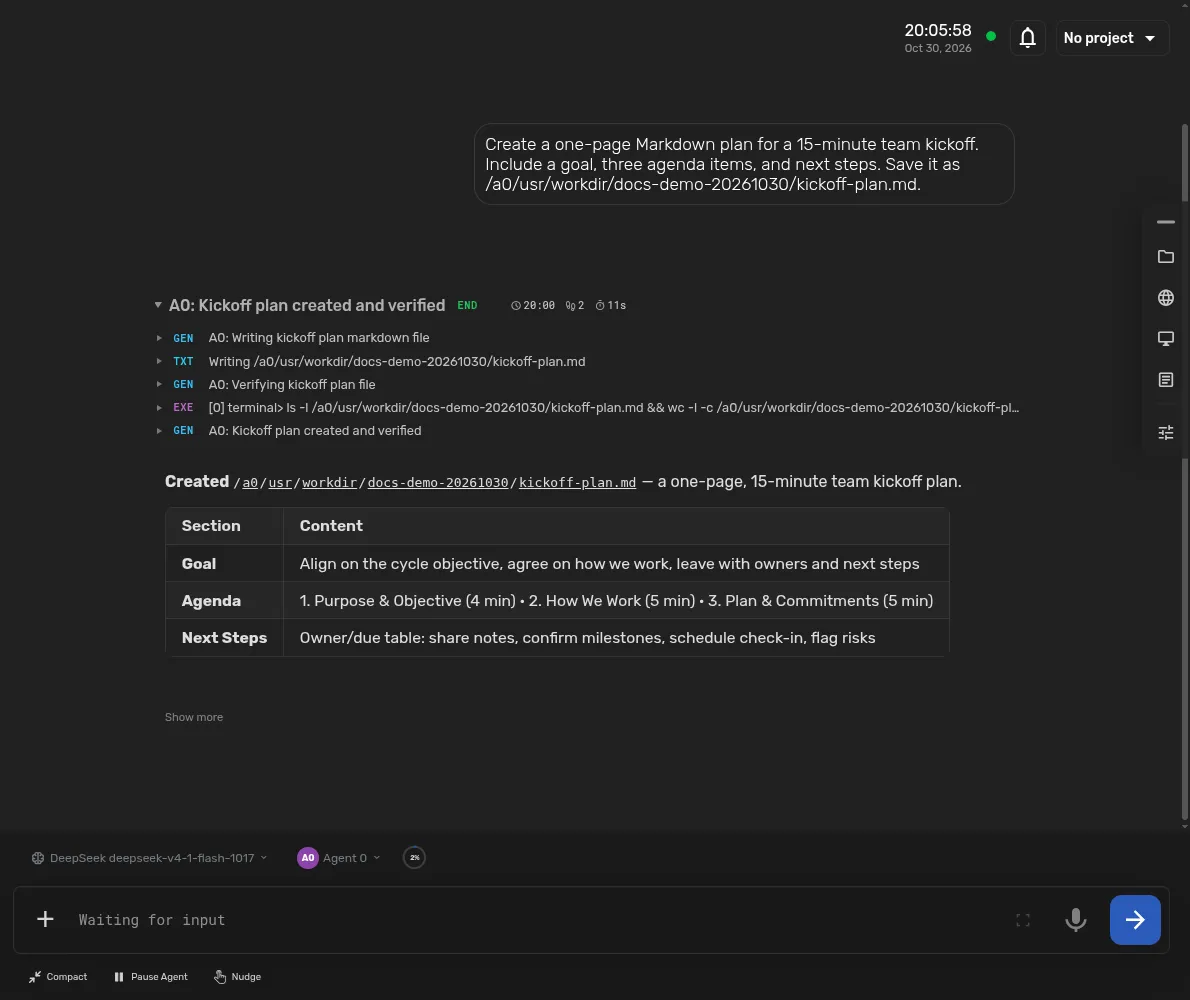
Agent Zero gaat het verst richting een volledig lokale setup. Het ondersteunt Ollama, LM Studio, llama.cpp, vLLM en oMLX (installatiedocumentatie), webzoeken loopt via een meegeleverde SearXNG-instantie in plaats van een zoek-API, en spraak-naar-tekst en tekst-naar-spraak kunnen lokaal draaien via ingebouwde Whisper- en Kokoro-plugins (plugins). De agent werkt in een eigen Docker-container, geïsoleerd van uw computer tenzij u toegang geeft.
De enige telemetrie is een updatecheck die uw versie en een gehashte instantie-ID verstuurt; die kunt u in de instellingen uitzetten. Reken op minstens 2 GB RAM voor Agent Zero zelf, vóór het model.
2. QwenPaw
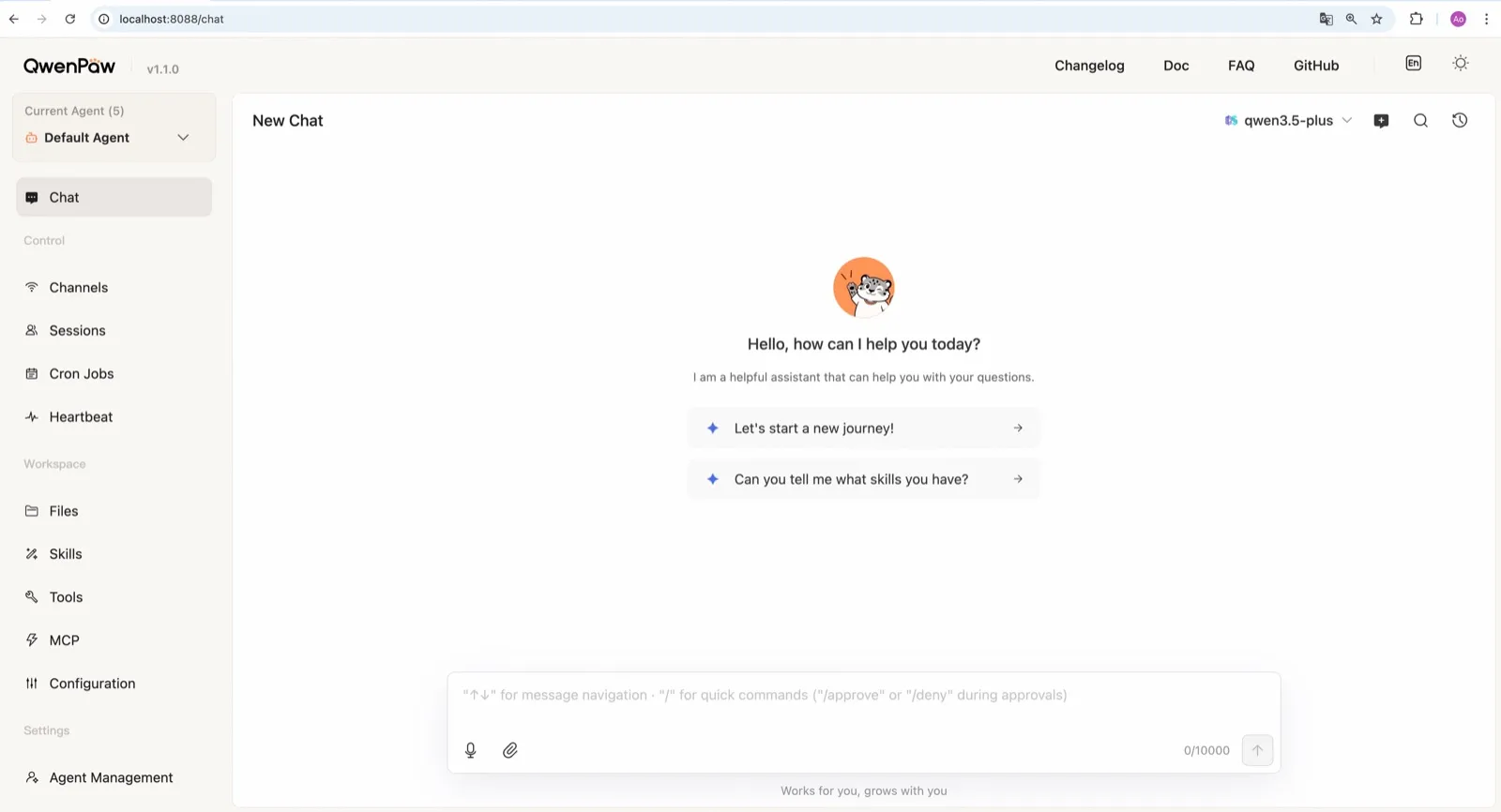
QwenPaw, van het AgentScope-team van Alibaba, levert een eigen llama.cpp-runtime mee, zodat het volledig offline kan draaien zonder API-sleutel en zonder aparte Ollama-installatie (modeldocumentatie). Het team publiceert ook kleine QwenPaw-Flash-modellen die getraind zijn voor agenttaken. Ollama en LM Studio werken ook.
Het staat onder Agent Zero vanwege de veiligheidsstandaarden: de commando-sandbox staat uit, en het gedocumenteerde quick-start-commando qwenpaw init --defaults accepteert automatisch anonieme installatietelemetrie. Draai in plaats daarvan de interactieve qwenpaw init om u af te melden.
3. ZeroClaw
ZeroClaw is de netste keuze als u al Ollama of een andere OpenAI-compatibele modelserver draait. Het heeft geen telemetrie, een OS-sandbox die standaard aan staat, en fallback-ketens tussen providers, zodat een lokaal model vooraan kan staan met een gehost model erachter, of met helemaal niets erachter. Als één Rust-binary draait het op kleine boards zoals een Raspberry Pi, naast een modelserver op een grotere machine.

4. nanobot
nanobot ondersteunt Ollama, vLLM en LM Studio direct (providers), verstuurt geen telemetrie, en bewaart geheugen als gewone Markdown-bestanden in ~/.nanobot, die makkelijk te inspecteren en te back-uppen zijn. De WebUI maakt een lokale setup prettig in gebruik. Zet de bubblewrap- of Seatbelt-sandbox aan voordat u een lokaal model shell-commando’s laat uitvoeren; die staat standaard uit.

5. Khoj
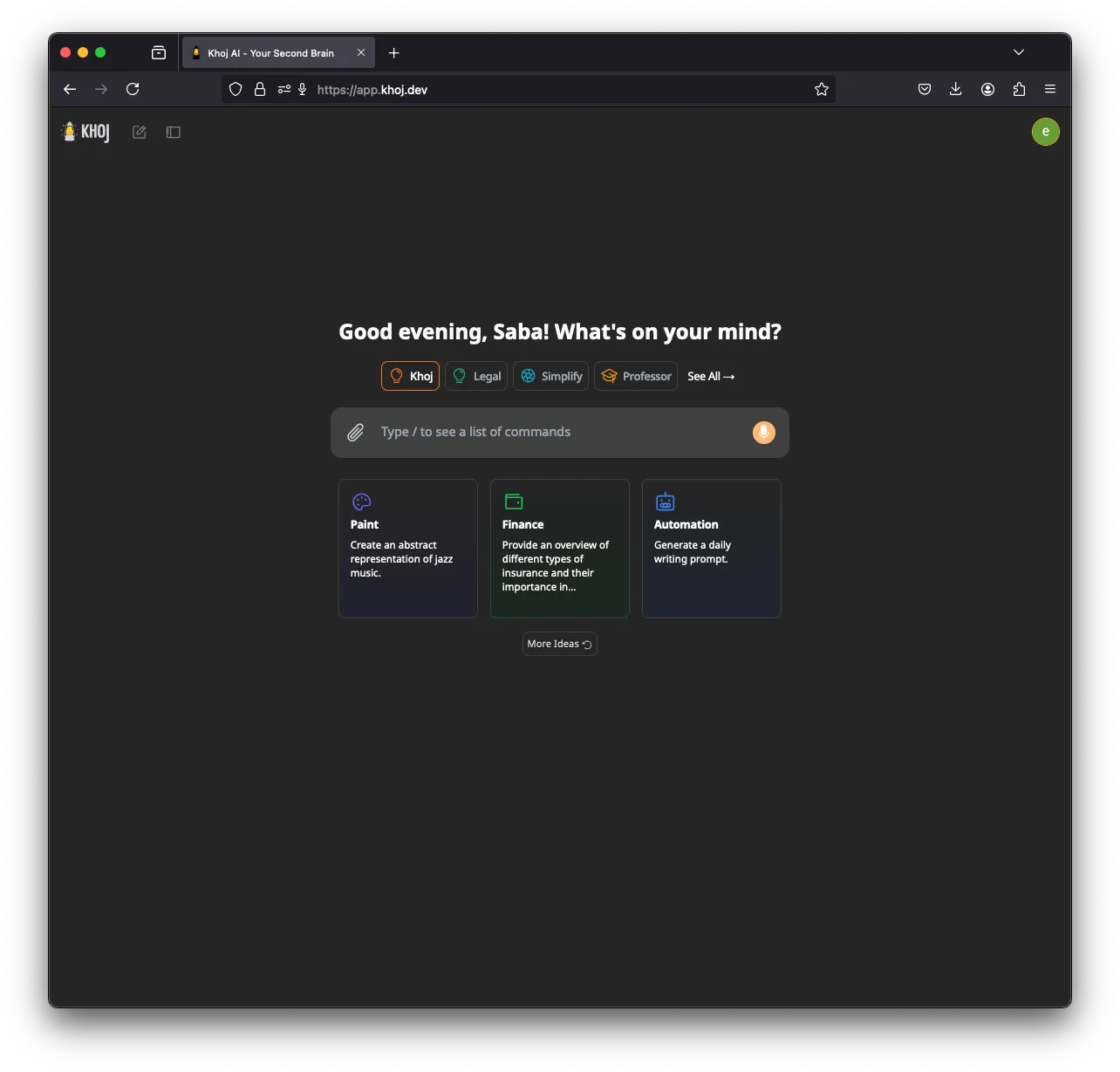
Khoj is de specialist: een AI-tweede brein dat uw notities en documenten indexeert en daaruit antwoordt. Het kan volledig offline draaien, met GGUF-modellen via llama.cpp en embeddings die op uw machine worden gegenereerd, en het ondersteunt ook Ollama, LM Studio en vLLM (setup). Een GPU (CUDA, ROCm, Vulkan of Apple Metal) helpt.
Het staat vijfde omdat de ontwikkeling is vertraagd (geen release sinds maart 2026), het geen chat-app-kanalen heeft, en het geanonimiseerde gebruikstelemetrie verstuurt totdat u KHOJ_TELEMETRY_DISABLE=True instelt.
6. Rakazo
Rakazo, dat wij maken, draait lokale modellen via Ollama of LM Studio (zelf gehoste modellen), verstuurt geen productanalytics vanaf een zelf gehoste installatie, en geeft elke bot een gesandboxte computer. Het staat hier omdat de lokale ondersteuning smaller is dan die van Agent Zero of QwenPaw: twee lokale runtimes, en geen ingebouwde. Het is ook in bèta. Zie de Rakazo-review.


7. OpenClaw
OpenClaw werkt met Ollama, LM Studio en vLLM (Ollama-provider), dus het hoort op elke lokale lijst, en het enorme plugin-ecosysteem is een reden om het te kiezen. Maar voor gebruikers die lokaal-eerst werken trekken de standaardinstellingen de verkeerde kant op: een dagelijkse updatecheck staat aan (update.checkOnStart: false stopt die) en commando’s draaien op uw host totdat u sandboxing aanzet. Wilt u OpenClaw met lokale inferentie en een dichtgezette sandbox, dan wikkelt NemoClaw het in met routing via Ollama, vLLM of NVIDIA NIM, ten koste van 8 GB RAM en een alfalabel.

De agent en het model op verschillende machines draaien
PicoClaw laat een handig patroon zien. De agent heeft maar 10 MB vrij RAM nodig en draait op boards van $10 en oude telefoons, maar heeft nog steeds netwerktoegang nodig om het model te bereiken (hardwaredocumentatie). Richt het, of ZeroClaw, op een Ollama- of vLLM-server op een desktop met een GPU, en u hebt een altijd actieve agent op een klein apparaat met alle inferentie op uw eigen netwerk. PicoClaw haalde de ranglijst niet omdat het project zegt het vóór v1.0 niet in productie te gebruiken.
Voor een breder overzicht, zie de beste zelf gehoste AI-agents.
Beste keuzes
Free, MIT-licensed AI agent that runs in its own Docker Linux workspace with a terminal, browser and desktop apps, and chats on Telegram and WhatsApp.
Runs in its own Docker container with local models, but sends telemetry by default.
Naar Agent ZeroSterke punten
- Free and MIT licensed, with frequent releases (v2.11 to v2.15 between late August and early November 2026)
- The agent works in its own Linux workspace with a terminal, browser, desktop apps and LibreOffice, isolated from your computer unless you grant host access
- Web search runs through a local SearXNG instance, and speech-to-text and text-to-speech can run locally
- Projects keep memory, files, secrets, instructions and model choices separate per job, with workspace snapshots you can roll back
- Built-in Telegram, WhatsApp and email channels, a scheduler, MCP and a community Plugin Hub with 200+ plugins
Zwakke punten
- Needs Docker, and the container image is a full Linux desktop environment rather than a small service
- No built-in image generation; the docs show teaching it an image API yourself
- By default it checks for updates with Agent Zero's server, sending your version and a hashed instance ID
- Code runs in the same container as Agent Zero itself today; per-task sandboxes are only a v3 prototype
- WhatsApp works by linking a phone account through a Baileys bridge, which needs Node.js, rather than the official WhatsApp Business API
Free, Apache-licensed personal AI agent from Alibaba's AgentScope team, formerly CoPaw, with a web console, memory, multiple agents and many chat apps.
Many chat apps and local models, but no sandbox and telemetry on by default.
Naar QwenPawSterke punten
- Runs fully offline with a built-in llama.cpp runtime and purpose-trained QwenPaw-Flash models, no API key needed
- Several independent agents, each with its own memory, skills and heartbeat, that can work together
- Layered security: Tool Guard, File Guard, skill scanning, access policies and an optional kernel-level sandbox
- Broad chat coverage, especially for Chinese platforms such as DingTalk, Feishu, WeChat and QQ, alongside Telegram, Discord, Slack and iMessage
- Well-documented web console for channels, cron jobs, heartbeat, skills, MCP and files
Zwakke punten
- The command sandbox is off by default, and inside Docker it falls back to no isolation
- The recommended setup command accepts anonymous install telemetry automatically
- No WhatsApp channel, and iMessage works only on a Mac with a third-party helper and Full Disk Access
- Desktop apps are still in beta, and the project moves fast, with frequent beta releases
Personal AI agent in one Rust binary, MIT or Apache-2.0, with local or cloud models, 30+ channels, approval gates and an OS sandbox on by default.
Meets every check: one Rust binary, approval gates and an OS sandbox on by default, no telemetry, local models.
Naar ZeroClawSterke punten
- Safe defaults: the recommended profile asks before medium-risk actions, blocks high-risk ones, keeps files in the workspace and runs tools in an OS sandbox
- One small Rust binary with one config file, running on macOS, Linux, Windows and boards like a Raspberry Pi
- More than 30 channels, plus a web dashboard for chat, memory, config and cron
- Provider fallback chains, local models through Ollama, and cryptographic receipts for tool calls
- States plainly that it sends no telemetry and needs no cloud account or license server
Zwakke punten
- Slack, iMessage, Signal and several other channels are not in the standard release; you build from source with extra features to get them
- `zeroclaw quickstart` only sets up the model provider; channels and risk profiles mean editing the TOML config file
- The Docker sandbox backend isn't picked automatically under the default native runtime
- Model costs are on you
Free, MIT-licensed personal AI agent in Python with a browser UI and terminal app, scheduled tasks, memory, and chat on Telegram, Discord, Slack and more.
Small, readable Python with a good web UI and no telemetry, but shell commands aren't sandboxed by default.
Naar nanobotSterke punten
- Free and MIT licensed, with a small Python core that is meant to be read and modified
- Polished bundled WebUI with projects, file diffs, an MCP app catalog and an automations calendar, plus a terminal UI
- Many chat channels, including Telegram, Discord, Slack, WhatsApp, WeChat, Feishu, Teams, Matrix and email
- Scheduled automations, long-running goals and a heartbeat that reports only useful results to your last chat
- Works with local models through Ollama, vLLM or LM Studio
Zwakke punten
- Shell commands are not sandboxed by default; the bubblewrap or macOS Seatbelt sandbox must be turned on, and Windows has none
- Model costs are on you, and voice messages need a separate transcription provider such as Groq or OpenAI
- No native mobile or desktop app; on a phone you use the WebUI in a browser or a chat app
- Missed scheduled runs are not replayed and interrupted subagent tasks are not relaunched after a restart
AGPL-licensed, self-hosted AI second brain that chats over your notes and documents with web search, custom agents and scheduled research emails.
Good at chatting over your own notes and documents, but development has slowed, it has no chat-app channels and telemetry is on by default.
Naar KhojSterke punten
- Searches and chats over your own notes and documents, including Markdown, Org-mode, PDF, Word, Notion and GitHub
- Works with local models through Ollama, LM Studio, vLLM or offline llama.cpp, and generates embeddings on your machine
- Custom agents with their own persona, knowledge, chat model and tools
- Automations run a query on a schedule and email you the result
- Generated code runs in a local Terrarium sandbox that the Docker Compose setup starts for you
Zwakke punten
- Development has slowed: no release since March 26, 2026, the last commit was on August 2, 2026, and the team now focuses on other products
- The hosted Khoj Cloud, and with it the WhatsApp bot, shut down on April 15, 2026, so self-hosting is the only way to use it
- AGPL-3.0 requires you to share your changes if you offer a modified version to others over a network
- Sends anonymized usage telemetry by default until you set KHOJ_TELEMETRY_DISABLE
- Scheduled emails need Resend and authentication set up when self-hosting, and no chat apps such as Telegram or Slack are supported
Open-source, self-hostable platform for persistent AI bots that each get a job, a computer, memory and routines, using the model you choose.
Our own product. Meets every check: Apache-2.0, sandboxed bot computers, no telemetry by default, any model you connect.
Naar RakazoSterke punten
- Open source (Apache-2.0) and fully self-hostable, including with local models
- Choice of model per bot, including existing Claude or ChatGPT subscriptions
- Bots keep working on schedules and triggers with their own cloud computer
- Approval controls over which actions a bot may take on its own
Zwakke punten
- Still in beta, with frequent releases
- You supply and pay for the model on the hosted plans, unless you buy Rakazo credits
- Telegram, WhatsApp and iMessage/SMS are only available when self-hosted
- More setup than a single chat app
Free, MIT-licensed personal AI agent that runs on your own computer and takes orders from WhatsApp, Telegram, iMessage, Slack and 20+ other chat apps.
The biggest ecosystem and every chat app, but sandboxing is off and telemetry is on by default.
Naar OpenClawSterke punten
- Free and MIT licensed, with no paid tier
- Runs on your own hardware, and state, memory and credentials stay there
- Works in 29 chat channels, including WhatsApp, Telegram, iMessage, Slack, Discord and Microsoft Teams
- Model-agnostic: 64 model and media providers, plus local models
- Large ecosystem of skills and 142 official plugins, and very active development
Zwakke punten
- Model costs are on you and can run high: testers and users have reported spending over $100 in a day with expensive models
- Sandboxing is off by default and the agent can run commands on the host unless you turn on approvals
- Setup and upkeep expect comfort with the command line; maintainers warn it is risky for non-technical users
- Broad access to email, messages and the system makes prompt injection and malicious third-party skills a real risk
Functies
| Agent Zero | QwenPaw | ZeroClaw | nanobot | Khoj | Rakazo | OpenClaw | |
|---|---|---|---|---|---|---|---|
| Zoeken op het web | Ja | Ja | Ja | Ja | Ja | Ja | Ja |
| Afbeeldingen maken | Nee | Ja | Ja | Ja | Ja | Ja | Ja |
| Spraakmodus | Ja | Ja | Ja | Ja | Ja | Ja | Ja |
| Bestanden uploaden | Ja | Ja | Ja | Ja | Ja | Ja | Ja |
| Geheugen | Ja | Ja | Ja | Ja | Ja | Ja | Ja |
| Voert taken voor je uit | Ja | Ja | Ja | Ja | Ja | Ja | Ja |
| App-koppelingen | Ja | Ja | Ja | Ja | Ja | Ja | Ja |
| Werkt zelfstandig | Ja | Ja | Ja | Ja | Ja | Ja | Ja |
| Stuurt zelf eerst een bericht | Ja | Ja | Ja | Ja | Ja | Ja | Ja |
| Meerdere bots | Ja | Ja | Ja | Ja | Ja | Ja | Ja |
Bronnen
Agent Zero
- agent0ai/agent-zero on GitHub (MIT, README, safety model)
- Agent Zero releases (v0.2 in June 2024 to v2.15 on November 1, 2026)
- Agent Zero homepage
- Agent Zero docs: Installation (Launcher, A0 Install, Docker, local models)
- Agent Zero docs: VPS deployment (hardware requirements)
- Agent Zero model provider list
- Agent Zero update check code (version and hashed ID sent to api.agent-zero.ai)
- Agent Zero built-in Telegram integration plugin
- Agent Zero built-in WhatsApp integration plugin
- Agent Zero built-in plugins (scheduler, notify user, email, SearXNG search, Whisper STT, Kokoro TTS)
- Agent Zero docs: Memory guide
- Agent Zero docs: Agent Profiles
- Agent Zero docs: API integration (adding image generation yourself)
- Agent Zero v3: A Sneak Peek Inside the Sandbox (August 17, 2026)
- Agent Zero LLM API (Venice.ai proxy for A0T token stakers)
QwenPaw
- agentscope-ai/QwenPaw on GitHub (Apache-2.0, README with install options and telemetry)
- QwenPaw documentation
- QwenPaw v1.1.0 release notes: CoPaw rebrands to QwenPaw
- copaw on PyPI (first release February 2026)
- QwenPaw docs: Channels
- QwenPaw docs: Models (cloud providers, llama.cpp, Ollama, LM Studio)
- QwenPaw docs: Security (Tool Guard, File Guard, sandbox)
- QwenPaw source: security.sandbox_enabled defaults to off
- QwenPaw docs: Heartbeat
- QwenPaw docs: Multi-agent
- QwenPaw docs: Comparison (voice and video interaction)
- QwenPaw docs: Desktop application (beta)
- QwenPaw docs: Plugins (GPT Image 2 image generation plugin)
- QwenPaw Qwen-Image tool plugin (image generation and editing)
ZeroClaw
- zeroclaw-labs/zeroclaw on GitHub (MIT OR Apache-2.0, v0.8.7, README)
- ZeroClaw website
- ZeroClaw docs: Sandboxing
- ZeroClaw source: risk presets (Balanced, recommended, has the sandbox on)
- ZeroClaw docs: Channels overview (default and standard release bundles)
- ZeroClaw docs: You own it (no telemetry)
- ZeroClaw docs: Docker and containers
- ZeroClaw source: tools (image generation, screenshot, web)
nanobot
- HKUDS/nanobot on GitHub (MIT, v0.4.1, README)
- nanobot documentation
- nanobot release archive (officially launched February 2, 2026)
- nanobot docs: Chat apps
- nanobot docs: Providers and models (Ollama, vLLM, LM Studio)
- nanobot docs: Configuration (security, exec sandbox off by default, transcription, Langfuse)
- nanobot docs: Automations and heartbeat
- nanobot docs: Concepts (heartbeat delivery, subagent recovery)
- nanobot docs: Memory and Dream
- nanobot docs: Multiple instances
- nanobot docs: Deployment (Docker, services, Render)
- nanobot source: skills installer runs with DISABLE_TELEMETRY
Khoj
- khoj-ai/khoj on GitHub (AGPL-3.0, README)
- Khoj releases (latest 2.0.0-beta.28, March 26, 2026)
- Khoj commit history (last commit August 2, 2026)
- Khoj Cloud Has Been Sunset (April 15, 2026)
- Khoj homepage (Open Paper, Pipali and the Khoj app)
- khoj-assistant on PyPI (first release 0.1.0, August 2, 2022)
- Khoj docs: Self-host setup (Docker, pip, model providers)
- Khoj docs: Ollama
- Khoj docs: Telemetry
- Khoj docs: Privacy
- Stop sending client IP in telemetry so it matches the privacy docs (#1382)
- Khoj docs: Automations
- Khoj docs: Code execution (Terrarium sandbox)
- Khoj docs: Agents
- Khoj docs: Image generation
- Khoj docs: Voice
- Khoj docs: WhatsApp (bot tied to Khoj Cloud)
- Khoj server settings (memory feature enabled and on by default)
Rakazo
- Rakazo homepage
- Rakazo pricing
- Rakazo privacy policy
- Rakazo on GitHub (README and license)
- Rakazo changelog
- Rakazo releases
- Rakazo docs: Image and video generation
- Rakazo docs: Memory
- Rakazo docs: Connect apps
- Rakazo docs: Routines
- Rakazo docs: Chat apps
- Rakazo docs: Messaging apps (self-hosting)
- Rakazo docs: Bots and chats (add another bot, bot templates)
- Rakazo docs: Groups (several bots in one chat)
- Rakazo docs: Mobile app (notifications)
- Rakazo privacy policy (updated Sep 14, 2026)
- Rakazo privacy policy source on GitHub
- Rakazo docs: Logs and monitoring (product analytics off by default)
- Rakazo docs: Desktop app (run locally in Docker, updates)
- Rakazo docs: Docker computers
- Rakazo docs: Self-hosted models (Ollama, LM Studio)
- Rakazo Railway template setup guide
OpenClaw
- OpenClaw homepage and Foundation section
- OpenClaw integrations: channels, providers and plugins
- openclaw/openclaw on GitHub (MIT, v2026.11.1)
- OpenClaw docs: Sandboxing (off by default)
- Wikipedia: OpenClaw
- Notebookcheck: OpenClaw can burn through hundreds of dollars per day
- OpenClaw docs: Memory overview
- OpenClaw docs: Automations
- OpenClaw docs: Chat channels
- OpenClaw docs: iMessage
- OpenClaw docs: Heartbeat, now a default Proactive check job
- OpenClaw docs: Multi-agent routing
- OpenClaw docs: Platforms (macOS, Windows, Linux, iOS and Android apps)
- OpenClaw docs: Tools (exec, browser, web search)
- OpenClaw docs: Audio and voice notes (inbound transcription)
- OpenClaw docs: Image and media support (inbound media)
- OpenClaw docs: Install (system requirements, installer script, npm, desktop apps, Docker)
- OpenClaw docs: One-click deploy on Railway
- OpenClaw docs: Usage telemetry and update checks (on by default, feature statistics opt-in)
- OpenClaw docs: Ollama provider (local models)