Hermes-Agent-Alternativen: 5 Open-Source-Agenten als Ersatz
Fünf Open-Source-Alternativen zu Hermes Agent für Self-Hoster: wer Befehle in einer Sandbox ausführt, wer Handy-Apps bietet und wer das Setup klein hält.
Auf einen Blick
| Bot | Lizenz | Chat-Apps | |||||
|---|---|---|---|---|---|---|---|
| Hermes Agent | MIT | 261.682 | Ja | Nein | Telegram, WhatsApp, iMessage, Discord, Slack | Ab 20 $/Monat | |
| ZeroClaw | MIT OR Apache-2.0 | 33.269 | Ja | Ja | Telegram, WhatsApp, Discord | Gratis | |
| OpenClaw | MIT | 394.193 | Ja | Nein | Telegram, WhatsApp, iMessage, Discord, Slack | Gratis | |
| NanoClaw | MIT | 31.096 | Ja | Ja | Telegram, WhatsApp, iMessage, Discord, Slack | Gratis | |
| Rakazo | Apache-2.0 | 7538 | Ja | Ja | Telegram, WhatsApp, iMessage, Slack | Ab 10 $/Monat | |
| NemoClaw | Apache-2.0 | 22.984 | Ja | Ja | Telegram, Discord, Slack | Gratis |


Checkliste
Hermes Agent von Nous Research macht für Self-Hoster vieles richtig: MIT-Lizenz, keine geteilten Metriken ohne Ihr Opt-in, lokale Modelle, über 20 Chat-Plattformen und ein Agent, der seine eigenen wiederverwendbaren Skills schreibt. Wenn Sie das hier lesen, ist Ihnen vermutlich eine seiner Lücken in die Quere gekommen. Neu dabei? Beginnen Sie mit Was ist Hermes Agent?.
Wo Hermes Agent zu kurz greift
Befehle laufen auf Ihrem Rechner. Das Terminal-Backend ist standardmäßig lokal, und Container-Isolation ist eine optionale Einstellung. Ein Agent, der neue Skills lernt und Ihre Nachrichten liest, ist genau die Art, die man eingesperrt haben möchte.
Keine Handy-App. Auf Android ist es eine Kommandozeilen-Installation über Termux, und für iOS gibt es nichts Natives. Sie erreichen ihn über eine Chat-App oder gar nicht.
Das Setup setzt einen Server-Admin voraus. Es erwartet Routine mit der Kommandozeile und dem Betrieb eines eigenen Servers. Es gibt kein Linux-Desktop-Paket, und iMessage braucht einen separaten BlueBubbles-Server auf einem Mac.
Kostenpflichtige Extras. Gehostete Websuche, Bildgenerierung und Sprache brauchen einen Nous-Portal-Plan oder eigene API-Schlüssel.
Wir haben die Alternativen vor allem nach dem ersten Punkt eingestuft, weil er Sie Daten kosten kann, und danach nach dem Setup-Aufwand.
1. ZeroClaw: standardmäßig in der Sandbox, ein Binary
ZeroClaw ist die beste Wahl, wenn Isolation der Grund für Ihren Wechsel ist. Sein empfohlenes Balanced-Profil fragt vor Aktionen mit mittlerem Risiko nach, blockiert Aktionen mit hohem Risiko, beschränkt den Dateizugriff auf den Workspace und führt Tools in einer OS-Sandbox aus (Seatbelt auf macOS, Firejail auf Linux). Es ist ein einzelnes Rust-Binary, konfiguriert über eine TOML-Datei, sendet keine Telemetrie und betreibt lokale Modelle über Ollama mit Fallback-Ketten zwischen Anbietern.
Hermes-Nutzer werden zwei Dinge vermissen: die selbstverbessernde Skill-Schleife und die Kanalvielfalt im Standard-Build. Slack, iMessage und Signal erfordern einen Build aus dem Quellcode mit zusätzlichen Features.

2. OpenClaw: Apps überall, größte Community
OpenClaw ist der Agent, aus dem Hermes importiert, und die Antwort auf die fehlende Handy-App: Es hat Apps für macOS, Windows, Linux, iOS und Android, 29 Chat-Kanäle und 142 offizielle Plugins. Seine Desktop-Apps decken auch Linux ab, wo Hermes kein Desktop-Paket hat.
Am Sandbox-Problem ändert es nichts. Sandboxing ist standardmäßig aus, und es sendet einen täglichen Update-Check mit Versions- und Systemdetails, bis Sie update.checkOnStart: false setzen. Unser Vergleich Hermes vs. OpenClaw geht tiefer.

3. NanoClaw: ein Container pro Agent
NanoClaw führt jeden Agenten in einem eigenen Docker-Container aus, der nur die Ordner sieht, die Sie einbinden, und leitet ausgehende Aufrufe über ein Credential-Gateway, sodass Agenten nie rohe Schlüssel halten. Wie bei Hermes-Profilen können Sie mehrere getrennte Agenten betreiben, jeder mit eigenem Speicher und eigenen Zugriffsrechten.
Es ist an Claude und Claude Code gebunden: Sie passen es an, indem Claude Code Ihren Fork bearbeitet, ohne Konfigurationsdateien. Außerdem sendet es anonyme Setup-Diagnosedaten, sofern Sie nicht NANOCLAW_NO_DIAGNOSTICS=1 setzen, und braucht unter Windows WSL2.

4. Rakazo: Bots in der Sandbox mit Mobile-Apps
Rakazo, das wir entwickeln, schließt beide Lücken zugleich: Jeder Bot bekommt seinen eigenen Sandbox-Computer mit Browser, Terminal und Desktop, und es gibt iOS- und Android-Apps sowie Desktop-Apps. Es steht unter Apache-2.0, sendet selbst gehostet keine Produkt-Analytics und arbeitet mit lokalen Modellen über Ollama oder LM Studio oder mit einem Claude- oder ChatGPT-Abo.
Es ist noch in der Beta, braucht Docker Engine mit Compose, und Telegram, WhatsApp und iMessage funktionieren nur bei einer selbst gehosteten Installation.


5. NemoClaw: Hermes behalten, aber in eine Sandbox stecken
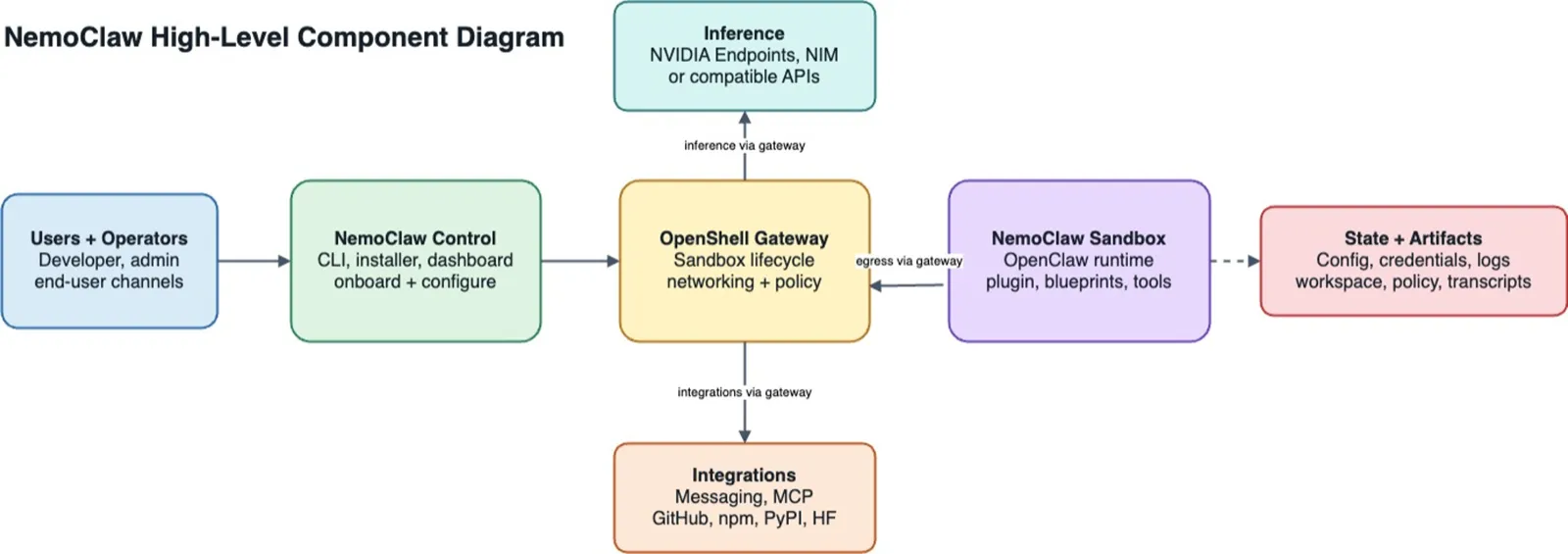
NemoClaw ist eigentlich kein Ersatz. Es ist NVIDIAs Stack, um OpenClaw, Hermes Agent oder LangChain Deep Agents Code in einer OpenShell-Sandbox auszuführen, wobei Netzwerkziele blockiert bleiben, bis ein Operator sie freigibt, und Zugangsdaten außerhalb der Sandbox liegen. Wenn Sie Hermes mögen und nur stört, dass er frei herumläuft, können Sie ihn damit behalten.
Der Preis sind Gewicht und Reife: mindestens 8 GB RAM, ein 2,4 GB großes Sandbox-Image, Alpha-Status und Telemetrie an NVIDIA, sofern Sie nicht NEMOCLAW_DISABLE_TELEMETRY=1 setzen. Was ist NemoClaw? erklärt das Setup.
Welche Sie wählen sollten
- Sie wechseln, weil Befehle nicht in einer Sandbox laufen: ZeroClaw, oder NanoClaw, wenn Sie ohnehin in Claude Code arbeiten.
- Sie wechseln, weil es keine Handy-App gibt: OpenClaw, oder Rakazo, wenn Sie zusätzlich Sandboxing wollen.
- Zufrieden mit Hermes, aber Sie wollen Isolation und haben die Hardware: NemoClaw.
Das gesamte Feld, über Hermes-ähnliche Agenten hinaus, finden Sie in unserer Liste der besten Open-Source-KI-Agenten.
Alternativen
Personal AI agent in one Rust binary, MIT or Apache-2.0, with local or cloud models, 30+ channels, approval gates and an OS sandbox on by default.
Meets every check: one Rust binary, approval gates and an OS sandbox on by default, no telemetry, local models.
ZeroClaw öffnenStärken
- Safe defaults: the recommended profile asks before medium-risk actions, blocks high-risk ones, keeps files in the workspace and runs tools in an OS sandbox
- One small Rust binary with one config file, running on macOS, Linux, Windows and boards like a Raspberry Pi
- More than 30 channels, plus a web dashboard for chat, memory, config and cron
- Provider fallback chains, local models through Ollama, and cryptographic receipts for tool calls
- States plainly that it sends no telemetry and needs no cloud account or license server
Schwächen
- Slack, iMessage, Signal and several other channels are not in the standard release; you build from source with extra features to get them
- `zeroclaw quickstart` only sets up the model provider; channels and risk profiles mean editing the TOML config file
- The Docker sandbox backend isn't picked automatically under the default native runtime
- Model costs are on you
Free, MIT-licensed personal AI agent that runs on your own computer and takes orders from WhatsApp, Telegram, iMessage, Slack and 20+ other chat apps.
The biggest ecosystem and every chat app, but sandboxing is off and telemetry is on by default.
OpenClaw öffnenStärken
- Free and MIT licensed, with no paid tier
- Runs on your own hardware, and state, memory and credentials stay there
- Works in 29 chat channels, including WhatsApp, Telegram, iMessage, Slack, Discord and Microsoft Teams
- Model-agnostic: 64 model and media providers, plus local models
- Large ecosystem of skills and 142 official plugins, and very active development
Schwächen
- Model costs are on you and can run high: testers and users have reported spending over $100 in a day with expensive models
- Sandboxing is off by default and the agent can run commands on the host unless you turn on approvals
- Setup and upkeep expect comfort with the command line; maintainers warn it is risky for non-technical users
- Broad access to email, messages and the system makes prompt injection and malicious third-party skills a real risk
Small, MIT-licensed OpenClaw alternative that runs each agent in its own Docker container and chats with you on WhatsApp, Telegram, Slack, Discord and more.
Every agent in its own container and a tiny codebase, but tied to Claude Code and sends setup diagnostics by default.
NanoClaw öffnenStärken
- Every agent runs in its own Docker container and sees only the folders you mount, so shell access stays off your host
- Small codebase (one host process and a handful of files) that you customize by having Claude Code edit your fork
- Agents never hold raw API keys: outbound calls go through a credential gateway with per-agent policies and rate limits
- Many chat channels, including WhatsApp, Telegram, Slack, Discord, iMessage, Teams, Matrix and email, with one or several agents per channel
- Scheduled tasks with optional script gates that skip waking the agent when there's nothing to do
Schwächen
- Built around Claude and Claude Code: customizing, debugging and adding channels all go through Claude Code
- Sends anonymous setup diagnostics unless you set NANOCLAW_NO_DIAGNOSTICS=1
- No config files by design, so every change means editing code in your own fork
- Needs Docker, and Windows only works through WSL2
Open-source, self-hostable platform for persistent AI bots that each get a job, a computer, memory and routines, using the model you choose.
Our own product. Meets every check: Apache-2.0, sandboxed bot computers, no telemetry by default, any model you connect.
Rakazo öffnenStärken
- Open source (Apache-2.0) and fully self-hostable, including with local models
- Choice of model per bot, including existing Claude or ChatGPT subscriptions
- Bots keep working on schedules and triggers with their own cloud computer
- Approval controls over which actions a bot may take on its own
Schwächen
- Still in beta, with frequent releases
- You supply and pay for the model on the hosted plans, unless you buy Rakazo credits
- Telegram, WhatsApp and iMessage/SMS are only available when self-hosted
- More setup than a single chat app
NVIDIA's Apache-2.0 stack for running OpenClaw, Hermes or Deep Agents inside locked-down OpenShell sandboxes with managed inference. Alpha.
Puts OpenClaw or Hermes in a locked-down sandbox, but it's alpha, heavy to run and sends telemetry by default.
NemoClaw öffnenStärken
- Puts OpenClaw or Hermes Agent in a sandbox with network, filesystem and process controls instead of running it on your host
- Unapproved network destinations are blocked and surfaced for an operator to approve
- Inference, messaging and MCP credentials stay outside the sandbox
- Backed by NVIDIA, with local inference through Ollama, vLLM or NIM and a tested path on DGX Spark
Schwächen
- Alpha: maintainers support it on a best-effort basis, and several channels are experimental
- A wrapper, not an agent: what the bot can do depends on the OpenClaw or Hermes version inside
- Heavier than running the agent alone: 8 GB RAM minimum, a 2.4 GB sandbox image and a container runtime
- The CLI sends operation telemetry to NVIDIA unless you set NEMOCLAW_DISABLE_TELEMETRY=1
Funktionen
| Hermes Agent | ZeroClaw | OpenClaw | NanoClaw | Rakazo | NemoClaw | |
|---|---|---|---|---|---|---|
| Websuche | Ja | Ja | Ja | Ja | Ja | Ja |
| Bilderzeugung | Ja | Ja | Ja | Unbekannt | Ja | Unbekannt |
| Sprachmodus | Ja | Ja | Ja | Unbekannt | Ja | Unbekannt |
| Datei-Uploads | Ja | Ja | Ja | Ja | Ja | Unbekannt |
| Gedächtnis | Ja | Ja | Ja | Ja | Ja | Unbekannt |
| Erledigt Aufgaben für dich | Ja | Ja | Ja | Ja | Ja | Ja |
| App-Integrationen | Ja | Ja | Ja | Ja | Ja | Ja |
| Arbeitet selbstständig | Ja | Ja | Ja | Ja | Ja | Ja |
| Meldet sich von selbst | Ja | Ja | Ja | Ja | Ja | Unbekannt |
| Mehrere Bots möglich | Ja | Ja | Ja | Ja | Ja | Unbekannt |
Quellen
Hermes Agent
- NousResearch/hermes-agent on GitHub (MIT, v0.23.0)
- Hermes Agent homepage and Nous Portal pricing
- Hermes Agent documentation
- Hermes Agent docs: Profiles, running multiple agents
- Hermes Agent docs: Bot Mode
- Hermes Agent docs: Voice mode
- Hermes Agent docs: Vision and image paste
- Hermes Agent docs: iMessage via BlueBubbles
- Nous Research on X: Meet Hermes Agent (February 25, 2026)
- Hermes Agent docs: Session heartbeats and cron watchdogs
- Hermes Agent docs: FAQ (Is my data sent anywhere?)
- Hermes Agent docs: Installation (desktop packages, install script, Docker)
- Hermes Agent docs: Platform support (no Linux desktop package; PyPI installs unsupported)
- Hermes Agent docs: Docker setup
- Hermes Agent docs: Configuration (terminal backend defaults to local)
- Hermes Agent docs: Security (approval modes, optional container isolation)
- Hermes Agent docs: Local models
- Hermes Agent example config (shared metrics off by default)
ZeroClaw
- zeroclaw-labs/zeroclaw on GitHub (MIT OR Apache-2.0, v0.8.7, README)
- ZeroClaw website
- ZeroClaw docs: Sandboxing
- ZeroClaw source: risk presets (Balanced, recommended, has the sandbox on)
- ZeroClaw docs: Channels overview (default and standard release bundles)
- ZeroClaw docs: You own it (no telemetry)
- ZeroClaw docs: Docker and containers
- ZeroClaw source: tools (image generation, screenshot, web)
OpenClaw
- OpenClaw homepage and Foundation section
- OpenClaw integrations: channels, providers and plugins
- openclaw/openclaw on GitHub (MIT, v2026.11.1)
- OpenClaw docs: Sandboxing (off by default)
- Wikipedia: OpenClaw
- Notebookcheck: OpenClaw can burn through hundreds of dollars per day
- OpenClaw docs: Memory overview
- OpenClaw docs: Automations
- OpenClaw docs: Chat channels
- OpenClaw docs: iMessage
- OpenClaw docs: Heartbeat, now a default Proactive check job
- OpenClaw docs: Multi-agent routing
- OpenClaw docs: Platforms (macOS, Windows, Linux, iOS and Android apps)
- OpenClaw docs: Tools (exec, browser, web search)
- OpenClaw docs: Audio and voice notes (inbound transcription)
- OpenClaw docs: Image and media support (inbound media)
- OpenClaw docs: Install (system requirements, installer script, npm, desktop apps, Docker)
- OpenClaw docs: One-click deploy on Railway
- OpenClaw docs: Usage telemetry and update checks (on by default, feature statistics opt-in)
- OpenClaw docs: Ollama provider (local models)
NanoClaw
Rakazo
- Rakazo homepage
- Rakazo pricing
- Rakazo privacy policy
- Rakazo on GitHub (README and license)
- Rakazo changelog
- Rakazo releases
- Rakazo docs: Image and video generation
- Rakazo docs: Memory
- Rakazo docs: Connect apps
- Rakazo docs: Routines
- Rakazo docs: Chat apps
- Rakazo docs: Messaging apps (self-hosting)
- Rakazo docs: Bots and chats (add another bot, bot templates)
- Rakazo docs: Groups (several bots in one chat)
- Rakazo docs: Mobile app (notifications)
- Rakazo privacy policy (updated Sep 14, 2026)
- Rakazo privacy policy source on GitHub
- Rakazo docs: Logs and monitoring (product analytics off by default)
- Rakazo docs: Desktop app (run locally in Docker, updates)
- Rakazo docs: Docker computers
- Rakazo docs: Self-hosted models (Ollama, LM Studio)
- Rakazo Railway template setup guide
NemoClaw
- NVIDIA/NemoClaw on GitHub (Apache-2.0, README: supported agents, alpha status)
- NemoClaw docs: Overview
- NemoClaw docs: Prerequisites and platforms
- NemoClaw docs: Choose an inference provider (Ollama, vLLM, NIM)
- NemoClaw docs index: messaging channels (WhatsApp, Teams, Google Chat, WeChat experimental)
- NemoClaw source: telemetry delivery and NEMOCLAW_DISABLE_TELEMETRY