Alternatywy dla Hermes Agent: 5 agentów open source zamiast niego
Pięć alternatyw open source dla Hermes Agent dla hostujących samodzielnie: kto izoluje polecenia, kto ma aplikacje na telefon, a kto ma prostą instalację.
W skrócie
| Bot | Licencja | Komunikatory | |||||
|---|---|---|---|---|---|---|---|
| Hermes Agent | MIT | 261,7 tys. | Tak | Nie | Telegram, WhatsApp, iMessage, Discord, Slack | Od 20 USD/mies. | |
| ZeroClaw | MIT OR Apache-2.0 | 33,3 tys. | Tak | Tak | Telegram, WhatsApp, Discord | Za darmo | |
| OpenClaw | MIT | 394,2 tys. | Tak | Nie | Telegram, WhatsApp, iMessage, Discord, Slack | Za darmo | |
| NanoClaw | MIT | 31,1 tys. | Tak | Tak | Telegram, WhatsApp, iMessage, Discord, Slack | Za darmo | |
| Rakazo | Apache-2.0 | 7,5 tys. | Tak | Tak | Telegram, WhatsApp, iMessage, Slack | Od 10 USD/mies. | |
| NemoClaw | Apache-2.0 | 23 tys. | Tak | Tak | Telegram, Discord, Slack | Za darmo |


Lista kontrolna
| Hermes Agent | ZeroClaw | OpenClaw | NanoClaw | Rakazo | NemoClaw | |
|---|---|---|---|---|---|---|
| Licencja open source | Tak | Tak | Tak | Tak | Tak | Tak |
| Działa z modelami lokalnymi | Tak | Tak | Tak | Tak | Tak | Tak |
| Domyślnie w sandboksie | Nie | Tak | Nie | Tak | Tak | Tak |
| Domyślnie bez telemetrii | Tak | Tak | Nie | Nie | Tak | Nie |
| Działa w twoich komunikatorach | Tak | Tak | Tak | Tak | Tak | Tak |
| Pracuje, gdy cię nie ma | Tak | Tak | Tak | Tak | Tak | Tak |
Hermes Agent od Nous Research robi wiele rzeczy dobrze z perspektywy samodzielnego hostingu: licencja MIT, brak udostępniania metryk bez zgody, modele lokalne, ponad 20 platform czatu i agent, który sam pisze reużywalne umiejętności. Kto czyta ten tekst, prawdopodobnie natknął się na którąś z jego luk. Dla nowych użytkowników warto zacząć od tekstu czym jest Hermes Agent.
Gdzie Hermes Agent zawodzi
Polecenia działają na naszej maszynie. Backend terminala domyślnie jest lokalny, a izolacja w kontenerze to opcjonalne ustawienie. Agent, który uczy się nowych umiejętności i czyta nasze wiadomości, to dokładnie ten rodzaj agenta, który chciałoby się zamknąć w klatce.
Brak aplikacji na telefon. Na Androidzie to instalacja z wiersza poleceń przez Termux, a na iOS nie ma nic natywnego. Dostęp jest tylko przez komunikator.
Instalacja zakłada administratora serwera. Wymaga swobody w pracy z wierszem poleceń i z prowadzeniem własnego serwera. Nie ma pakietu desktopowego dla Linuksa, a iMessage wymaga osobnego serwera BlueBubbles na Macu.
Płatne dodatki. Hostowane wyszukiwanie w sieci, generowanie obrazów i mowa wymagają planu Nous Portal albo własnych kluczy API.
Alternatywy uszeregowaliśmy głównie według pierwszego punktu, bo to on może kosztować utratę danych, a potem według tego, ile wymagają konfiguracji.
1. ZeroClaw: domyślnie w sandboksie, jeden plik binarny
ZeroClaw to najlepszy wybór, jeśli powodem odejścia jest izolacja. Zalecany profil Balanced pyta przed działaniami średniego ryzyka, blokuje działania wysokiego ryzyka, ogranicza dostęp do plików do przestrzeni roboczej i uruchamia narzędzia w sandboksie systemu operacyjnego (Seatbelt na macOS, Firejail na Linuksie). To pojedynczy plik binarny w Rust konfigurowany jednym plikiem TOML, nie wysyła telemetrii i uruchamia modele lokalne przez Ollama z łańcuchami awaryjnymi między dostawcami.
Użytkownikom Hermesa zabraknie dwóch rzeczy: pętli samodoskonalących się umiejętności i szerokiego wyboru kanałów w standardowym buildzie. Slack, iMessage i Signal wymagają kompilacji ze źródeł z dodatkowymi funkcjami.

2. OpenClaw: aplikacje wszędzie, największa społeczność
OpenClaw to agent, z którego Hermes importuje dane, i odpowiedź na brak aplikacji na telefon: ma aplikacje na macOS, Windows, Linuksa, iOS i Androida, 29 kanałów czatu i 142 oficjalne wtyczki. Jego aplikacje desktopowe obejmują też Linuksa, gdzie Hermes nie ma pakietu desktopowego.
Nie rozwiązuje problemu sandboksa. Sandbox jest domyślnie wyłączony, a codzienne sprawdzanie aktualizacji wysyła wersję i informacje o systemie, dopóki nie ustawi się update.checkOnStart: false. Nasze porównanie Hermes vs OpenClaw wchodzi w szczegóły.

3. NanoClaw: jeden kontener na agenta
NanoClaw uruchamia każdego agenta we własnym kontenerze Docker, który widzi tylko zamontowane foldery, i kieruje połączenia wychodzące przez bramkę poświadczeń, dzięki czemu agenci nigdy nie trzymają surowych kluczy. Podobnie jak w profilach Hermesa, można uruchomić kilku oddzielnych agentów, każdego z własną pamięcią i uprawnieniami.
Jest związany z Claude i Claude Code: dostosowuje się go, każąc Claude Code edytować własny fork, bez plików konfiguracyjnych. Wysyła też anonimową diagnostykę instalacji, chyba że ustawi się NANOCLAW_NO_DIAGNOSTICS=1, a na Windows wymaga WSL2.

4. Rakazo: boty w sandboksie z aplikacjami mobilnymi
Rakazo, które tworzymy, zamyka obie luki naraz: każdy bot dostaje własny odizolowany komputer z przeglądarką, terminalem i pulpitem, a oprócz aplikacji desktopowych są aplikacje na iOS i Androida. Ma licencję Apache-2.0, przy samodzielnym hostingu nie wysyła analityki produktowej i działa z modelami lokalnymi przez Ollama lub LM Studio albo z subskrypcją Claude lub ChatGPT.
Wciąż jest w fazie beta, wymaga Docker Engine z Compose, a Telegram, WhatsApp i iMessage działają tylko w instalacji hostowanej samodzielnie.


5. NemoClaw: zostać przy Hermesie, ale w sandboksie
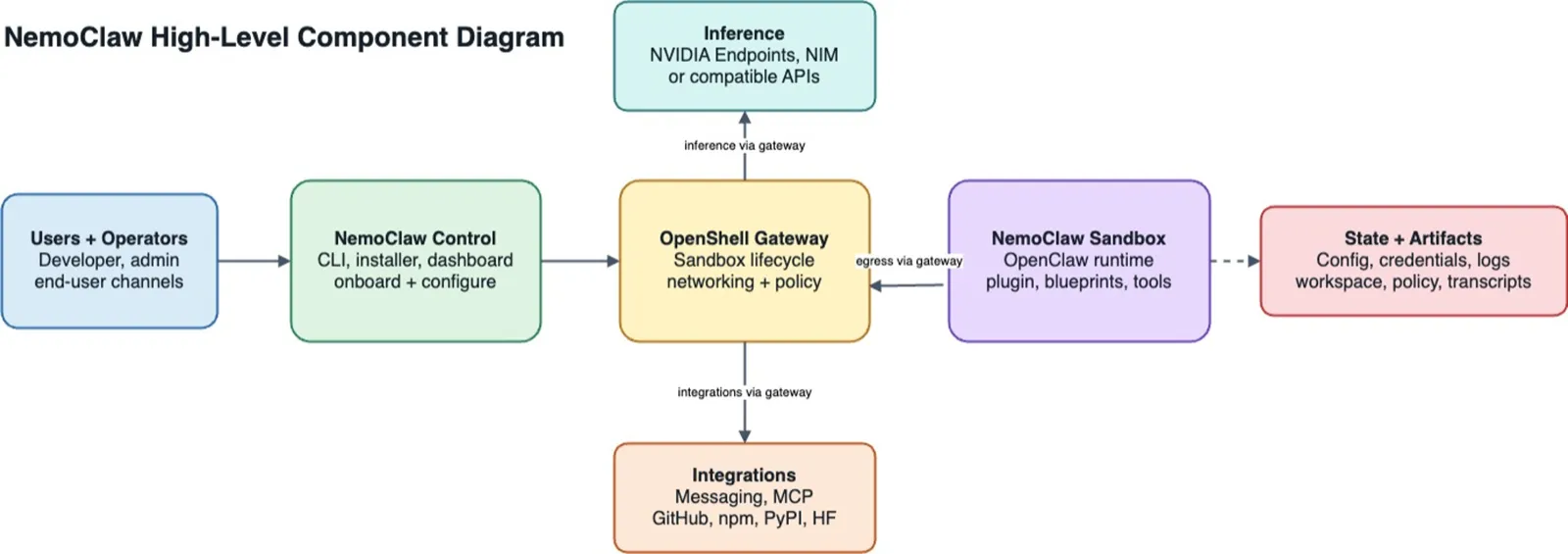
NemoClaw to właściwie nie zamiennik. To stos NVIDIA do uruchamiania OpenClaw, Hermes Agent lub LangChain Deep Agents Code w sandboksie OpenShell, z adresami sieciowymi zablokowanymi do czasu zatwierdzenia przez operatora i poświadczeniami trzymanymi poza sandboksem. Jeśli Hermes się podoba, a przeszkadza tylko to, że działa bez ograniczeń, ta opcja pozwala go zachować.
Ceną są wymagania i dojrzałość: minimum 8 GB RAM, obraz sandboksa o rozmiarze 2.4 GB, status alfa i telemetria do NVIDIA, chyba że ustawi się NEMOCLAW_DISABLE_TELEMETRY=1. Tekst czym jest NemoClaw wyjaśnia konfigurację.
Który wybrać
- Odejście, bo polecenia nie są w sandboksie: ZeroClaw, albo NanoClaw, jeśli już pracuje się w Claude Code.
- Odejście, bo nie ma aplikacji na telefon: OpenClaw, albo Rakazo, jeśli potrzebny jest też sandbox.
- Hermes odpowiada, ale potrzebna jest izolacja i jest odpowiedni sprzęt: NemoClaw.
Pełne zestawienie, nie tylko agentów podobnych do Hermesa, jest na naszej liście najlepszych agentów AI open source.
Alternatywy
Personal AI agent in one Rust binary, MIT or Apache-2.0, with local or cloud models, 30+ channels, approval gates and an OS sandbox on by default.
Meets every check: one Rust binary, approval gates and an OS sandbox on by default, no telemetry, local models.
Przejdź do ZeroClawMocne strony
- Safe defaults: the recommended profile asks before medium-risk actions, blocks high-risk ones, keeps files in the workspace and runs tools in an OS sandbox
- One small Rust binary with one config file, running on macOS, Linux, Windows and boards like a Raspberry Pi
- More than 30 channels, plus a web dashboard for chat, memory, config and cron
- Provider fallback chains, local models through Ollama, and cryptographic receipts for tool calls
- States plainly that it sends no telemetry and needs no cloud account or license server
Słabe strony
- Slack, iMessage, Signal and several other channels are not in the standard release; you build from source with extra features to get them
- `zeroclaw quickstart` only sets up the model provider; channels and risk profiles mean editing the TOML config file
- The Docker sandbox backend isn't picked automatically under the default native runtime
- Model costs are on you
Free, MIT-licensed personal AI agent that runs on your own computer and takes orders from WhatsApp, Telegram, iMessage, Slack and 20+ other chat apps.
The biggest ecosystem and every chat app, but sandboxing is off and telemetry is on by default.
Przejdź do OpenClawMocne strony
- Free and MIT licensed, with no paid tier
- Runs on your own hardware, and state, memory and credentials stay there
- Works in 29 chat channels, including WhatsApp, Telegram, iMessage, Slack, Discord and Microsoft Teams
- Model-agnostic: 64 model and media providers, plus local models
- Large ecosystem of skills and 142 official plugins, and very active development
Słabe strony
- Model costs are on you and can run high: testers and users have reported spending over $100 in a day with expensive models
- Sandboxing is off by default and the agent can run commands on the host unless you turn on approvals
- Setup and upkeep expect comfort with the command line; maintainers warn it is risky for non-technical users
- Broad access to email, messages and the system makes prompt injection and malicious third-party skills a real risk
Small, MIT-licensed OpenClaw alternative that runs each agent in its own Docker container and chats with you on WhatsApp, Telegram, Slack, Discord and more.
Every agent in its own container and a tiny codebase, but tied to Claude Code and sends setup diagnostics by default.
Przejdź do NanoClawMocne strony
- Every agent runs in its own Docker container and sees only the folders you mount, so shell access stays off your host
- Small codebase (one host process and a handful of files) that you customize by having Claude Code edit your fork
- Agents never hold raw API keys: outbound calls go through a credential gateway with per-agent policies and rate limits
- Many chat channels, including WhatsApp, Telegram, Slack, Discord, iMessage, Teams, Matrix and email, with one or several agents per channel
- Scheduled tasks with optional script gates that skip waking the agent when there's nothing to do
Słabe strony
- Built around Claude and Claude Code: customizing, debugging and adding channels all go through Claude Code
- Sends anonymous setup diagnostics unless you set NANOCLAW_NO_DIAGNOSTICS=1
- No config files by design, so every change means editing code in your own fork
- Needs Docker, and Windows only works through WSL2
Open-source, self-hostable platform for persistent AI bots that each get a job, a computer, memory and routines, using the model you choose.
Our own product. Meets every check: Apache-2.0, sandboxed bot computers, no telemetry by default, any model you connect.
Przejdź do RakazoMocne strony
- Open source (Apache-2.0) and fully self-hostable, including with local models
- Choice of model per bot, including existing Claude or ChatGPT subscriptions
- Bots keep working on schedules and triggers with their own cloud computer
- Approval controls over which actions a bot may take on its own
Słabe strony
- Still in beta, with frequent releases
- You supply and pay for the model on the hosted plans, unless you buy Rakazo credits
- Telegram, WhatsApp and iMessage/SMS are only available when self-hosted
- More setup than a single chat app
NVIDIA's Apache-2.0 stack for running OpenClaw, Hermes or Deep Agents inside locked-down OpenShell sandboxes with managed inference. Alpha.
Puts OpenClaw or Hermes in a locked-down sandbox, but it's alpha, heavy to run and sends telemetry by default.
Przejdź do NemoClawMocne strony
- Puts OpenClaw or Hermes Agent in a sandbox with network, filesystem and process controls instead of running it on your host
- Unapproved network destinations are blocked and surfaced for an operator to approve
- Inference, messaging and MCP credentials stay outside the sandbox
- Backed by NVIDIA, with local inference through Ollama, vLLM or NIM and a tested path on DGX Spark
Słabe strony
- Alpha: maintainers support it on a best-effort basis, and several channels are experimental
- A wrapper, not an agent: what the bot can do depends on the OpenClaw or Hermes version inside
- Heavier than running the agent alone: 8 GB RAM minimum, a 2.4 GB sandbox image and a container runtime
- The CLI sends operation telemetry to NVIDIA unless you set NEMOCLAW_DISABLE_TELEMETRY=1
Funkcje
| Hermes Agent | ZeroClaw | OpenClaw | NanoClaw | Rakazo | NemoClaw | |
|---|---|---|---|---|---|---|
| Wyszukiwanie w sieci | Tak | Tak | Tak | Tak | Tak | Tak |
| Generowanie obrazów | Tak | Tak | Tak | Nieznane | Tak | Nieznane |
| Tryb głosowy | Tak | Tak | Tak | Nieznane | Tak | Nieznane |
| Przesyłanie plików | Tak | Tak | Tak | Tak | Tak | Nieznane |
| Pamięć | Tak | Tak | Tak | Tak | Tak | Nieznane |
| Wykonuje zadania za ciebie | Tak | Tak | Tak | Tak | Tak | Tak |
| Integracje z aplikacjami | Tak | Tak | Tak | Tak | Tak | Tak |
| Działa samodzielnie | Tak | Tak | Tak | Tak | Tak | Tak |
| Pisze pierwszy | Tak | Tak | Tak | Tak | Tak | Nieznane |
| Wiele botów | Tak | Tak | Tak | Tak | Tak | Nieznane |
Źródła
Hermes Agent
- NousResearch/hermes-agent on GitHub (MIT, v0.23.0)
- Hermes Agent homepage and Nous Portal pricing
- Hermes Agent documentation
- Hermes Agent docs: Profiles, running multiple agents
- Hermes Agent docs: Bot Mode
- Hermes Agent docs: Voice mode
- Hermes Agent docs: Vision and image paste
- Hermes Agent docs: iMessage via BlueBubbles
- Nous Research on X: Meet Hermes Agent (February 25, 2026)
- Hermes Agent docs: Session heartbeats and cron watchdogs
- Hermes Agent docs: FAQ (Is my data sent anywhere?)
- Hermes Agent docs: Installation (desktop packages, install script, Docker)
- Hermes Agent docs: Platform support (no Linux desktop package; PyPI installs unsupported)
- Hermes Agent docs: Docker setup
- Hermes Agent docs: Configuration (terminal backend defaults to local)
- Hermes Agent docs: Security (approval modes, optional container isolation)
- Hermes Agent docs: Local models
- Hermes Agent example config (shared metrics off by default)
ZeroClaw
- zeroclaw-labs/zeroclaw on GitHub (MIT OR Apache-2.0, v0.8.7, README)
- ZeroClaw website
- ZeroClaw docs: Sandboxing
- ZeroClaw source: risk presets (Balanced, recommended, has the sandbox on)
- ZeroClaw docs: Channels overview (default and standard release bundles)
- ZeroClaw docs: You own it (no telemetry)
- ZeroClaw docs: Docker and containers
- ZeroClaw source: tools (image generation, screenshot, web)
OpenClaw
- OpenClaw homepage and Foundation section
- OpenClaw integrations: channels, providers and plugins
- openclaw/openclaw on GitHub (MIT, v2026.11.1)
- OpenClaw docs: Sandboxing (off by default)
- Wikipedia: OpenClaw
- Notebookcheck: OpenClaw can burn through hundreds of dollars per day
- OpenClaw docs: Memory overview
- OpenClaw docs: Automations
- OpenClaw docs: Chat channels
- OpenClaw docs: iMessage
- OpenClaw docs: Heartbeat, now a default Proactive check job
- OpenClaw docs: Multi-agent routing
- OpenClaw docs: Platforms (macOS, Windows, Linux, iOS and Android apps)
- OpenClaw docs: Tools (exec, browser, web search)
- OpenClaw docs: Audio and voice notes (inbound transcription)
- OpenClaw docs: Image and media support (inbound media)
- OpenClaw docs: Install (system requirements, installer script, npm, desktop apps, Docker)
- OpenClaw docs: One-click deploy on Railway
- OpenClaw docs: Usage telemetry and update checks (on by default, feature statistics opt-in)
- OpenClaw docs: Ollama provider (local models)
NanoClaw
Rakazo
- Rakazo homepage
- Rakazo pricing
- Rakazo privacy policy
- Rakazo on GitHub (README and license)
- Rakazo changelog
- Rakazo releases
- Rakazo docs: Image and video generation
- Rakazo docs: Memory
- Rakazo docs: Connect apps
- Rakazo docs: Routines
- Rakazo docs: Chat apps
- Rakazo docs: Messaging apps (self-hosting)
- Rakazo docs: Bots and chats (add another bot, bot templates)
- Rakazo docs: Groups (several bots in one chat)
- Rakazo docs: Mobile app (notifications)
- Rakazo privacy policy (updated Sep 14, 2026)
- Rakazo privacy policy source on GitHub
- Rakazo docs: Logs and monitoring (product analytics off by default)
- Rakazo docs: Desktop app (run locally in Docker, updates)
- Rakazo docs: Docker computers
- Rakazo docs: Self-hosted models (Ollama, LM Studio)
- Rakazo Railway template setup guide
NemoClaw
- NVIDIA/NemoClaw on GitHub (Apache-2.0, README: supported agents, alpha status)
- NemoClaw docs: Overview
- NemoClaw docs: Prerequisites and platforms
- NemoClaw docs: Choose an inference provider (Ollama, vLLM, NIM)
- NemoClaw docs index: messaging channels (WhatsApp, Teams, Google Chat, WeChat experimental)
- NemoClaw source: telemetry delivery and NEMOCLAW_DISABLE_TELEMETRY