おすすめのオープンソースAIエージェントとパーソナルAIアシスタント
オープンソースのAIエージェント7つを、ライセンス、コミュニティ、成熟度、実際のオープンさで比較。OpenClawやHermes Agentから、読み切れる小さなコードベースまで。
早わかり
| ボット | ライセンス | チャットアプリ | |||||
|---|---|---|---|---|---|---|---|
| OpenClaw | MIT | 39.4万 | あり | なし | Telegram, WhatsApp, iMessage, Discord, Slack | 無料 | |
| Hermes Agent | MIT | 26.2万 | あり | なし | Telegram, WhatsApp, iMessage, Discord, Slack | 月額$20から | |
| nanobot | MIT | 5万 | あり | なし | Telegram, WhatsApp, Discord, Slack | 無料 | |
| ZeroClaw | MIT OR Apache-2.0 | 3.3万 | あり | あり | Telegram, WhatsApp, Discord | 無料 | |
| Agent Zero | MIT | 2万 | あり | あり | Telegram, WhatsApp | 無料 | |
| Rakazo | Apache-2.0 | 7538 | あり | あり | Telegram, WhatsApp, iMessage, Slack | 月額$10から | |
| NanoClaw | MIT | 3.1万 | あり | あり | Telegram, WhatsApp, iMessage, Discord, Slack | 無料 |


チェックリスト
| OpenClaw | Hermes Agent | nanobot | ZeroClaw | Agent Zero | Rakazo | NanoClaw | |
|---|---|---|---|---|---|---|---|
| オープンソースライセンス | あり | あり | あり | あり | あり | あり | あり |
| ローカルモデルで動作 | あり | あり | あり | あり | あり | あり | あり |
| デフォルトでサンドボックス | なし | なし | なし | あり | あり | あり | あり |
| デフォルトでテレメトリーなし | なし | あり | あり | あり | なし | あり | なし |
| いつものチャットアプリで使える | あり | あり | あり | あり | あり | あり | あり |
| 不在中も作業する | あり | あり | あり | あり | あり | あり | あり |
このカテゴリーでの「オープンソース」は幅が広いものです。MITライセンスで、その上に何かを販売する企業がいないプロジェクトもあれば、有料のホスティングサービスと並んでコードを公開しているものもあり、オープンではあるもののほとんどメンテナンスされていないものもあります。このランキングはオープンソースの側面に焦点を当てています。つまり、ライセンスで何ができるのか、誰がコードを支えているのか、そして来年もプロジェクトが動き続けているかどうかです。
ランキングの基準
7つすべてがオープンソースでセルフホスト可能で、すべてローカルモデルで動作します。評価したのは次の点です。
- ライセンス。 多くの読者にとっては、パーミッシブなライセンス(MIT、Apache-2.0)をコピーレフトより上位としています。変更内容を公開せずに改変・再配布できるためです。
- 独立性。 何も販売していない非営利団体や研究室のほうが、オープンなコードが有料プランにつながっているベンダーよりも強い保証になります。ただし、どちらもそれ自体が問題というわけではありません。
- コミュニティと成熟度。 プロジェクトの規模、リリースのペース、そしてメンテナーがアルファ、ベータ、安定版のどれと位置づけているか。
- 改造のしやすさ。 何かを変更するために読まなければならないコードの量。
- 当サイトのチェックリスト(上の表):サンドボックス、テレメトリ、チャットアプリ、バックグラウンド処理も評価に含めていますが、セルフホスト型のランキングよりも重みは小さくしています。
AGPL-3.0で2026年3月以降リリースのないKhojと、2026年5月以降コミットのないOpenFangは除外しました。
1. OpenClaw
OpenClawがオープンソースAIエージェントの定番であるのには理由があります。MITライセンスで、有料プランやホスティングサービスはなく、非営利団体のOpenClaw Foundationが管理しています(ホームページ)。また、このリストの中で群を抜いて大きなコミュニティを持ち(表を参照)、142の公式プラグインと大規模なスキルのエコシステムがあります。
オープンソースだからといって、デフォルトで安全というわけではありません。サンドボックスはオフで、毎日のアップデート確認はオンになっています。実際のアカウントに接続する前にOpenClawは安全か?を、初めての方はOpenClawとはをお読みください。

2. Hermes Agent
Hermes AgentはMITライセンスで、ここでは2番目に大きなプロジェクトです。大手2つの中ではデータに関して最もオープンです。デフォルトでテレメトリはなく、モデルプロバイダーとしてNous Portalを選ばない限り、すべてが~/.hermesの下に保存されます。最大の特徴は、再利用可能なスキルを自ら作成し、改良していくことです。
独立性では2位です。Nous Researchは無料のコードと並行して、月額$20からのNous Portalサブスクリプションを販売しています。必須ではありませんが、ホスト型のWeb検索、画像、音声にはプランか自前のキーが必要です。詳しくはHermes Agentとはをご覧ください。

3. nanobot
nanobotは香港大学のData Intelligence Labが開発したもので、読まれることを前提に作られています。小さなPythonコア、MITライセンスで、販売するホスティングサービスはありません。Python SDKとOpenAI互換APIを備えているため、独自エージェントの土台としても使えます。同梱のWebUIはこのリストの中でも優れたものの一つです。
トレードオフとして、シェルコマンドはデフォルトではサンドボックス化されていません。

4. ZeroClaw
ZeroClawはMITまたはApache-2.0のデュアルライセンスで、単一のRustバイナリとして提供されます。チェックリストだけで見れば上位のすべてを上回ります。デフォルトでサンドボックス化され、テレメトリもありません。ここで4位なのは、コミュニティがOpenClawやHermes Agentよりもずっと小さく、コードを変更するつもりならRustはPythonやTypeScriptよりもハードルが高いためです。

5. Agent Zero
Agent ZeroはMITライセンスで、このランキングで最も古いプロジェクトです。2024年6月からリリースを続けており、2026年8月下旬から11月上旬にかけてv2.11からv2.15を出しています。コミュニティのPlugin Hubには200以上のプラグインがあります。
運営組織について知っておくべき点が2つあります。チェコの小さな企業であること、そしてプロジェクトがA0T暗号トークンの保有者向けにトークンステーキング型のモデルプロキシを運営していることです(詳細)。このプロキシは無視して、任意のプロバイダーやローカルモデルを使えます。
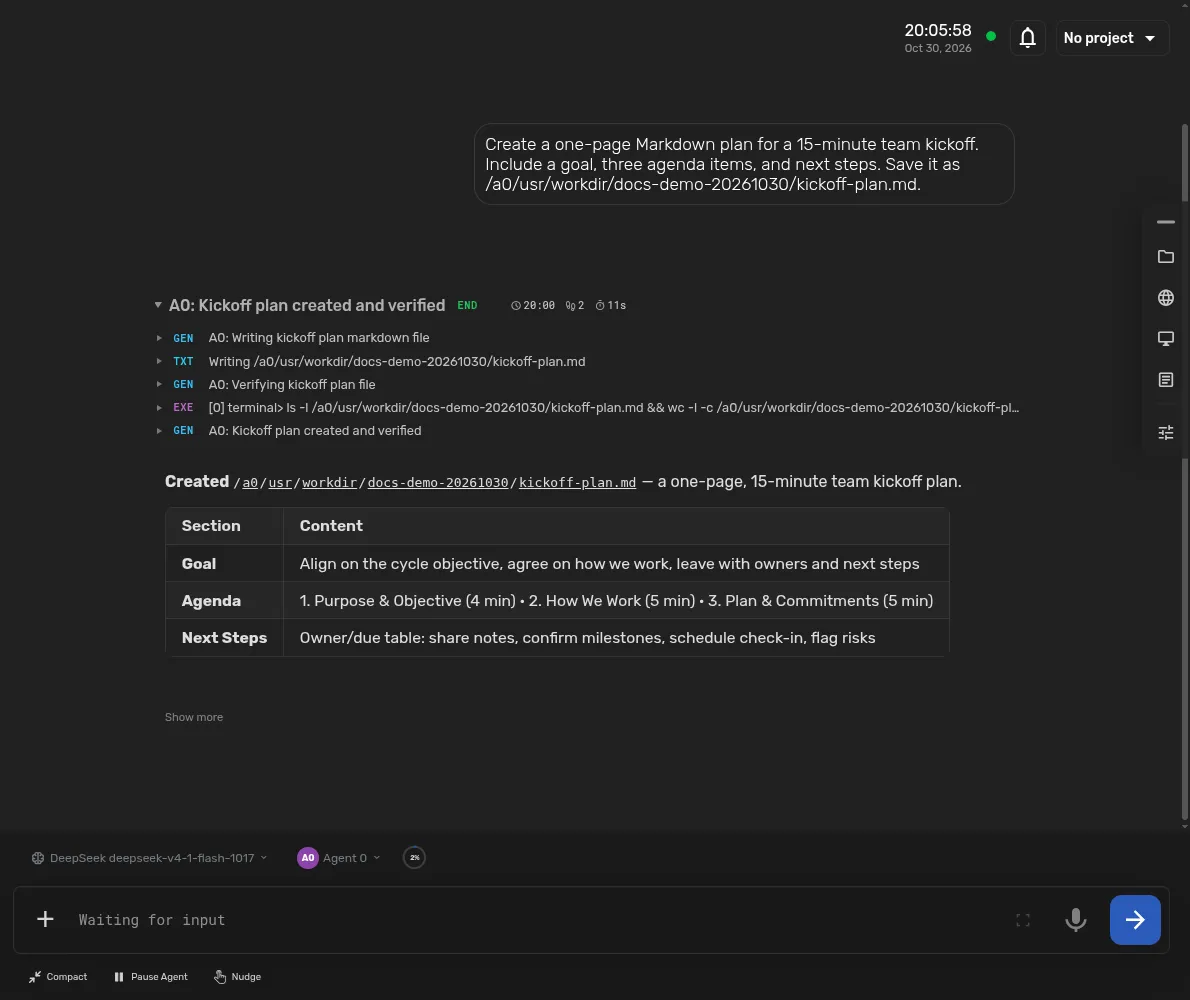
6. Rakazo
Rakazo(私たちが開発しています)はApache-2.0で、完全にセルフホスト可能です。オープンなコードはクラウドコンピューターを追加する有料のホスティングプランと並行して提供されているため、独立性ではHermes Agentと同じ立ち位置です。チェックリストのすべての項目を満たしていますが、より新しく、ベータ版と位置づけています。Rakazoのレビューをご覧ください。


7. NanoClaw
NanoClawはMITライセンスで、意図的に非常に小さなコードベースになっています。ホストプロセスが1つと、少数のファイルだけです。そのため、ここで最も読みやすいエージェントです。オープンさで最下位なのは、AnthropicのClaude Agent SDK上に構築され、あらゆるカスタマイズにClaude Codeを前提としているためです。エージェントごとに他のプロバイダーを追加できるとはいえ、実際には1つのプロプライエタリなツールに縛られています。

ライセンス一覧
| ライセンス | エージェント |
|---|---|
| MIT | OpenClaw, Hermes Agent, nanobot, Agent Zero, NanoClaw |
| MIT または Apache-2.0 | ZeroClaw |
| Apache-2.0 | Rakazo |
いずれも、商用利用を含め、コードの実行、改変、再配布が可能です。接続するモデルは別の問題です。オープンウェイトのローカルモデルにはそれぞれのライセンスがあり、ホスト型プロバイダーにはそれぞれの利用規約があります。
別の観点からは、おすすめのローカルAIエージェントとOpenClawの代替をご覧ください。
おすすめ
Free, MIT-licensed personal AI agent that runs on your own computer and takes orders from WhatsApp, Telegram, iMessage, Slack and 20+ other chat apps.
The biggest ecosystem and every chat app, but sandboxing is off and telemetry is on by default.
OpenClawを開く長所
- Free and MIT licensed, with no paid tier
- Runs on your own hardware, and state, memory and credentials stay there
- Works in 29 chat channels, including WhatsApp, Telegram, iMessage, Slack, Discord and Microsoft Teams
- Model-agnostic: 64 model and media providers, plus local models
- Large ecosystem of skills and 142 official plugins, and very active development
短所
- Model costs are on you and can run high: testers and users have reported spending over $100 in a day with expensive models
- Sandboxing is off by default and the agent can run commands on the host unless you turn on approvals
- Setup and upkeep expect comfort with the command line; maintainers warn it is risky for non-technical users
- Broad access to email, messages and the system makes prompt injection and malicious third-party skills a real risk
Free, MIT-licensed AI agent from Nous Research that runs on your own machine or server, learns reusable skills, and chats with you on Telegram, Slack and more.
MIT licensed, no telemetry and lives in your chat apps, but commands aren't sandboxed by default.
Hermes Agentを開く長所
- Free and MIT licensed, and runs on hardware you control
- Writes and refines its own skills from experience, on top of persistent memory and cross-session search
- One gateway for 20+ chat platforms, including Telegram, Discord, Slack, WhatsApp, Signal and email
- Run several separate agents as profiles, each with its own model, memory and skills, and let them talk in group chats
- Model-agnostic, with a one-command import from OpenClaw
短所
- Setup expects comfort with the command line and with running your own server
- Model costs are on you unless you use free models, and hosted web search, images and speech need a paid Nous Portal plan or your own keys
- iMessage needs a separate BlueBubbles server on a Mac
- No native mobile app; Android support is a command-line install through Termux
Free, MIT-licensed personal AI agent in Python with a browser UI and terminal app, scheduled tasks, memory, and chat on Telegram, Discord, Slack and more.
Small, readable Python with a good web UI and no telemetry, but shell commands aren't sandboxed by default.
nanobotを開く長所
- Free and MIT licensed, with a small Python core that is meant to be read and modified
- Polished bundled WebUI with projects, file diffs, an MCP app catalog and an automations calendar, plus a terminal UI
- Many chat channels, including Telegram, Discord, Slack, WhatsApp, WeChat, Feishu, Teams, Matrix and email
- Scheduled automations, long-running goals and a heartbeat that reports only useful results to your last chat
- Works with local models through Ollama, vLLM or LM Studio
短所
- Shell commands are not sandboxed by default; the bubblewrap or macOS Seatbelt sandbox must be turned on, and Windows has none
- Model costs are on you, and voice messages need a separate transcription provider such as Groq or OpenAI
- No native mobile or desktop app; on a phone you use the WebUI in a browser or a chat app
- Missed scheduled runs are not replayed and interrupted subagent tasks are not relaunched after a restart
Personal AI agent in one Rust binary, MIT or Apache-2.0, with local or cloud models, 30+ channels, approval gates and an OS sandbox on by default.
Meets every check: one Rust binary, approval gates and an OS sandbox on by default, no telemetry, local models.
ZeroClawを開く長所
- Safe defaults: the recommended profile asks before medium-risk actions, blocks high-risk ones, keeps files in the workspace and runs tools in an OS sandbox
- One small Rust binary with one config file, running on macOS, Linux, Windows and boards like a Raspberry Pi
- More than 30 channels, plus a web dashboard for chat, memory, config and cron
- Provider fallback chains, local models through Ollama, and cryptographic receipts for tool calls
- States plainly that it sends no telemetry and needs no cloud account or license server
短所
- Slack, iMessage, Signal and several other channels are not in the standard release; you build from source with extra features to get them
- `zeroclaw quickstart` only sets up the model provider; channels and risk profiles mean editing the TOML config file
- The Docker sandbox backend isn't picked automatically under the default native runtime
- Model costs are on you
Free, MIT-licensed AI agent that runs in its own Docker Linux workspace with a terminal, browser and desktop apps, and chats on Telegram and WhatsApp.
Runs in its own Docker container with local models, but sends telemetry by default.
Agent Zeroを開く長所
- Free and MIT licensed, with frequent releases (v2.11 to v2.15 between late August and early November 2026)
- The agent works in its own Linux workspace with a terminal, browser, desktop apps and LibreOffice, isolated from your computer unless you grant host access
- Web search runs through a local SearXNG instance, and speech-to-text and text-to-speech can run locally
- Projects keep memory, files, secrets, instructions and model choices separate per job, with workspace snapshots you can roll back
- Built-in Telegram, WhatsApp and email channels, a scheduler, MCP and a community Plugin Hub with 200+ plugins
短所
- Needs Docker, and the container image is a full Linux desktop environment rather than a small service
- No built-in image generation; the docs show teaching it an image API yourself
- By default it checks for updates with Agent Zero's server, sending your version and a hashed instance ID
- Code runs in the same container as Agent Zero itself today; per-task sandboxes are only a v3 prototype
- WhatsApp works by linking a phone account through a Baileys bridge, which needs Node.js, rather than the official WhatsApp Business API
Open-source, self-hostable platform for persistent AI bots that each get a job, a computer, memory and routines, using the model you choose.
Our own product. Meets every check: Apache-2.0, sandboxed bot computers, no telemetry by default, any model you connect.
Rakazoを開く長所
- Open source (Apache-2.0) and fully self-hostable, including with local models
- Choice of model per bot, including existing Claude or ChatGPT subscriptions
- Bots keep working on schedules and triggers with their own cloud computer
- Approval controls over which actions a bot may take on its own
短所
- Still in beta, with frequent releases
- You supply and pay for the model on the hosted plans, unless you buy Rakazo credits
- Telegram, WhatsApp and iMessage/SMS are only available when self-hosted
- More setup than a single chat app
Small, MIT-licensed OpenClaw alternative that runs each agent in its own Docker container and chats with you on WhatsApp, Telegram, Slack, Discord and more.
Every agent in its own container and a tiny codebase, but tied to Claude Code and sends setup diagnostics by default.
NanoClawを開く長所
- Every agent runs in its own Docker container and sees only the folders you mount, so shell access stays off your host
- Small codebase (one host process and a handful of files) that you customize by having Claude Code edit your fork
- Agents never hold raw API keys: outbound calls go through a credential gateway with per-agent policies and rate limits
- Many chat channels, including WhatsApp, Telegram, Slack, Discord, iMessage, Teams, Matrix and email, with one or several agents per channel
- Scheduled tasks with optional script gates that skip waking the agent when there's nothing to do
短所
- Built around Claude and Claude Code: customizing, debugging and adding channels all go through Claude Code
- Sends anonymous setup diagnostics unless you set NANOCLAW_NO_DIAGNOSTICS=1
- No config files by design, so every change means editing code in your own fork
- Needs Docker, and Windows only works through WSL2
機能
| OpenClaw | Hermes Agent | nanobot | ZeroClaw | Agent Zero | Rakazo | NanoClaw | |
|---|---|---|---|---|---|---|---|
| ウェブ検索 | あり | あり | あり | あり | あり | あり | あり |
| 画像生成 | あり | あり | あり | あり | なし | あり | 不明 |
| 音声モード | あり | あり | あり | あり | あり | あり | 不明 |
| ファイルのアップロード | あり | あり | あり | あり | あり | あり | あり |
| メモリー | あり | あり | あり | あり | あり | あり | あり |
| 代わりに操作を実行 | あり | あり | あり | あり | あり | あり | あり |
| アプリ連携 | あり | あり | あり | あり | あり | あり | あり |
| 自律的に動作 | あり | あり | あり | あり | あり | あり | あり |
| 自分から連絡してくる | あり | あり | あり | あり | あり | あり | あり |
| 複数のボット | あり | あり | あり | あり | あり | あり | あり |
出典
OpenClaw
- OpenClaw homepage and Foundation section
- OpenClaw integrations: channels, providers and plugins
- openclaw/openclaw on GitHub (MIT, v2026.11.1)
- OpenClaw docs: Sandboxing (off by default)
- Wikipedia: OpenClaw
- Notebookcheck: OpenClaw can burn through hundreds of dollars per day
- OpenClaw docs: Memory overview
- OpenClaw docs: Automations
- OpenClaw docs: Chat channels
- OpenClaw docs: iMessage
- OpenClaw docs: Heartbeat, now a default Proactive check job
- OpenClaw docs: Multi-agent routing
- OpenClaw docs: Platforms (macOS, Windows, Linux, iOS and Android apps)
- OpenClaw docs: Tools (exec, browser, web search)
- OpenClaw docs: Audio and voice notes (inbound transcription)
- OpenClaw docs: Image and media support (inbound media)
- OpenClaw docs: Install (system requirements, installer script, npm, desktop apps, Docker)
- OpenClaw docs: One-click deploy on Railway
- OpenClaw docs: Usage telemetry and update checks (on by default, feature statistics opt-in)
- OpenClaw docs: Ollama provider (local models)
Hermes Agent
- NousResearch/hermes-agent on GitHub (MIT, v0.23.0)
- Hermes Agent homepage and Nous Portal pricing
- Hermes Agent documentation
- Hermes Agent docs: Profiles, running multiple agents
- Hermes Agent docs: Bot Mode
- Hermes Agent docs: Voice mode
- Hermes Agent docs: Vision and image paste
- Hermes Agent docs: iMessage via BlueBubbles
- Nous Research on X: Meet Hermes Agent (February 25, 2026)
- Hermes Agent docs: Session heartbeats and cron watchdogs
- Hermes Agent docs: FAQ (Is my data sent anywhere?)
- Hermes Agent docs: Installation (desktop packages, install script, Docker)
- Hermes Agent docs: Platform support (no Linux desktop package; PyPI installs unsupported)
- Hermes Agent docs: Docker setup
- Hermes Agent docs: Configuration (terminal backend defaults to local)
- Hermes Agent docs: Security (approval modes, optional container isolation)
- Hermes Agent docs: Local models
- Hermes Agent example config (shared metrics off by default)
nanobot
- HKUDS/nanobot on GitHub (MIT, v0.4.1, README)
- nanobot documentation
- nanobot release archive (officially launched February 2, 2026)
- nanobot docs: Chat apps
- nanobot docs: Providers and models (Ollama, vLLM, LM Studio)
- nanobot docs: Configuration (security, exec sandbox off by default, transcription, Langfuse)
- nanobot docs: Automations and heartbeat
- nanobot docs: Concepts (heartbeat delivery, subagent recovery)
- nanobot docs: Memory and Dream
- nanobot docs: Multiple instances
- nanobot docs: Deployment (Docker, services, Render)
- nanobot source: skills installer runs with DISABLE_TELEMETRY
ZeroClaw
- zeroclaw-labs/zeroclaw on GitHub (MIT OR Apache-2.0, v0.8.7, README)
- ZeroClaw website
- ZeroClaw docs: Sandboxing
- ZeroClaw source: risk presets (Balanced, recommended, has the sandbox on)
- ZeroClaw docs: Channels overview (default and standard release bundles)
- ZeroClaw docs: You own it (no telemetry)
- ZeroClaw docs: Docker and containers
- ZeroClaw source: tools (image generation, screenshot, web)
Agent Zero
- agent0ai/agent-zero on GitHub (MIT, README, safety model)
- Agent Zero releases (v0.2 in June 2024 to v2.15 on November 1, 2026)
- Agent Zero homepage
- Agent Zero docs: Installation (Launcher, A0 Install, Docker, local models)
- Agent Zero docs: VPS deployment (hardware requirements)
- Agent Zero model provider list
- Agent Zero update check code (version and hashed ID sent to api.agent-zero.ai)
- Agent Zero built-in Telegram integration plugin
- Agent Zero built-in WhatsApp integration plugin
- Agent Zero built-in plugins (scheduler, notify user, email, SearXNG search, Whisper STT, Kokoro TTS)
- Agent Zero docs: Memory guide
- Agent Zero docs: Agent Profiles
- Agent Zero docs: API integration (adding image generation yourself)
- Agent Zero v3: A Sneak Peek Inside the Sandbox (August 17, 2026)
- Agent Zero LLM API (Venice.ai proxy for A0T token stakers)
Rakazo
- Rakazo homepage
- Rakazo pricing
- Rakazo privacy policy
- Rakazo on GitHub (README and license)
- Rakazo changelog
- Rakazo releases
- Rakazo docs: Image and video generation
- Rakazo docs: Memory
- Rakazo docs: Connect apps
- Rakazo docs: Routines
- Rakazo docs: Chat apps
- Rakazo docs: Messaging apps (self-hosting)
- Rakazo docs: Bots and chats (add another bot, bot templates)
- Rakazo docs: Groups (several bots in one chat)
- Rakazo docs: Mobile app (notifications)
- Rakazo privacy policy (updated Sep 14, 2026)
- Rakazo privacy policy source on GitHub
- Rakazo docs: Logs and monitoring (product analytics off by default)
- Rakazo docs: Desktop app (run locally in Docker, updates)
- Rakazo docs: Docker computers
- Rakazo docs: Self-hosted models (Ollama, LM Studio)
- Rakazo Railway template setup guide