Los mejores agentes de IA de código abierto y asistentes personales de IA
Siete agentes de IA de código abierto comparados por licencia, comunidad, madurez y apertura real, desde OpenClaw y Hermes Agent hasta código que se lee fácil.
De un vistazo
| Bot | Licencia | Apps de chat | |||||
|---|---|---|---|---|---|---|---|
| OpenClaw | MIT | 394,2 mil | Sí | No | Telegram, WhatsApp, iMessage, Discord, Slack | Gratis | |
| Hermes Agent | MIT | 261,7 mil | Sí | No | Telegram, WhatsApp, iMessage, Discord, Slack | Desde 20 US$/mes | |
| nanobot | MIT | 49,9 mil | Sí | No | Telegram, WhatsApp, Discord, Slack | Gratis | |
| ZeroClaw | MIT OR Apache-2.0 | 33,3 mil | Sí | Sí | Telegram, WhatsApp, Discord | Gratis | |
| Agent Zero | MIT | 19,8 mil | Sí | Sí | Telegram, WhatsApp | Gratis | |
| Rakazo | Apache-2.0 | 7,5 mil | Sí | Sí | Telegram, WhatsApp, iMessage, Slack | Desde 10 US$/mes | |
| NanoClaw | MIT | 31,1 mil | Sí | Sí | Telegram, WhatsApp, iMessage, Discord, Slack | Gratis |


Lista de control
| OpenClaw | Hermes Agent | nanobot | ZeroClaw | Agent Zero | Rakazo | NanoClaw | |
|---|---|---|---|---|---|---|---|
| Licencia de código abierto | Sí | Sí | Sí | Sí | Sí | Sí | Sí |
| Funciona con modelos locales | Sí | Sí | Sí | Sí | Sí | Sí | Sí |
| Sandbox por defecto | No | No | No | Sí | Sí | Sí | Sí |
| Sin telemetría por defecto | No | Sí | Sí | Sí | No | Sí | No |
| Vive en tus apps de chat | Sí | Sí | Sí | Sí | Sí | Sí | Sí |
| Trabaja mientras no estás | Sí | Sí | Sí | Sí | Sí | Sí | Sí |
“Código abierto” abarca muchas cosas en esta categoría. Algunos proyectos tienen licencia MIT y ninguna empresa vende nada encima; otros son código abierto junto a un servicio alojado de pago; unos pocos son abiertos pero apenas se mantienen. Este ranking trata de la parte de código abierto: qué le permite hacer la licencia, quién respalda el código y si el proyecto seguirá avanzando el año que viene.
Cómo los clasificamos
Los siete son de código abierto y autoalojables, y todos funcionan con modelos locales. Valoramos:
- Licencia. Las permisivas (MIT, Apache-2.0) quedan por encima del copyleft para la mayoría de los lectores, porque puede modificar y redistribuir sin compartir sus cambios.
- Independencia. Una organización sin ánimo de lucro o un laboratorio de investigación sin nada que vender es una garantía más sólida que un proveedor cuyo código abierto alimenta un plan de pago, aunque ninguna de las dos cosas es un problema por sí sola.
- Comunidad y madurez. Tamaño del proyecto, ritmo de lanzamientos y si los mantenedores lo consideran alfa, beta o estable.
- Facilidad para modificarlo. Cuánto código tiene que leer para cambiar algo.
- La lista de comprobación del sitio (tabla de arriba): el sandboxing, la telemetría, las apps de chat y el trabajo en segundo plano siguen contando, solo que con menos peso que en nuestro ranking de agentes autoalojados.
Dejamos fuera Khoj, que es AGPL-3.0 y no ha publicado ninguna versión desde marzo de 2026, y OpenFang, que no tiene commits desde mayo de 2026.
1. OpenClaw
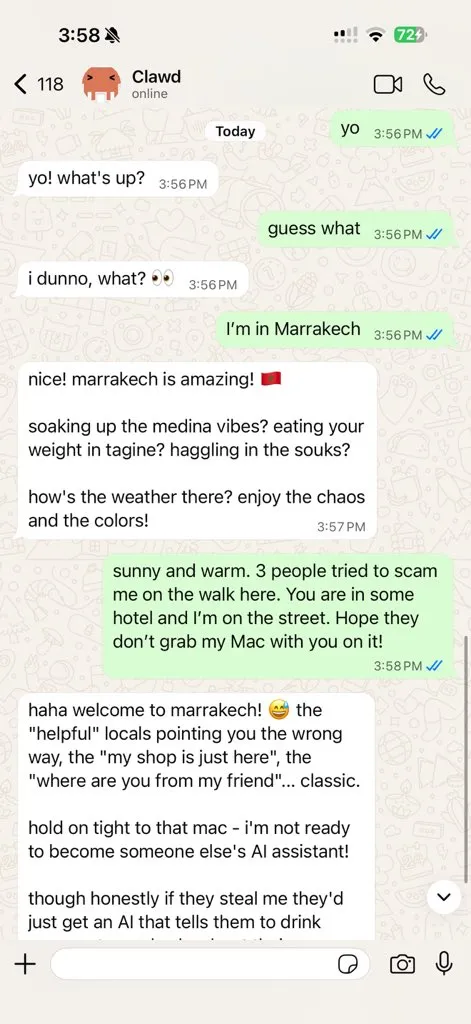
OpenClaw es el agente de IA de código abierto por defecto por una razón. Tiene licencia MIT, no tiene plan de pago ni servicio alojado y lo custodia la organización sin ánimo de lucro OpenClaw Foundation (página principal). También es, con mucha diferencia, la comunidad más grande de esta lista (vea la tabla), con 142 plugins oficiales y un gran ecosistema de skills.
Código abierto no significa seguro por defecto: el sandboxing está desactivado y una comprobación diaria de actualizaciones está activada. Lea ¿Es seguro OpenClaw? antes de conectarlo a cuentas reales, y qué es OpenClaw si es nuevo en esto.
2. Hermes Agent
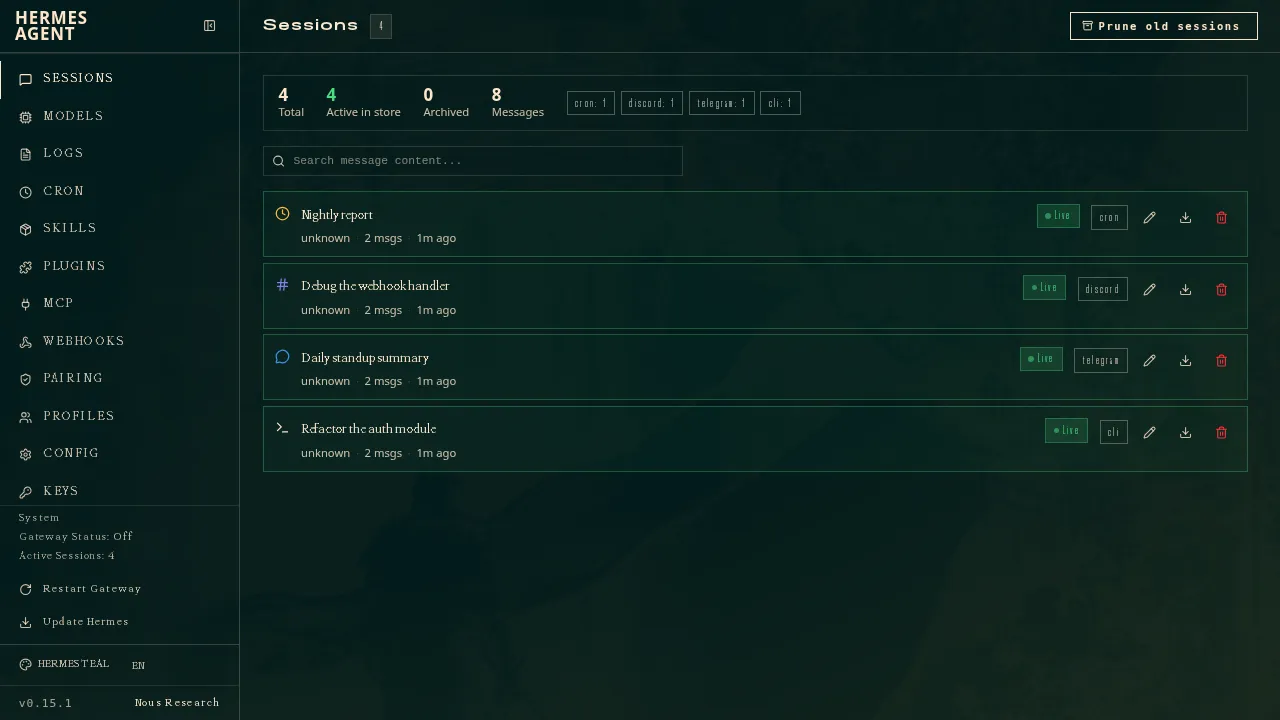
Hermes Agent tiene licencia MIT y es el segundo proyecto más grande de la lista. Es el más abierto en cuanto a datos de los dos grandes: sin telemetría por defecto, y todo se queda en ~/.hermes salvo que elija Nous Portal como proveedor de modelos. Su función estrella es que escribe y perfecciona sus propias skills reutilizables.
Queda segundo en independencia: Nous Research vende suscripciones a Nous Portal desde 20 $ al mes junto al código gratuito. Nunca necesita una, pero la búsqueda web, las imágenes y la voz alojadas requieren un plan o sus propias claves. Más en qué es Hermes Agent.
3. nanobot
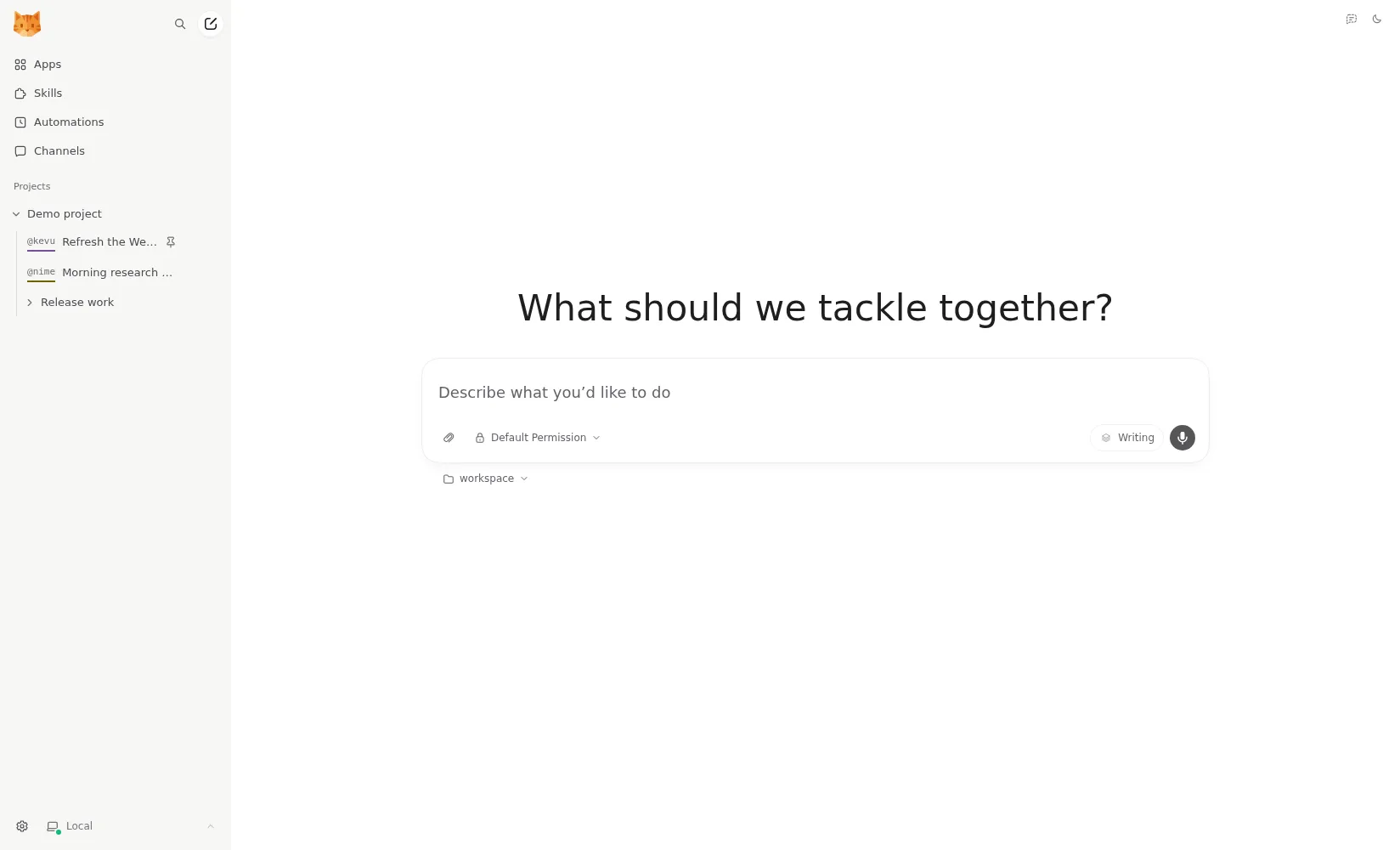
nanobot viene del Data Intelligence Lab de la Universidad de Hong Kong y está hecho para leerse: un núcleo pequeño en Python, con licencia MIT y sin servicio alojado que vender. Tiene un SDK de Python y una API compatible con OpenAI, así que también sirve como base para su propio agente. La WebUI incluida es de las mejores de la lista.
La contrapartida es que los comandos de shell no se ejecutan en sandbox por defecto.
4. ZeroClaw
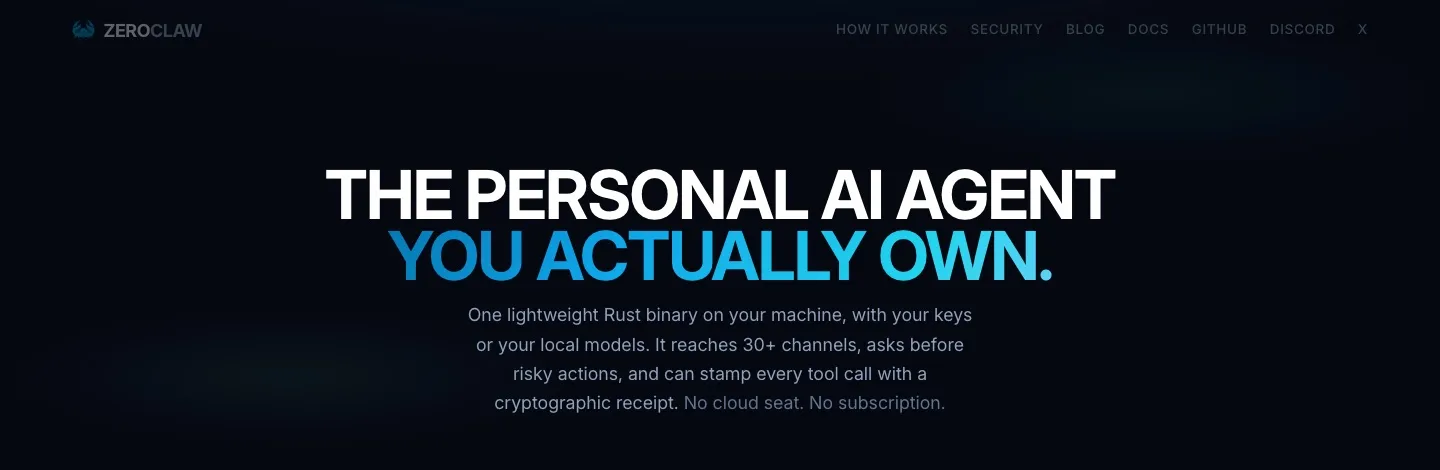
ZeroClaw tiene doble licencia MIT o Apache-2.0 y se distribuye como un único binario de Rust. Solo en términos de la lista de comprobación supera a todos los anteriores: sandbox por defecto y sin telemetría. Queda cuarto aquí porque su comunidad es mucho más pequeña que la de OpenClaw y Hermes Agent, y Rust es un listón más alto que Python o TypeScript si piensa modificar el código.
5. Agent Zero
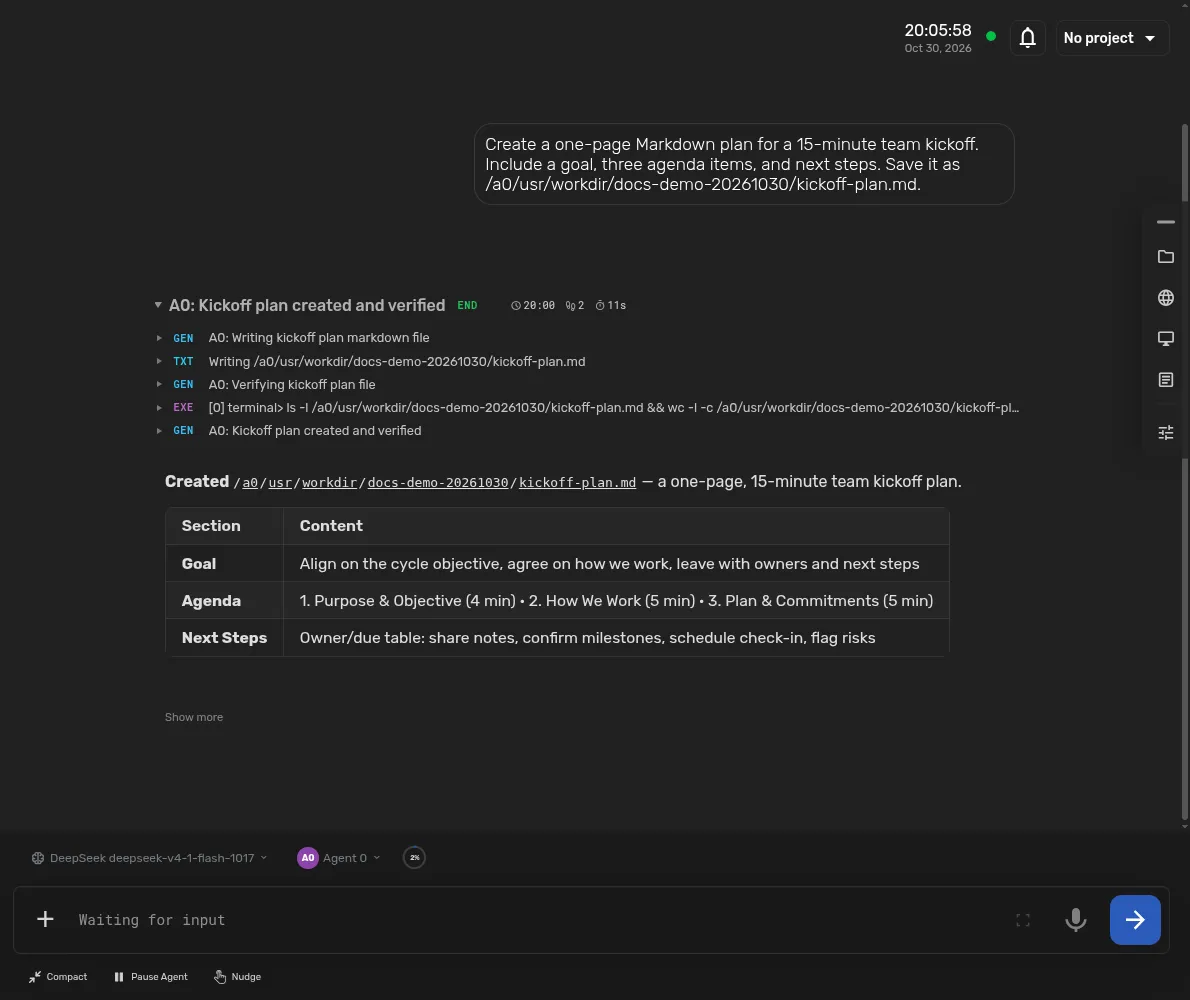
Agent Zero tiene licencia MIT y es el proyecto más antiguo de este ranking, con versiones desde junio de 2024 y de la v2.11 a la v2.15 publicadas entre finales de agosto y principios de noviembre de 2026. Su Plugin Hub comunitario tiene más de 200 plugins.
Dos cosas que conviene saber sobre la organización: es una pequeña empresa checa, y el proyecto opera un proxy de modelos con staking de tokens para los poseedores de su criptotoken A0T (detalles). Puede ignorar ese proxy y usar cualquier proveedor o modelo local.
6. Rakazo
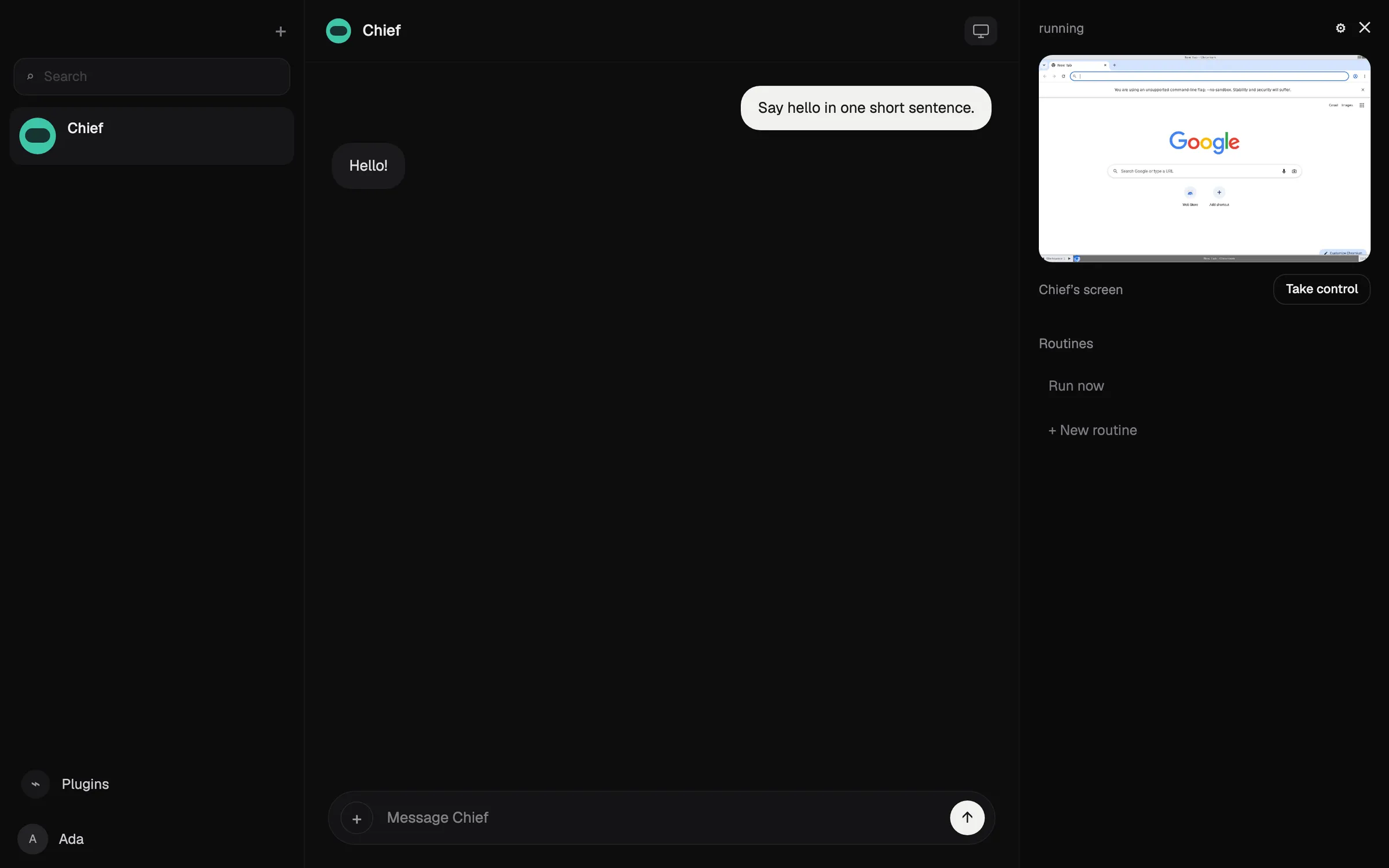
Rakazo, que desarrollamos nosotros, es Apache-2.0 y totalmente autoalojable. El código abierto convive con planes alojados de pago que añaden un ordenador en la nube, así que en independencia está en la misma posición que Hermes Agent. Cumple todos los puntos de la lista de comprobación, pero es más joven y se define como beta. Vea el análisis de Rakazo.

7. NanoClaw
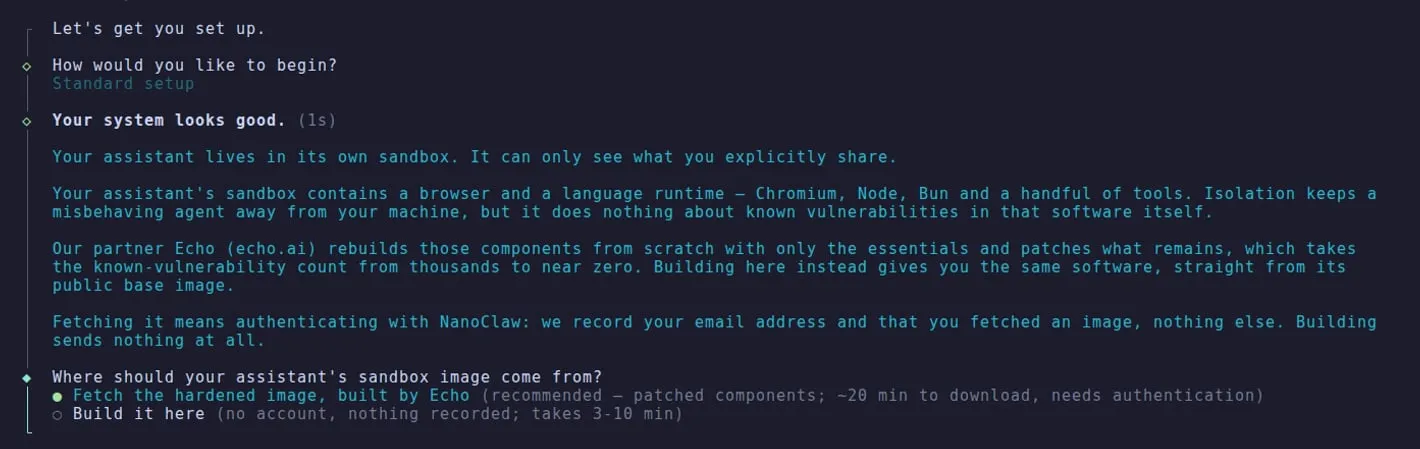
NanoClaw tiene licencia MIT y un código deliberadamente diminuto: un proceso anfitrión y un puñado de archivos. Eso lo convierte en el agente más legible de la lista. Queda último en apertura porque está construido sobre el Claude Agent SDK de Anthropic y espera Claude Code para cada personalización, así que en la práctica está atado a una herramienta propietaria, aunque se pueden añadir otros proveedores por agente.
Licencias de un vistazo
| Licencia | Agentes |
|---|---|
| MIT | OpenClaw, Hermes Agent, nanobot, Agent Zero, NanoClaw |
| MIT o Apache-2.0 | ZeroClaw |
| Apache-2.0 | Rakazo |
Todas le permiten ejecutar, modificar y redistribuir el código, también con fines comerciales. El modelo que conecte es otro asunto: los modelos locales de pesos abiertos tienen sus propias licencias, y los proveedores alojados, sus propias condiciones.
Para otros enfoques, vea los mejores agentes de IA locales y las alternativas a OpenClaw.
Los mejores
Free, MIT-licensed personal AI agent that runs on your own computer and takes orders from WhatsApp, Telegram, iMessage, Slack and 20+ other chat apps.
The biggest ecosystem and every chat app, but sandboxing is off and telemetry is on by default.
Ir a OpenClawPuntos fuertes
- Free and MIT licensed, with no paid tier
- Runs on your own hardware, and state, memory and credentials stay there
- Works in 29 chat channels, including WhatsApp, Telegram, iMessage, Slack, Discord and Microsoft Teams
- Model-agnostic: 64 model and media providers, plus local models
- Large ecosystem of skills and 142 official plugins, and very active development
Puntos débiles
- Model costs are on you and can run high: testers and users have reported spending over $100 in a day with expensive models
- Sandboxing is off by default and the agent can run commands on the host unless you turn on approvals
- Setup and upkeep expect comfort with the command line; maintainers warn it is risky for non-technical users
- Broad access to email, messages and the system makes prompt injection and malicious third-party skills a real risk
Free, MIT-licensed AI agent from Nous Research that runs on your own machine or server, learns reusable skills, and chats with you on Telegram, Slack and more.
MIT licensed, no telemetry and lives in your chat apps, but commands aren't sandboxed by default.
Ir a Hermes AgentPuntos fuertes
- Free and MIT licensed, and runs on hardware you control
- Writes and refines its own skills from experience, on top of persistent memory and cross-session search
- One gateway for 20+ chat platforms, including Telegram, Discord, Slack, WhatsApp, Signal and email
- Run several separate agents as profiles, each with its own model, memory and skills, and let them talk in group chats
- Model-agnostic, with a one-command import from OpenClaw
Puntos débiles
- Setup expects comfort with the command line and with running your own server
- Model costs are on you unless you use free models, and hosted web search, images and speech need a paid Nous Portal plan or your own keys
- iMessage needs a separate BlueBubbles server on a Mac
- No native mobile app; Android support is a command-line install through Termux
Free, MIT-licensed personal AI agent in Python with a browser UI and terminal app, scheduled tasks, memory, and chat on Telegram, Discord, Slack and more.
Small, readable Python with a good web UI and no telemetry, but shell commands aren't sandboxed by default.
Ir a nanobotPuntos fuertes
- Free and MIT licensed, with a small Python core that is meant to be read and modified
- Polished bundled WebUI with projects, file diffs, an MCP app catalog and an automations calendar, plus a terminal UI
- Many chat channels, including Telegram, Discord, Slack, WhatsApp, WeChat, Feishu, Teams, Matrix and email
- Scheduled automations, long-running goals and a heartbeat that reports only useful results to your last chat
- Works with local models through Ollama, vLLM or LM Studio
Puntos débiles
- Shell commands are not sandboxed by default; the bubblewrap or macOS Seatbelt sandbox must be turned on, and Windows has none
- Model costs are on you, and voice messages need a separate transcription provider such as Groq or OpenAI
- No native mobile or desktop app; on a phone you use the WebUI in a browser or a chat app
- Missed scheduled runs are not replayed and interrupted subagent tasks are not relaunched after a restart
Personal AI agent in one Rust binary, MIT or Apache-2.0, with local or cloud models, 30+ channels, approval gates and an OS sandbox on by default.
Meets every check: one Rust binary, approval gates and an OS sandbox on by default, no telemetry, local models.
Ir a ZeroClawPuntos fuertes
- Safe defaults: the recommended profile asks before medium-risk actions, blocks high-risk ones, keeps files in the workspace and runs tools in an OS sandbox
- One small Rust binary with one config file, running on macOS, Linux, Windows and boards like a Raspberry Pi
- More than 30 channels, plus a web dashboard for chat, memory, config and cron
- Provider fallback chains, local models through Ollama, and cryptographic receipts for tool calls
- States plainly that it sends no telemetry and needs no cloud account or license server
Puntos débiles
- Slack, iMessage, Signal and several other channels are not in the standard release; you build from source with extra features to get them
- `zeroclaw quickstart` only sets up the model provider; channels and risk profiles mean editing the TOML config file
- The Docker sandbox backend isn't picked automatically under the default native runtime
- Model costs are on you
Free, MIT-licensed AI agent that runs in its own Docker Linux workspace with a terminal, browser and desktop apps, and chats on Telegram and WhatsApp.
Runs in its own Docker container with local models, but sends telemetry by default.
Ir a Agent ZeroPuntos fuertes
- Free and MIT licensed, with frequent releases (v2.11 to v2.15 between late August and early November 2026)
- The agent works in its own Linux workspace with a terminal, browser, desktop apps and LibreOffice, isolated from your computer unless you grant host access
- Web search runs through a local SearXNG instance, and speech-to-text and text-to-speech can run locally
- Projects keep memory, files, secrets, instructions and model choices separate per job, with workspace snapshots you can roll back
- Built-in Telegram, WhatsApp and email channels, a scheduler, MCP and a community Plugin Hub with 200+ plugins
Puntos débiles
- Needs Docker, and the container image is a full Linux desktop environment rather than a small service
- No built-in image generation; the docs show teaching it an image API yourself
- By default it checks for updates with Agent Zero's server, sending your version and a hashed instance ID
- Code runs in the same container as Agent Zero itself today; per-task sandboxes are only a v3 prototype
- WhatsApp works by linking a phone account through a Baileys bridge, which needs Node.js, rather than the official WhatsApp Business API
Open-source, self-hostable platform for persistent AI bots that each get a job, a computer, memory and routines, using the model you choose.
Our own product. Meets every check: Apache-2.0, sandboxed bot computers, no telemetry by default, any model you connect.
Ir a RakazoPuntos fuertes
- Open source (Apache-2.0) and fully self-hostable, including with local models
- Choice of model per bot, including existing Claude or ChatGPT subscriptions
- Bots keep working on schedules and triggers with their own cloud computer
- Approval controls over which actions a bot may take on its own
Puntos débiles
- Still in beta, with frequent releases
- You supply and pay for the model on the hosted plans, unless you buy Rakazo credits
- Telegram, WhatsApp and iMessage/SMS are only available when self-hosted
- More setup than a single chat app
Small, MIT-licensed OpenClaw alternative that runs each agent in its own Docker container and chats with you on WhatsApp, Telegram, Slack, Discord and more.
Every agent in its own container and a tiny codebase, but tied to Claude Code and sends setup diagnostics by default.
Ir a NanoClawPuntos fuertes
- Every agent runs in its own Docker container and sees only the folders you mount, so shell access stays off your host
- Small codebase (one host process and a handful of files) that you customize by having Claude Code edit your fork
- Agents never hold raw API keys: outbound calls go through a credential gateway with per-agent policies and rate limits
- Many chat channels, including WhatsApp, Telegram, Slack, Discord, iMessage, Teams, Matrix and email, with one or several agents per channel
- Scheduled tasks with optional script gates that skip waking the agent when there's nothing to do
Puntos débiles
- Built around Claude and Claude Code: customizing, debugging and adding channels all go through Claude Code
- Sends anonymous setup diagnostics unless you set NANOCLAW_NO_DIAGNOSTICS=1
- No config files by design, so every change means editing code in your own fork
- Needs Docker, and Windows only works through WSL2
Funciones
| OpenClaw | Hermes Agent | nanobot | ZeroClaw | Agent Zero | Rakazo | NanoClaw | |
|---|---|---|---|---|---|---|---|
| Búsqueda web | Sí | Sí | Sí | Sí | Sí | Sí | Sí |
| Generación de imágenes | Sí | Sí | Sí | Sí | No | Sí | Desconocido |
| Modo de voz | Sí | Sí | Sí | Sí | Sí | Sí | Desconocido |
| Subida de archivos | Sí | Sí | Sí | Sí | Sí | Sí | Sí |
| Memoria | Sí | Sí | Sí | Sí | Sí | Sí | Sí |
| Hace tareas por ti | Sí | Sí | Sí | Sí | Sí | Sí | Sí |
| Integraciones con apps | Sí | Sí | Sí | Sí | Sí | Sí | Sí |
| Trabaja por su cuenta | Sí | Sí | Sí | Sí | Sí | Sí | Sí |
| Te escribe primero | Sí | Sí | Sí | Sí | Sí | Sí | Sí |
| Varios bots | Sí | Sí | Sí | Sí | Sí | Sí | Sí |
Fuentes
OpenClaw
- OpenClaw homepage and Foundation section
- OpenClaw integrations: channels, providers and plugins
- openclaw/openclaw on GitHub (MIT, v2026.11.1)
- OpenClaw docs: Sandboxing (off by default)
- Wikipedia: OpenClaw
- Notebookcheck: OpenClaw can burn through hundreds of dollars per day
- OpenClaw docs: Memory overview
- OpenClaw docs: Automations
- OpenClaw docs: Chat channels
- OpenClaw docs: iMessage
- OpenClaw docs: Heartbeat, now a default Proactive check job
- OpenClaw docs: Multi-agent routing
- OpenClaw docs: Platforms (macOS, Windows, Linux, iOS and Android apps)
- OpenClaw docs: Tools (exec, browser, web search)
- OpenClaw docs: Audio and voice notes (inbound transcription)
- OpenClaw docs: Image and media support (inbound media)
- OpenClaw docs: Install (system requirements, installer script, npm, desktop apps, Docker)
- OpenClaw docs: One-click deploy on Railway
- OpenClaw docs: Usage telemetry and update checks (on by default, feature statistics opt-in)
- OpenClaw docs: Ollama provider (local models)
Hermes Agent
- NousResearch/hermes-agent on GitHub (MIT, v0.23.0)
- Hermes Agent homepage and Nous Portal pricing
- Hermes Agent documentation
- Hermes Agent docs: Profiles, running multiple agents
- Hermes Agent docs: Bot Mode
- Hermes Agent docs: Voice mode
- Hermes Agent docs: Vision and image paste
- Hermes Agent docs: iMessage via BlueBubbles
- Nous Research on X: Meet Hermes Agent (February 25, 2026)
- Hermes Agent docs: Session heartbeats and cron watchdogs
- Hermes Agent docs: FAQ (Is my data sent anywhere?)
- Hermes Agent docs: Installation (desktop packages, install script, Docker)
- Hermes Agent docs: Platform support (no Linux desktop package; PyPI installs unsupported)
- Hermes Agent docs: Docker setup
- Hermes Agent docs: Configuration (terminal backend defaults to local)
- Hermes Agent docs: Security (approval modes, optional container isolation)
- Hermes Agent docs: Local models
- Hermes Agent example config (shared metrics off by default)
nanobot
- HKUDS/nanobot on GitHub (MIT, v0.4.1, README)
- nanobot documentation
- nanobot release archive (officially launched February 2, 2026)
- nanobot docs: Chat apps
- nanobot docs: Providers and models (Ollama, vLLM, LM Studio)
- nanobot docs: Configuration (security, exec sandbox off by default, transcription, Langfuse)
- nanobot docs: Automations and heartbeat
- nanobot docs: Concepts (heartbeat delivery, subagent recovery)
- nanobot docs: Memory and Dream
- nanobot docs: Multiple instances
- nanobot docs: Deployment (Docker, services, Render)
- nanobot source: skills installer runs with DISABLE_TELEMETRY
ZeroClaw
- zeroclaw-labs/zeroclaw on GitHub (MIT OR Apache-2.0, v0.8.7, README)
- ZeroClaw website
- ZeroClaw docs: Sandboxing
- ZeroClaw source: risk presets (Balanced, recommended, has the sandbox on)
- ZeroClaw docs: Channels overview (default and standard release bundles)
- ZeroClaw docs: You own it (no telemetry)
- ZeroClaw docs: Docker and containers
- ZeroClaw source: tools (image generation, screenshot, web)
Agent Zero
- agent0ai/agent-zero on GitHub (MIT, README, safety model)
- Agent Zero releases (v0.2 in June 2024 to v2.15 on November 1, 2026)
- Agent Zero homepage
- Agent Zero docs: Installation (Launcher, A0 Install, Docker, local models)
- Agent Zero docs: VPS deployment (hardware requirements)
- Agent Zero model provider list
- Agent Zero update check code (version and hashed ID sent to api.agent-zero.ai)
- Agent Zero built-in Telegram integration plugin
- Agent Zero built-in WhatsApp integration plugin
- Agent Zero built-in plugins (scheduler, notify user, email, SearXNG search, Whisper STT, Kokoro TTS)
- Agent Zero docs: Memory guide
- Agent Zero docs: Agent Profiles
- Agent Zero docs: API integration (adding image generation yourself)
- Agent Zero v3: A Sneak Peek Inside the Sandbox (August 17, 2026)
- Agent Zero LLM API (Venice.ai proxy for A0T token stakers)
Rakazo
- Rakazo homepage
- Rakazo pricing
- Rakazo privacy policy
- Rakazo on GitHub (README and license)
- Rakazo changelog
- Rakazo releases
- Rakazo docs: Image and video generation
- Rakazo docs: Memory
- Rakazo docs: Connect apps
- Rakazo docs: Routines
- Rakazo docs: Chat apps
- Rakazo docs: Messaging apps (self-hosting)
- Rakazo docs: Bots and chats (add another bot, bot templates)
- Rakazo docs: Groups (several bots in one chat)
- Rakazo docs: Mobile app (notifications)
- Rakazo privacy policy (updated Sep 14, 2026)
- Rakazo privacy policy source on GitHub
- Rakazo docs: Logs and monitoring (product analytics off by default)
- Rakazo docs: Desktop app (run locally in Docker, updates)
- Rakazo docs: Docker computers
- Rakazo docs: Self-hosted models (Ollama, LM Studio)
- Rakazo Railway template setup guide