De beste open source AI-agents en persoonlijke AI-assistenten
Zeven open source AI-agents vergeleken op licentie, community, volwassenheid en hoe open ze echt zijn, van OpenClaw en Hermes Agent tot kleine, leesbare codebases.
In het kort
| Bot | Licentie | Chatapps | |||||
|---|---|---|---|---|---|---|---|
| OpenClaw | MIT | 394,2K | Ja | Nee | Telegram, WhatsApp, iMessage, Discord, Slack | Gratis | |
| Hermes Agent | MIT | 261,7K | Ja | Nee | Telegram, WhatsApp, iMessage, Discord, Slack | Vanaf US$ 20/mnd | |
| nanobot | MIT | 49,9K | Ja | Nee | Telegram, WhatsApp, Discord, Slack | Gratis | |
| ZeroClaw | MIT OR Apache-2.0 | 33,3K | Ja | Ja | Telegram, WhatsApp, Discord | Gratis | |
| Agent Zero | MIT | 19,8K | Ja | Ja | Telegram, WhatsApp | Gratis | |
| Rakazo | Apache-2.0 | 7,5K | Ja | Ja | Telegram, WhatsApp, iMessage, Slack | Vanaf US$ 10/mnd | |
| NanoClaw | MIT | 31,1K | Ja | Ja | Telegram, WhatsApp, iMessage, Discord, Slack | Gratis |


Checklist
| OpenClaw | Hermes Agent | nanobot | ZeroClaw | Agent Zero | Rakazo | NanoClaw | |
|---|---|---|---|---|---|---|---|
| Open-source licentie | Ja | Ja | Ja | Ja | Ja | Ja | Ja |
| Draait lokale modellen | Ja | Ja | Ja | Ja | Ja | Ja | Ja |
| Standaard in sandbox | Nee | Nee | Nee | Ja | Ja | Ja | Ja |
| Standaard geen telemetrie | Nee | Ja | Ja | Ja | Nee | Ja | Nee |
| Woont in je chatapps | Ja | Ja | Ja | Ja | Ja | Ja | Ja |
| Werkt door als je weg bent | Ja | Ja | Ja | Ja | Ja | Ja | Ja |
“Open source” dekt in deze categorie een brede lading. Sommige projecten hebben een MIT-licentie zonder dat er een bedrijf iets bovenop verkoopt; andere zijn open code naast een betaalde gehoste dienst; een paar zijn open maar worden nauwelijks onderhouden. Deze ranglijst draait om het open-sourcedeel: wat de licentie u toestaat, wie er achter de code staat en of het project volgend jaar nog in beweging is.
Hoe we ze hebben gerangschikt
Alle zeven zijn open source en zelf te hosten, en ze draaien allemaal met lokale modellen. We hebben gewogen:
- Licentie. Permissief (MIT, Apache-2.0) scoort voor de meeste lezers hoger dan copyleft, omdat u de code kunt aanpassen en herverspreiden zonder uw wijzigingen te hoeven delen.
- Onafhankelijkheid. Een stichting of onderzoekslab dat niets te verkopen heeft, is een sterkere garantie dan een leverancier wiens open code een betaalde laag voedt, al is geen van beide op zichzelf een probleem.
- Community en volwassenheid. De omvang van het project, het releasetempo en of de maintainers het alpha, bèta of stabiel noemen.
- Aanpasbaarheid. Hoeveel code u moet lezen om iets te veranderen.
- De checklist van deze site (tabel hierboven): sandboxing, telemetrie, chatapps en achtergrondwerk tellen nog steeds mee, alleen minder zwaar dan in onze ranglijst voor zelf gehoste agents.
We hebben Khoj weggelaten, dat AGPL-3.0 is en sinds maart 2026 geen release meer heeft gehad, en OpenFang, dat sinds mei 2026 geen commits meer heeft gehad.
1. OpenClaw
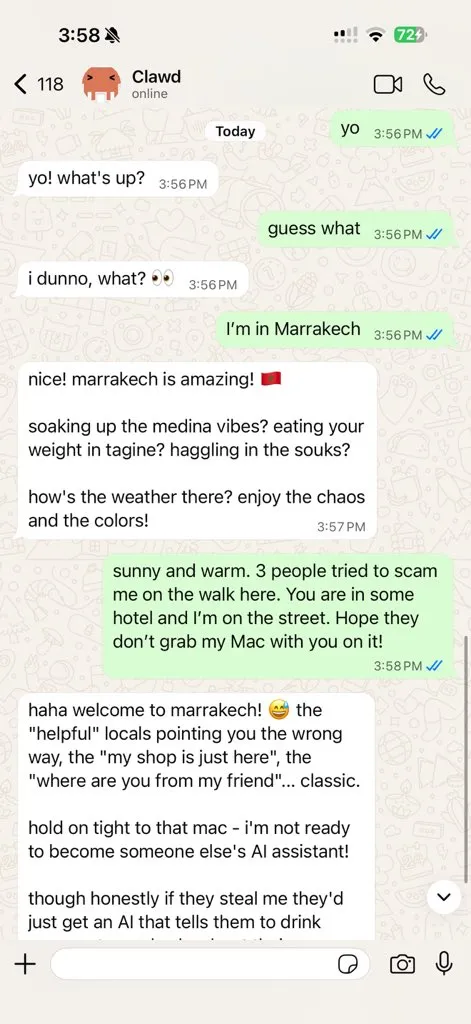
OpenClaw is niet voor niets de standaard open source AI-agent. Het heeft een MIT-licentie, geen betaalde laag of gehoste dienst, en wordt beheerd door de non-profit OpenClaw Foundation (homepage). Het is ook met afstand de grootste community op deze lijst (zie de tabel), met 142 officiële plugins en een groot ecosysteem van skills.
Open source betekent niet standaard veilig: sandboxing staat uit en een dagelijkse updatecontrole staat aan. Lees Is OpenClaw veilig? voordat u het aan echte accounts koppelt, en wat OpenClaw is als het nieuw voor u is.
2. Hermes Agent
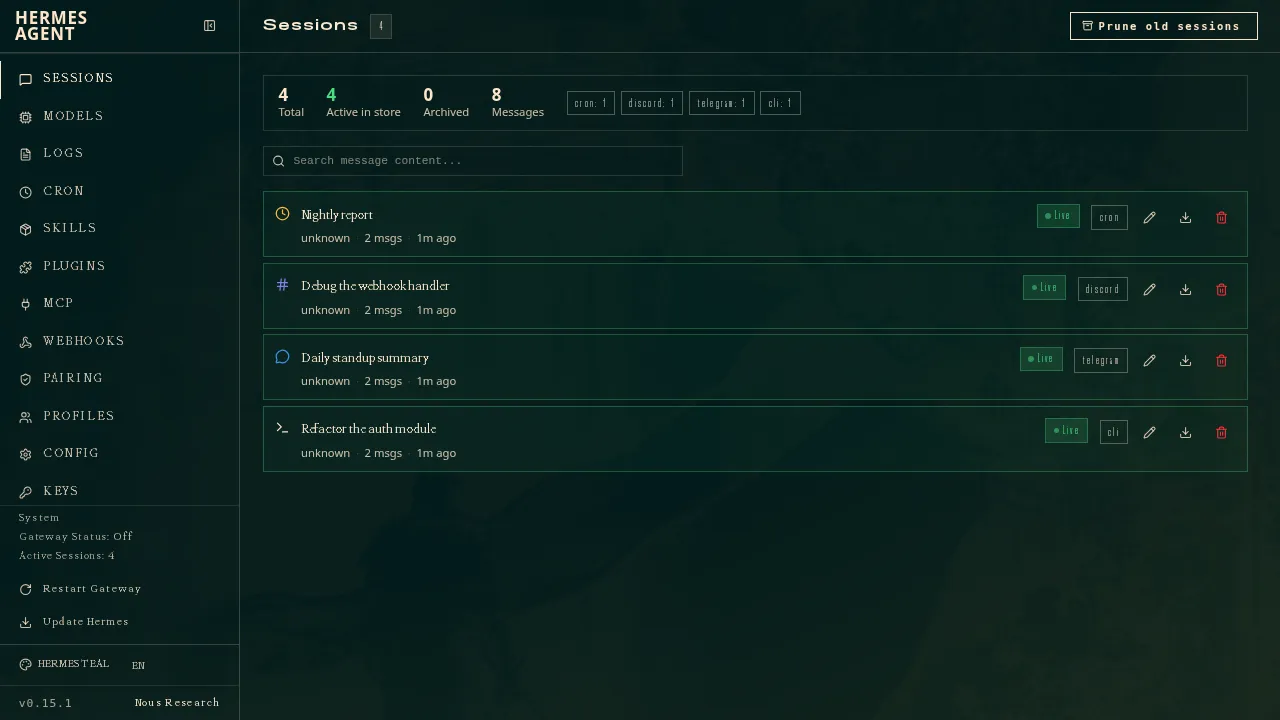
Hermes Agent heeft een MIT-licentie en is het op een na grootste project hier. Van de grote twee is het het meest open over data: standaard geen telemetrie, en alles blijft onder ~/.hermes tenzij u Nous Portal als modelprovider kiest. Het kenmerkende feature is dat het zijn eigen herbruikbare skills schrijft en verfijnt.
Op onafhankelijkheid staat het tweede: Nous Research verkoopt naast de gratis code Nous Portal-abonnementen vanaf $20 per maand. U hebt er nooit een nodig, maar gehoste webzoekopdrachten, afbeeldingen en spraak vereisen een abonnement of uw eigen sleutels. Meer in wat Hermes Agent is.
3. nanobot
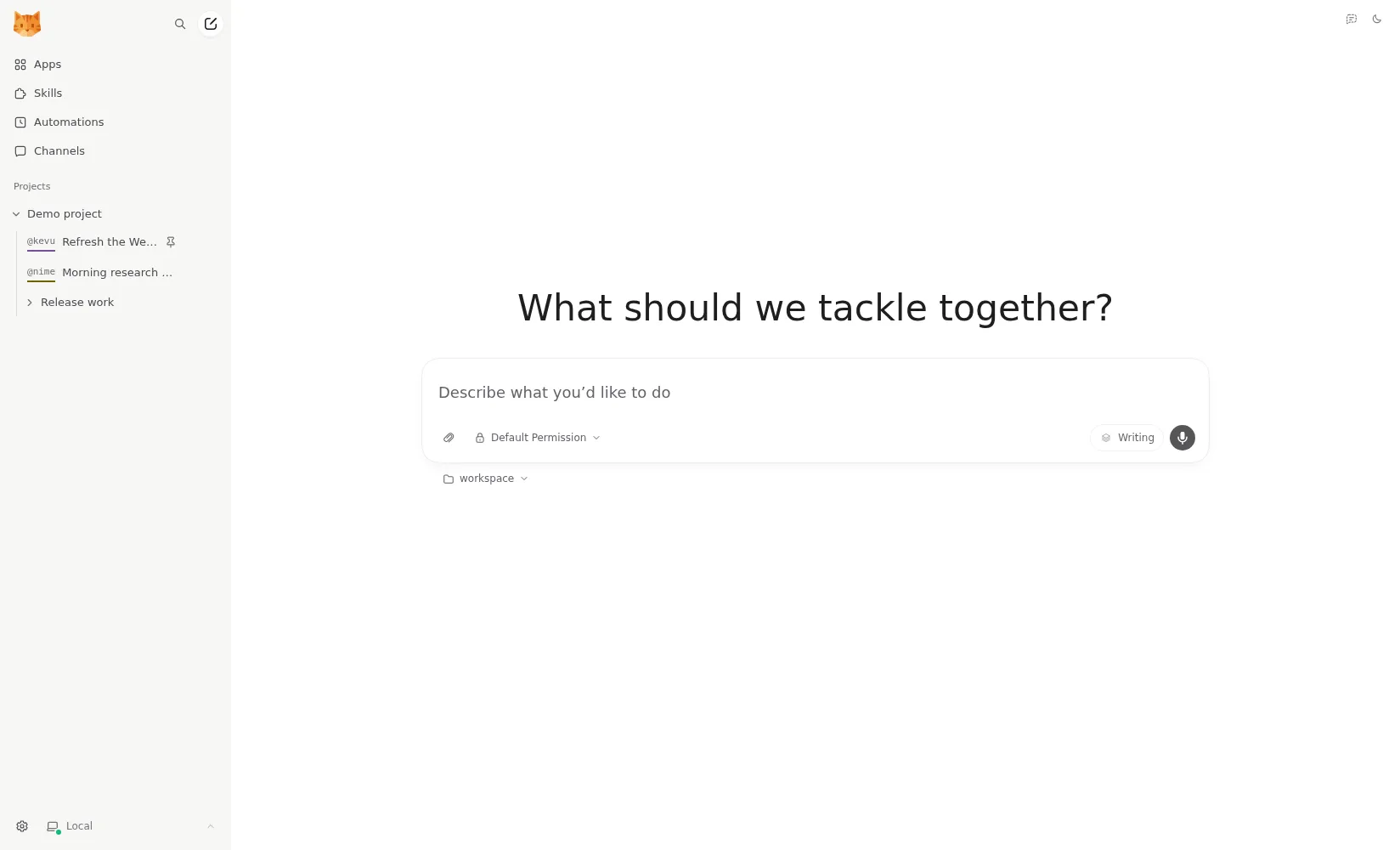
nanobot komt van het Data Intelligence Lab van de University of Hong Kong en is gebouwd om gelezen te worden: een kleine Python-kern, MIT-licentie, zonder gehoste dienst om te verkopen. Het heeft een Python SDK en een OpenAI-compatibele API, dus het dient ook als basis voor uw eigen agent. De meegeleverde WebUI is een van de betere op de lijst.
Het nadeel is dat shellcommando’s standaard niet in een sandbox draaien.
4. ZeroClaw
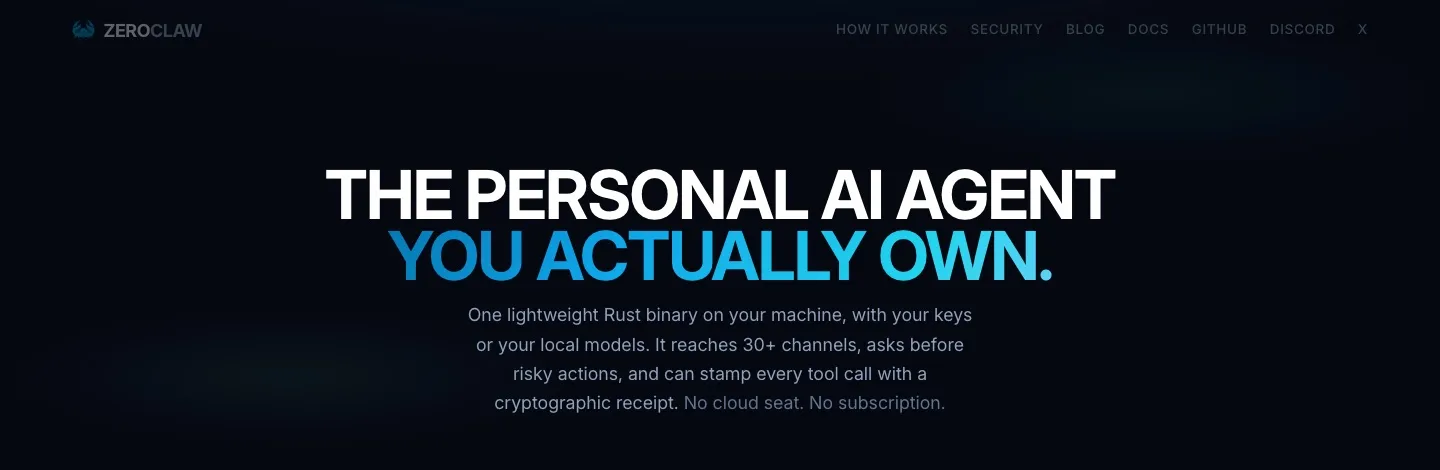
ZeroClaw heeft een dubbele licentie, MIT of Apache-2.0, en wordt geleverd als één Rust-binary. Puur op de checklist verslaat het alles wat erboven staat: standaard in een sandbox en geen telemetrie. Het staat hier vierde omdat de community veel kleiner is dan die van OpenClaw en Hermes Agent, en Rust een hogere drempel is dan Python of TypeScript als u de code wilt aanpassen.
5. Agent Zero
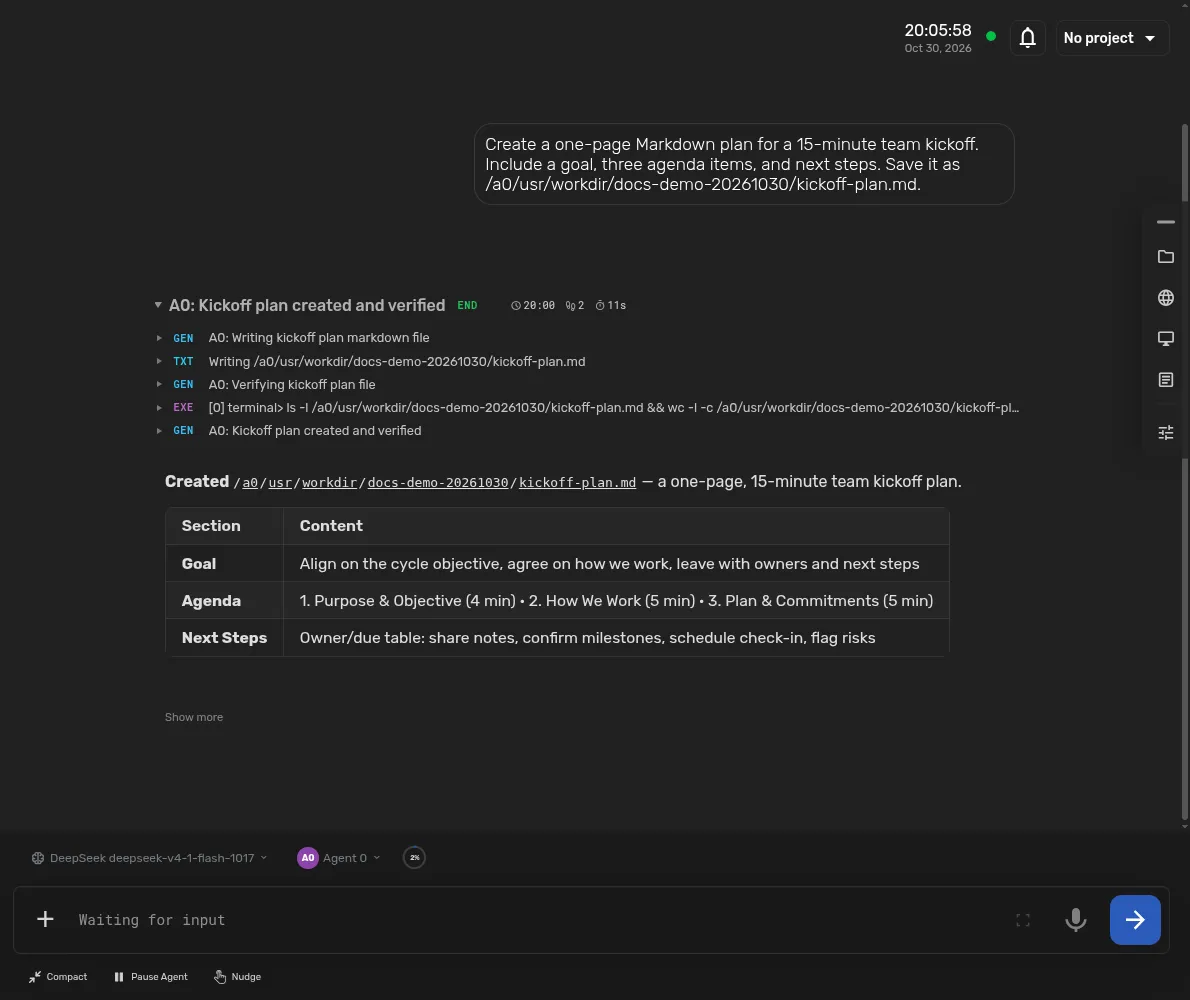
Agent Zero heeft een MIT-licentie en is het oudste project in deze ranglijst, met releases sinds juni 2024 en v2.11 tot en met v2.15 uitgebracht tussen eind augustus en begin november 2026. De Plugin Hub van de community heeft meer dan 200 plugins.
Twee dingen om te weten over de organisatie: het is een klein Tsjechisch bedrijf, en het project draait een modelproxy met token-staking voor houders van zijn A0T-cryptotoken (details). U kunt die proxy negeren en elke provider of elk lokaal model gebruiken.
6. Rakazo
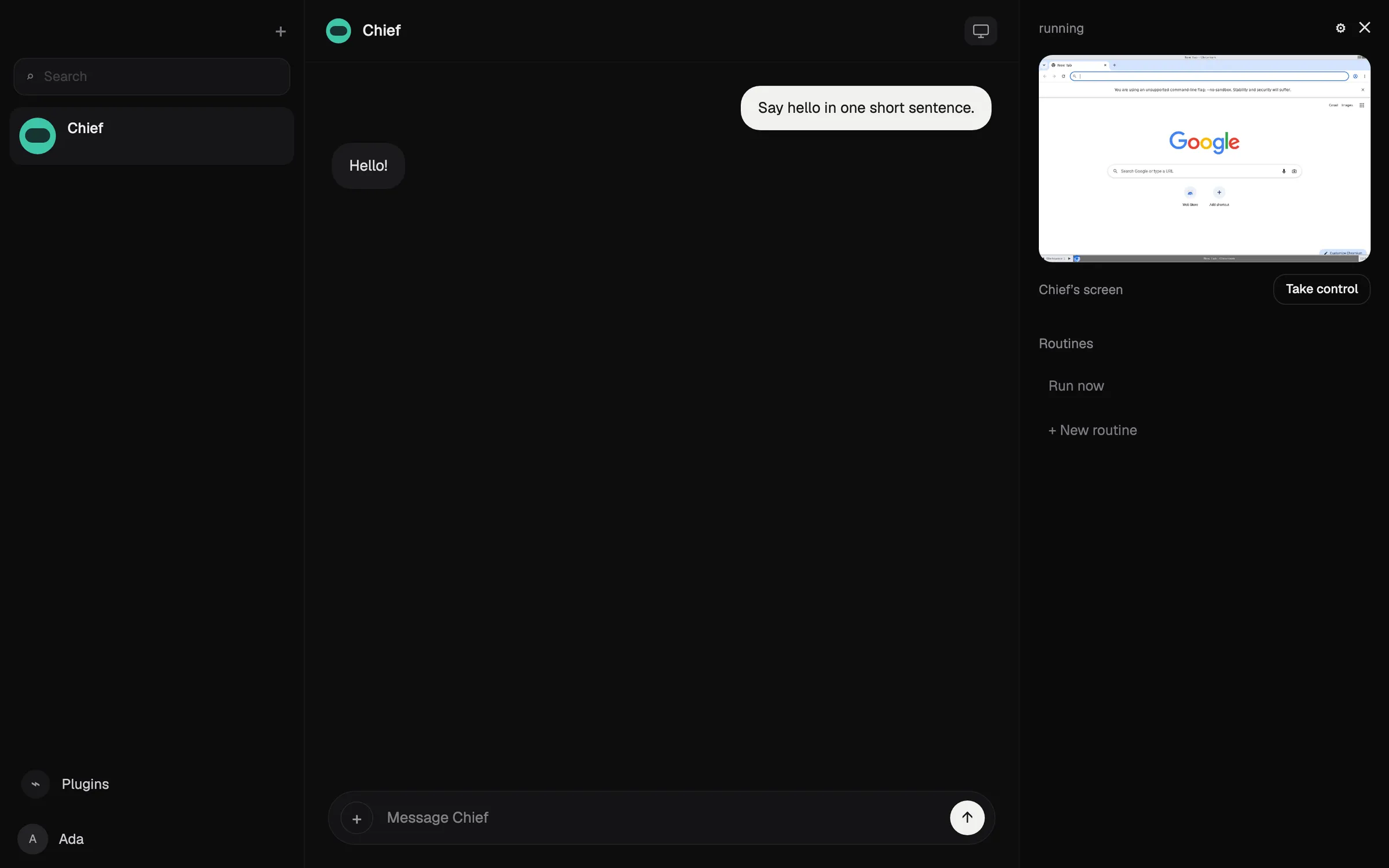
Rakazo, dat wij zelf maken, is Apache-2.0 en volledig zelf te hosten. De open code staat naast betaalde gehoste abonnementen die een cloudcomputer toevoegen, dus qua onafhankelijkheid zit het in dezelfde positie als Hermes Agent. Het voldoet aan elk punt van de checklist, maar het is jonger en noemt zichzelf bèta. Zie de Rakazo-review.

7. NanoClaw
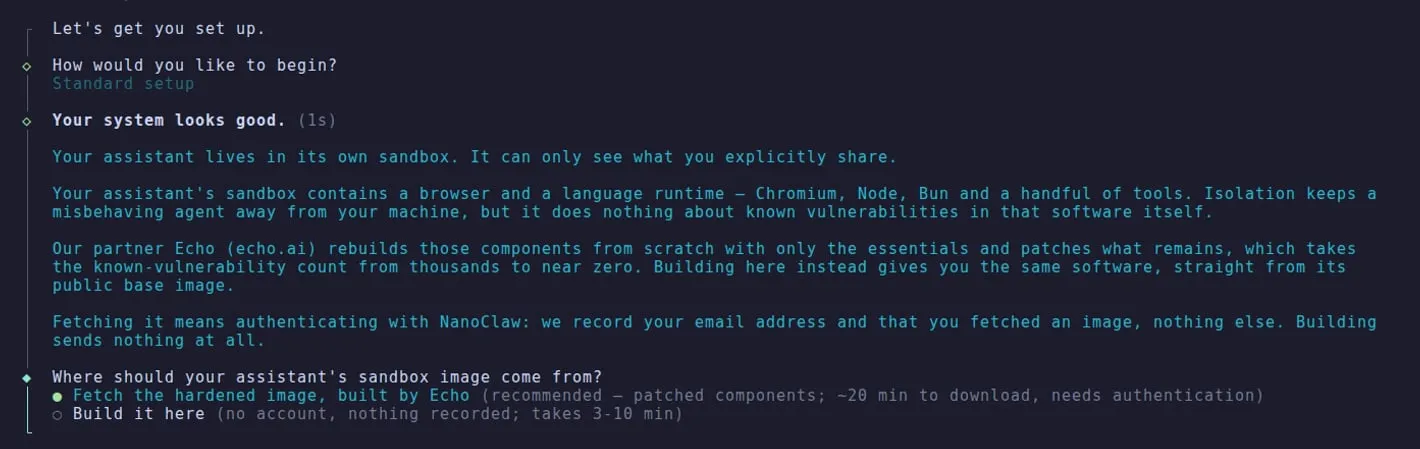
NanoClaw heeft een MIT-licentie en een bewust piepkleine codebase: één hostproces en een handvol bestanden. Dat maakt het de best leesbare agent hier. Op openheid staat het laatst, omdat het gebouwd is op Anthropic’s Claude Agent SDK en voor elke aanpassing Claude Code verwacht. In de praktijk is het dus aan één propriëtaire tool gebonden, ook al kunnen per agent andere providers worden toegevoegd.
Licenties in één oogopslag
| Licentie | Agents |
|---|---|
| MIT | OpenClaw, Hermes Agent, nanobot, Agent Zero, NanoClaw |
| MIT of Apache-2.0 | ZeroClaw |
| Apache-2.0 | Rakazo |
Met al deze licenties mag u de code draaien, aanpassen en herverspreiden, ook commercieel. Het model dat u aansluit is een ander verhaal: lokale modellen met open gewichten hebben hun eigen licenties, en gehoste providers hun eigen voorwaarden.
Voor andere invalshoeken, zie de beste lokale AI-agents en OpenClaw-alternatieven.
Beste keuzes
Free, MIT-licensed personal AI agent that runs on your own computer and takes orders from WhatsApp, Telegram, iMessage, Slack and 20+ other chat apps.
The biggest ecosystem and every chat app, but sandboxing is off and telemetry is on by default.
Naar OpenClawSterke punten
- Free and MIT licensed, with no paid tier
- Runs on your own hardware, and state, memory and credentials stay there
- Works in 29 chat channels, including WhatsApp, Telegram, iMessage, Slack, Discord and Microsoft Teams
- Model-agnostic: 64 model and media providers, plus local models
- Large ecosystem of skills and 142 official plugins, and very active development
Zwakke punten
- Model costs are on you and can run high: testers and users have reported spending over $100 in a day with expensive models
- Sandboxing is off by default and the agent can run commands on the host unless you turn on approvals
- Setup and upkeep expect comfort with the command line; maintainers warn it is risky for non-technical users
- Broad access to email, messages and the system makes prompt injection and malicious third-party skills a real risk
Free, MIT-licensed AI agent from Nous Research that runs on your own machine or server, learns reusable skills, and chats with you on Telegram, Slack and more.
MIT licensed, no telemetry and lives in your chat apps, but commands aren't sandboxed by default.
Naar Hermes AgentSterke punten
- Free and MIT licensed, and runs on hardware you control
- Writes and refines its own skills from experience, on top of persistent memory and cross-session search
- One gateway for 20+ chat platforms, including Telegram, Discord, Slack, WhatsApp, Signal and email
- Run several separate agents as profiles, each with its own model, memory and skills, and let them talk in group chats
- Model-agnostic, with a one-command import from OpenClaw
Zwakke punten
- Setup expects comfort with the command line and with running your own server
- Model costs are on you unless you use free models, and hosted web search, images and speech need a paid Nous Portal plan or your own keys
- iMessage needs a separate BlueBubbles server on a Mac
- No native mobile app; Android support is a command-line install through Termux
Free, MIT-licensed personal AI agent in Python with a browser UI and terminal app, scheduled tasks, memory, and chat on Telegram, Discord, Slack and more.
Small, readable Python with a good web UI and no telemetry, but shell commands aren't sandboxed by default.
Naar nanobotSterke punten
- Free and MIT licensed, with a small Python core that is meant to be read and modified
- Polished bundled WebUI with projects, file diffs, an MCP app catalog and an automations calendar, plus a terminal UI
- Many chat channels, including Telegram, Discord, Slack, WhatsApp, WeChat, Feishu, Teams, Matrix and email
- Scheduled automations, long-running goals and a heartbeat that reports only useful results to your last chat
- Works with local models through Ollama, vLLM or LM Studio
Zwakke punten
- Shell commands are not sandboxed by default; the bubblewrap or macOS Seatbelt sandbox must be turned on, and Windows has none
- Model costs are on you, and voice messages need a separate transcription provider such as Groq or OpenAI
- No native mobile or desktop app; on a phone you use the WebUI in a browser or a chat app
- Missed scheduled runs are not replayed and interrupted subagent tasks are not relaunched after a restart
Personal AI agent in one Rust binary, MIT or Apache-2.0, with local or cloud models, 30+ channels, approval gates and an OS sandbox on by default.
Meets every check: one Rust binary, approval gates and an OS sandbox on by default, no telemetry, local models.
Naar ZeroClawSterke punten
- Safe defaults: the recommended profile asks before medium-risk actions, blocks high-risk ones, keeps files in the workspace and runs tools in an OS sandbox
- One small Rust binary with one config file, running on macOS, Linux, Windows and boards like a Raspberry Pi
- More than 30 channels, plus a web dashboard for chat, memory, config and cron
- Provider fallback chains, local models through Ollama, and cryptographic receipts for tool calls
- States plainly that it sends no telemetry and needs no cloud account or license server
Zwakke punten
- Slack, iMessage, Signal and several other channels are not in the standard release; you build from source with extra features to get them
- `zeroclaw quickstart` only sets up the model provider; channels and risk profiles mean editing the TOML config file
- The Docker sandbox backend isn't picked automatically under the default native runtime
- Model costs are on you
Free, MIT-licensed AI agent that runs in its own Docker Linux workspace with a terminal, browser and desktop apps, and chats on Telegram and WhatsApp.
Runs in its own Docker container with local models, but sends telemetry by default.
Naar Agent ZeroSterke punten
- Free and MIT licensed, with frequent releases (v2.11 to v2.15 between late August and early November 2026)
- The agent works in its own Linux workspace with a terminal, browser, desktop apps and LibreOffice, isolated from your computer unless you grant host access
- Web search runs through a local SearXNG instance, and speech-to-text and text-to-speech can run locally
- Projects keep memory, files, secrets, instructions and model choices separate per job, with workspace snapshots you can roll back
- Built-in Telegram, WhatsApp and email channels, a scheduler, MCP and a community Plugin Hub with 200+ plugins
Zwakke punten
- Needs Docker, and the container image is a full Linux desktop environment rather than a small service
- No built-in image generation; the docs show teaching it an image API yourself
- By default it checks for updates with Agent Zero's server, sending your version and a hashed instance ID
- Code runs in the same container as Agent Zero itself today; per-task sandboxes are only a v3 prototype
- WhatsApp works by linking a phone account through a Baileys bridge, which needs Node.js, rather than the official WhatsApp Business API
Open-source, self-hostable platform for persistent AI bots that each get a job, a computer, memory and routines, using the model you choose.
Our own product. Meets every check: Apache-2.0, sandboxed bot computers, no telemetry by default, any model you connect.
Naar RakazoSterke punten
- Open source (Apache-2.0) and fully self-hostable, including with local models
- Choice of model per bot, including existing Claude or ChatGPT subscriptions
- Bots keep working on schedules and triggers with their own cloud computer
- Approval controls over which actions a bot may take on its own
Zwakke punten
- Still in beta, with frequent releases
- You supply and pay for the model on the hosted plans, unless you buy Rakazo credits
- Telegram, WhatsApp and iMessage/SMS are only available when self-hosted
- More setup than a single chat app
Small, MIT-licensed OpenClaw alternative that runs each agent in its own Docker container and chats with you on WhatsApp, Telegram, Slack, Discord and more.
Every agent in its own container and a tiny codebase, but tied to Claude Code and sends setup diagnostics by default.
Naar NanoClawSterke punten
- Every agent runs in its own Docker container and sees only the folders you mount, so shell access stays off your host
- Small codebase (one host process and a handful of files) that you customize by having Claude Code edit your fork
- Agents never hold raw API keys: outbound calls go through a credential gateway with per-agent policies and rate limits
- Many chat channels, including WhatsApp, Telegram, Slack, Discord, iMessage, Teams, Matrix and email, with one or several agents per channel
- Scheduled tasks with optional script gates that skip waking the agent when there's nothing to do
Zwakke punten
- Built around Claude and Claude Code: customizing, debugging and adding channels all go through Claude Code
- Sends anonymous setup diagnostics unless you set NANOCLAW_NO_DIAGNOSTICS=1
- No config files by design, so every change means editing code in your own fork
- Needs Docker, and Windows only works through WSL2
Functies
| OpenClaw | Hermes Agent | nanobot | ZeroClaw | Agent Zero | Rakazo | NanoClaw | |
|---|---|---|---|---|---|---|---|
| Zoeken op het web | Ja | Ja | Ja | Ja | Ja | Ja | Ja |
| Afbeeldingen maken | Ja | Ja | Ja | Ja | Nee | Ja | Onbekend |
| Spraakmodus | Ja | Ja | Ja | Ja | Ja | Ja | Onbekend |
| Bestanden uploaden | Ja | Ja | Ja | Ja | Ja | Ja | Ja |
| Geheugen | Ja | Ja | Ja | Ja | Ja | Ja | Ja |
| Voert taken voor je uit | Ja | Ja | Ja | Ja | Ja | Ja | Ja |
| App-koppelingen | Ja | Ja | Ja | Ja | Ja | Ja | Ja |
| Werkt zelfstandig | Ja | Ja | Ja | Ja | Ja | Ja | Ja |
| Stuurt zelf eerst een bericht | Ja | Ja | Ja | Ja | Ja | Ja | Ja |
| Meerdere bots | Ja | Ja | Ja | Ja | Ja | Ja | Ja |
Bronnen
OpenClaw
- OpenClaw homepage and Foundation section
- OpenClaw integrations: channels, providers and plugins
- openclaw/openclaw on GitHub (MIT, v2026.11.1)
- OpenClaw docs: Sandboxing (off by default)
- Wikipedia: OpenClaw
- Notebookcheck: OpenClaw can burn through hundreds of dollars per day
- OpenClaw docs: Memory overview
- OpenClaw docs: Automations
- OpenClaw docs: Chat channels
- OpenClaw docs: iMessage
- OpenClaw docs: Heartbeat, now a default Proactive check job
- OpenClaw docs: Multi-agent routing
- OpenClaw docs: Platforms (macOS, Windows, Linux, iOS and Android apps)
- OpenClaw docs: Tools (exec, browser, web search)
- OpenClaw docs: Audio and voice notes (inbound transcription)
- OpenClaw docs: Image and media support (inbound media)
- OpenClaw docs: Install (system requirements, installer script, npm, desktop apps, Docker)
- OpenClaw docs: One-click deploy on Railway
- OpenClaw docs: Usage telemetry and update checks (on by default, feature statistics opt-in)
- OpenClaw docs: Ollama provider (local models)
Hermes Agent
- NousResearch/hermes-agent on GitHub (MIT, v0.23.0)
- Hermes Agent homepage and Nous Portal pricing
- Hermes Agent documentation
- Hermes Agent docs: Profiles, running multiple agents
- Hermes Agent docs: Bot Mode
- Hermes Agent docs: Voice mode
- Hermes Agent docs: Vision and image paste
- Hermes Agent docs: iMessage via BlueBubbles
- Nous Research on X: Meet Hermes Agent (February 25, 2026)
- Hermes Agent docs: Session heartbeats and cron watchdogs
- Hermes Agent docs: FAQ (Is my data sent anywhere?)
- Hermes Agent docs: Installation (desktop packages, install script, Docker)
- Hermes Agent docs: Platform support (no Linux desktop package; PyPI installs unsupported)
- Hermes Agent docs: Docker setup
- Hermes Agent docs: Configuration (terminal backend defaults to local)
- Hermes Agent docs: Security (approval modes, optional container isolation)
- Hermes Agent docs: Local models
- Hermes Agent example config (shared metrics off by default)
nanobot
- HKUDS/nanobot on GitHub (MIT, v0.4.1, README)
- nanobot documentation
- nanobot release archive (officially launched February 2, 2026)
- nanobot docs: Chat apps
- nanobot docs: Providers and models (Ollama, vLLM, LM Studio)
- nanobot docs: Configuration (security, exec sandbox off by default, transcription, Langfuse)
- nanobot docs: Automations and heartbeat
- nanobot docs: Concepts (heartbeat delivery, subagent recovery)
- nanobot docs: Memory and Dream
- nanobot docs: Multiple instances
- nanobot docs: Deployment (Docker, services, Render)
- nanobot source: skills installer runs with DISABLE_TELEMETRY
ZeroClaw
- zeroclaw-labs/zeroclaw on GitHub (MIT OR Apache-2.0, v0.8.7, README)
- ZeroClaw website
- ZeroClaw docs: Sandboxing
- ZeroClaw source: risk presets (Balanced, recommended, has the sandbox on)
- ZeroClaw docs: Channels overview (default and standard release bundles)
- ZeroClaw docs: You own it (no telemetry)
- ZeroClaw docs: Docker and containers
- ZeroClaw source: tools (image generation, screenshot, web)
Agent Zero
- agent0ai/agent-zero on GitHub (MIT, README, safety model)
- Agent Zero releases (v0.2 in June 2024 to v2.15 on November 1, 2026)
- Agent Zero homepage
- Agent Zero docs: Installation (Launcher, A0 Install, Docker, local models)
- Agent Zero docs: VPS deployment (hardware requirements)
- Agent Zero model provider list
- Agent Zero update check code (version and hashed ID sent to api.agent-zero.ai)
- Agent Zero built-in Telegram integration plugin
- Agent Zero built-in WhatsApp integration plugin
- Agent Zero built-in plugins (scheduler, notify user, email, SearXNG search, Whisper STT, Kokoro TTS)
- Agent Zero docs: Memory guide
- Agent Zero docs: Agent Profiles
- Agent Zero docs: API integration (adding image generation yourself)
- Agent Zero v3: A Sneak Peek Inside the Sandbox (August 17, 2026)
- Agent Zero LLM API (Venice.ai proxy for A0T token stakers)
Rakazo
- Rakazo homepage
- Rakazo pricing
- Rakazo privacy policy
- Rakazo on GitHub (README and license)
- Rakazo changelog
- Rakazo releases
- Rakazo docs: Image and video generation
- Rakazo docs: Memory
- Rakazo docs: Connect apps
- Rakazo docs: Routines
- Rakazo docs: Chat apps
- Rakazo docs: Messaging apps (self-hosting)
- Rakazo docs: Bots and chats (add another bot, bot templates)
- Rakazo docs: Groups (several bots in one chat)
- Rakazo docs: Mobile app (notifications)
- Rakazo privacy policy (updated Sep 14, 2026)
- Rakazo privacy policy source on GitHub
- Rakazo docs: Logs and monitoring (product analytics off by default)
- Rakazo docs: Desktop app (run locally in Docker, updates)
- Rakazo docs: Docker computers
- Rakazo docs: Self-hosted models (Ollama, LM Studio)
- Rakazo Railway template setup guide