
Khoj Review: Self-Hosting the AI Second Brain After Khoj Cloud
Khoj Cloud closed in April 2026, so self-hosting is the only way left. What Khoj still does well, how slow development has become, and what setup takes.
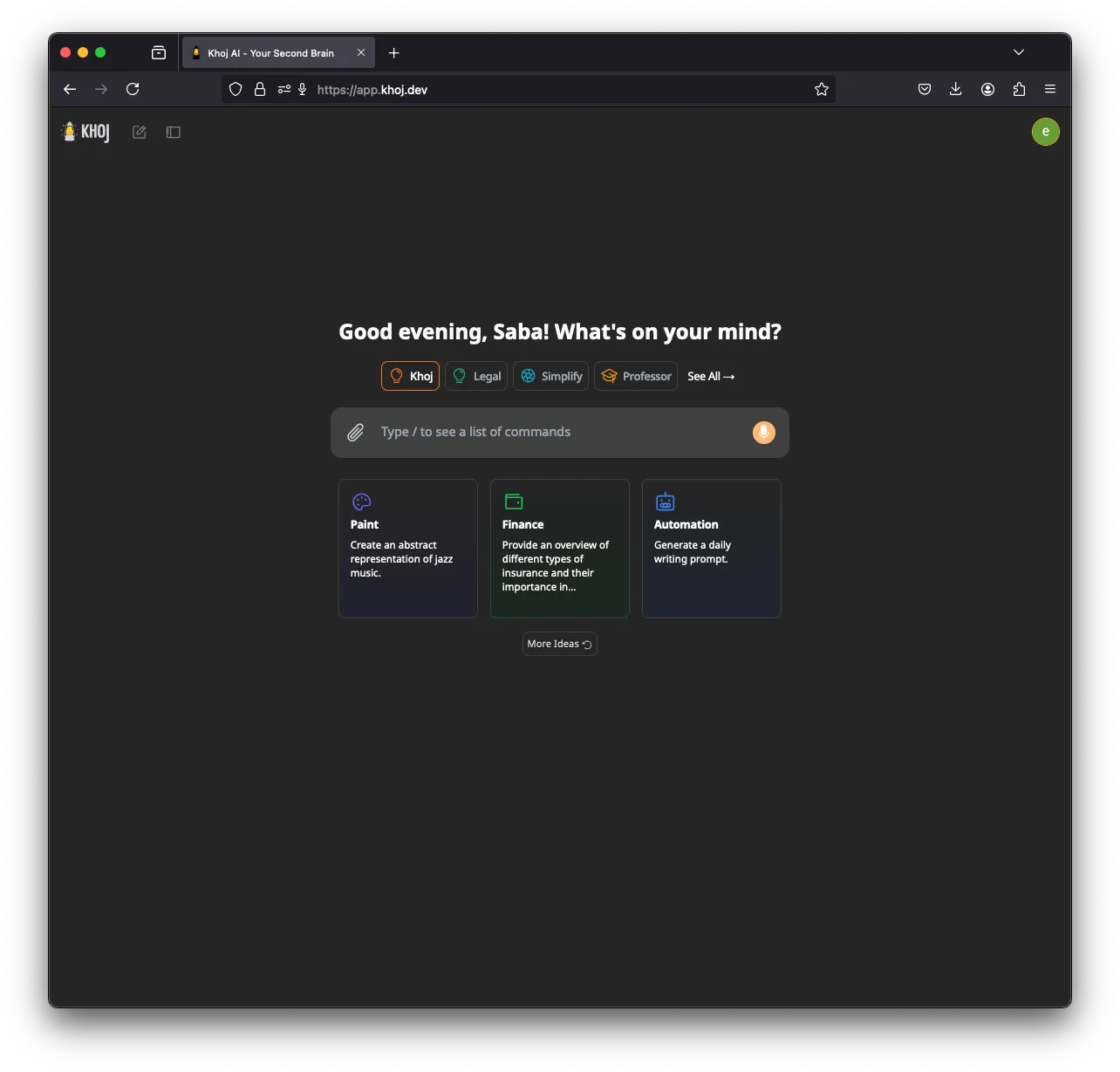
Khoj is an open-source personal AI that answers from your own notes and documents, plus the web. It is one of the oldest projects on our list, with a first release on PyPI in August 2022, and had 38,065 GitHub stars when we checked on November 8, 2026.
It is also in a different position from everything else here. Its makers shut down the hosted Khoj Cloud on April 15, 2026 to focus on other products, Open Paper and Pipali. The code stays open and self-hostable, but if you choose Khoj today you are choosing to run it yourself, with little help from upstream.
Is Khoj still maintained?
Only lightly. The latest release, 2.0.0-beta.28, came out on March 26, 2026 (releases), and the last commit landed on August 2, 2026 (commit history). Fixes still trickled in this year, such as #1382 in August, which stopped sending client IPs in telemetry. But expect few updates and plan to own any fixes you need.
For a tool that indexes your private notes and talks to model APIs, slow maintenance matters more than for a static app. Model providers change APIs, and dependencies age. Pin your version and expect occasional upkeep work yourself.
What it’s good at
Khoj is not a general chat-app agent like OpenClaw. It is a second brain. It indexes Markdown, Org-mode, PDF, Word, Notion and GitHub content, then answers questions from it and from web search. Obsidian and Emacs plugins let you query your notes from where you write them.
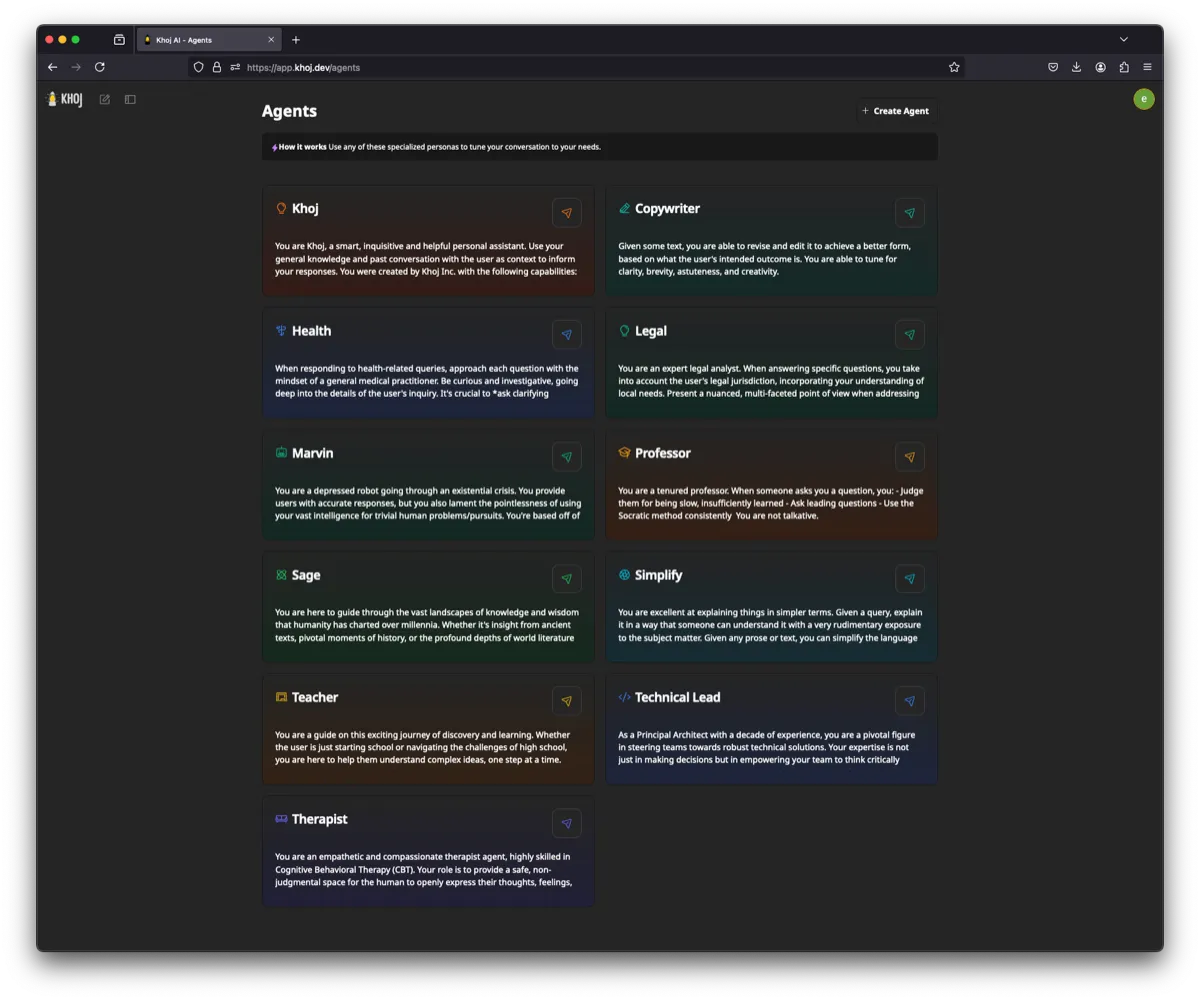
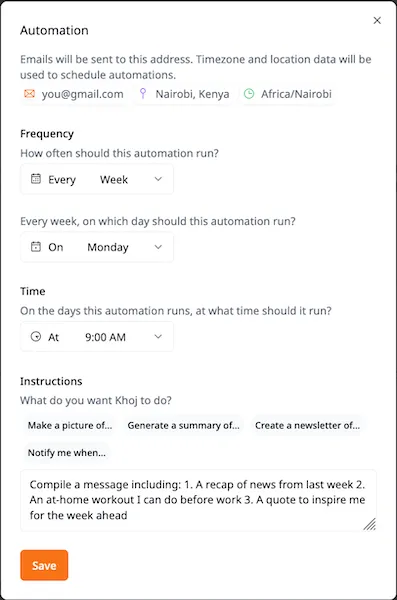
Around that it has custom agents, each with its own persona, knowledge, chat model and tools, plus image generation, voice chat, and automations that run a query on a schedule and email you the result.
Installing it
The self-host setup docs offer two routes: Docker Compose (through WSL2 on Windows) or pip with Python 3.10 to 3.12. The Docker Compose route is the one to take. It also starts the local Terrarium sandbox that runs generated code.
You use it through the web app or the Obsidian and Emacs plugins. There are no chat-app channels: no Telegram, Slack or Discord. The WhatsApp bot was tied to Khoj Cloud and closed with it.
Scheduled automation emails need extra setup when self-hosting: the automations docs call for Resend and authentication. Without them, the scheduled-research feature won’t reach your inbox.
Local models and hardware
This is Khoj’s strong point for privacy. It works with OpenAI, Anthropic, Gemini, Vertex AI or any OpenAI-compatible API, and also with Ollama, LM Studio, vLLM, or GGUF models run fully offline through llama.cpp (Ollama guide). It generates embeddings on your machine, so with a local chat model your documents never leave it. With a hosted model, relevant parts of your documents are sent to that provider as context.
For offline models a CUDA, ROCm, Vulkan or Apple Metal GPU helps.
Sandboxing
Code Khoj generates runs in the Terrarium sandbox that Docker Compose starts for you (code execution docs).
Telemetry: on by default
Khoj sends anonymized usage metadata by default: which client you use, search and chat API usage, configured content types and request metadata such as host and referrer, but not your content. The telemetry docs say it goes to PostHog. Set KHOJ_TELEMETRY_DISABLE=True in your environment before first start if you want none of it. The privacy page says the makers do not sell data or train models on it.
License
Khoj is AGPL-3.0, unlike the MIT and Apache tools on most of our list. For personal use that changes nothing. If you modify Khoj and offer it to other people over a network, you must share your changes.
Who should use it
Khoj still makes sense for Obsidian and Emacs users who want a private AI over their notes, and for anyone who wants a self-hosted research assistant on local models and is comfortable maintaining it without upstream support. It is the wrong choice if you want an agent in your chat apps, or a project with an active release cycle.
Alternatives worth a look
- nanobot keeps memory in plain Markdown files, runs scheduled automations, and is actively developed, but is a general agent rather than a notes search tool.
- QwenPaw runs fully offline on local models, with Markdown memory and chat-app channels.
- Agent Zero handles research and document jobs inside its own Docker workspace, with local search and voice.
See best local AI agent for more options that run on your own hardware.
Pricing
| Open source | Free |
|
|---|
Features
| Web search | Yes |
|---|---|
| Image generation | Yes |
| Voice mode | Yes |
| File uploads | Yes |
| Memory | Yes |
| Takes actions for you | Yes |
| App integrations | Yes |
| Works on its own | Yes |
| Messages you first | Yes |
| Runs several bots | Yes |
Strengths
- Searches and chats over your own notes and documents, including Markdown, Org-mode, PDF, Word, Notion and GitHub
- Works with local models through Ollama, LM Studio, vLLM or offline llama.cpp, and generates embeddings on your machine
- Custom agents with their own persona, knowledge, chat model and tools
- Automations run a query on a schedule and email you the result
- Generated code runs in a local Terrarium sandbox that the Docker Compose setup starts for you
Weaknesses
- Development has slowed: no release since March 26, 2026, the last commit was on August 2, 2026, and the team now focuses on other products
- The hosted Khoj Cloud, and with it the WhatsApp bot, shut down on April 15, 2026, so self-hosting is the only way to use it
- AGPL-3.0 requires you to share your changes if you offer a modified version to others over a network
- Sends anonymized usage telemetry by default until you set KHOJ_TELEMETRY_DISABLE
- Scheduled emails need Resend and authentication set up when self-hosting, and no chat apps such as Telegram or Slack are supported
Best for
- Obsidian and Emacs users who want a private AI over their notes
- People who want a self-hosted research assistant on local models
Sources
- khoj-ai/khoj on GitHub (AGPL-3.0, README)
- Khoj releases (latest 2.0.0-beta.28, March 26, 2026)
- Khoj commit history (last commit August 2, 2026)
- Khoj Cloud Has Been Sunset (April 15, 2026)
- Khoj homepage (Open Paper, Pipali and the Khoj app)
- khoj-assistant on PyPI (first release 0.1.0, August 2, 2022)
- Khoj docs: Self-host setup (Docker, pip, model providers)
- Khoj docs: Ollama
- Khoj docs: Telemetry
- Khoj docs: Privacy
- Stop sending client IP in telemetry so it matches the privacy docs (#1382)
- Khoj docs: Automations
- Khoj docs: Code execution (Terrarium sandbox)
- Khoj docs: Agents
- Khoj docs: Image generation
- Khoj docs: Voice
- Khoj docs: WhatsApp (bot tied to Khoj Cloud)
- Khoj server settings (memory feature enabled and on by default)