

NanoClaw vs OpenClaw: कंटेनर और छोटा codebase, या सब कुछ?
NanoClaw vs OpenClaw: हर एजेंट के Docker कंटेनर और Claude से बना छोटा codebase बनाम OpenClaw के ऐप, प्लगइन और 29 चैनल। किसे कौन सा चलाना चाहिए।
एक नज़र में
चेकलिस्ट
NanoClaw की शुरुआत OpenClaw की प्रतिक्रिया के रूप में हुई: एक पर्सनल एजेंट का वही विचार जिसे आप WhatsApp, Telegram या Slack से मैसेज करते हैं, लेकिन पढ़ने लायक छोटा और हर एजेंट एक कंटेनर में बंद। यह 31 जनवरी 2026 को लॉन्च हुआ, OpenClaw के लगभग दो महीने बाद। अब दोनों इस पर बहुत अलग दाँव लगाते हैं कि self-hoster क्या चाहता है।
आइसोलेशन
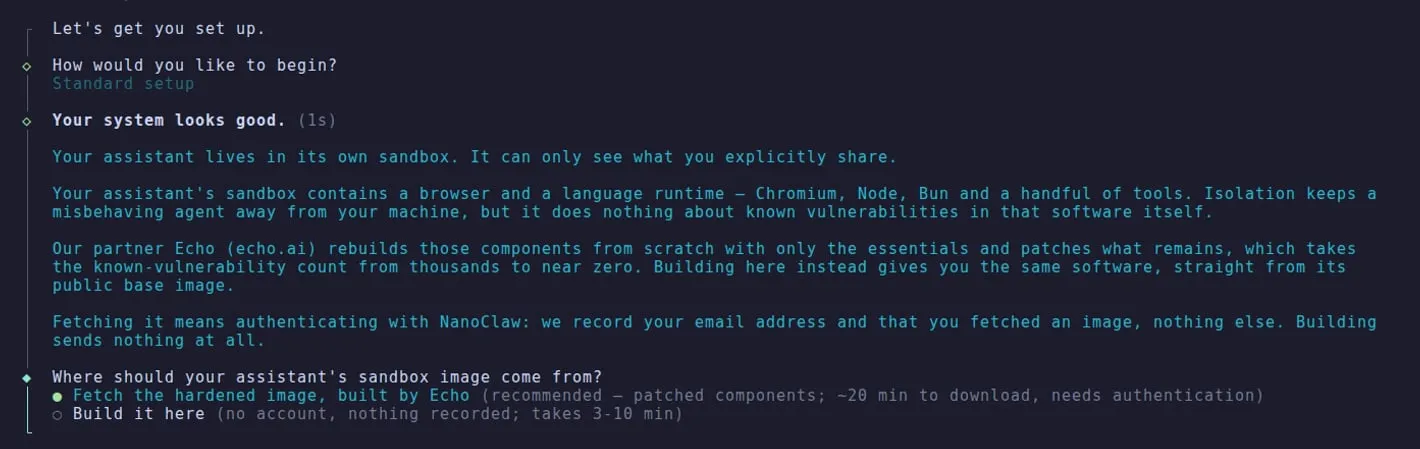
NanoClaw का सबसे मज़बूत तर्क। एक Node होस्ट process मैसेज को उन एजेंटों तक route करता है जो हर एक अपने Linux कंटेनर में चलते हैं और सिर्फ़ उन्हीं फ़ोल्डरों को देख सकते हैं जिन्हें आप mount करते हैं, इसलिए shell एक्सेस आपके होस्ट से दूर रहता है। बाहरी API कॉल हर एजेंट की policies और rate limits वाले एक credential gateway से होकर जाती हैं, इसलिए एजेंटों के पास कभी raw keys नहीं होतीं। इसके पार्टनर Echo की एक वैकल्पिक hardened इमेज मुफ़्त अकाउंट के साथ उपलब्ध है; इमेज को लोकल बिल्ड करना डिफ़ॉल्ट है।
OpenClaw आपके होस्ट पर चलता है, sandboxing डिफ़ॉल्ट रूप से बंद के साथ। इसमें एक sandbox और approvals हैं जिन्हें आप चालू कर सकते हैं, लेकिन शुरुआत में एजेंट सीधे कमांड चला सकता है, आपके ईमेल, मैसेज और आपकी इंस्टॉल की गई किसी भी थर्ड-पार्टी skill तक एक्सेस के साथ। जोखिमों के लिए क्या OpenClaw सुरक्षित है? देखें।
आप इसे कैसे कस्टमाइज़ करते हैं
यहीं दोनों सबसे ज़्यादा अलग होते हैं।
OpenClaw सामान्य तरीके से कॉन्फ़िगर होता है और community skills व 142 आधिकारिक प्लगइन से बढ़ाया जाता है, चुनने के लिए 64 मॉडल और मीडिया providers के साथ।
NanoClaw में जानबूझकर कोई config फ़ाइल नहीं है। आप Claude Code से कोड बदलने को कहकर अपना fork कस्टमाइज़ करते हैं, और चैनल भी ऐसे ही जोड़ते हैं, Teams, Matrix, Google Chat, Signal, WeChat, ईमेल और दूसरों के लिए /add-<channel> skills के साथ। इससे codebase छोटा और आपका अपना रहता है, लेकिन इसका मतलब है कि कस्टमाइज़ करने, debugging और चैनल जोड़ने के toolchain में Claude Code शामिल है।
मॉडल
NanoClaw, Anthropic के Claude Agent SDK पर बना है और डिफ़ॉल्ट रूप से Claude इस्तेमाल करता है। OpenCode, Codex और Ollama providers हर एजेंट के लिए skills से जोड़े जा सकते हैं, इसलिए लोकल मॉडल संभव हैं, लेकिन Claude डिफ़ॉल्ट रास्ता है। OpenClaw शुरू से model-agnostic है और Ollama के ज़रिए लोकल मॉडल चलाता है।
इंस्टॉल और प्लेटफ़ॉर्म
NanoClaw की सेटअप स्क्रिप्ट ज़रूरत हो तो Node, pnpm और Docker इंस्टॉल करती है, फिर एक चैनल pair करती है। यह macOS या Linux पर चलता है, और Windows पर सिर्फ़ WSL2 के ज़रिए। ज़रूरतें: Node.js 22+, pnpm 10+, Docker, और Claude Code।
OpenClaw एक स्क्रिप्ट, npm, डेस्कटॉप ऐप, Docker या one-click Railway deploy से इंस्टॉल होता है, और macOS, Windows और Linux पर चलता है, नेटिव iOS और Android ऐप के साथ। इसे Node 24.16+ या 26.1+ चाहिए, जो इसका installer उपलब्ध करा देता है।
चैनल
शुरुआत में NanoClaw Slack, Telegram, Discord, WhatsApp या iMessage pair करता है, और skills से और जोड़े जाते हैं। आप हर चैनल पर एक या कई एजेंट चला सकते हैं। OpenClaw कोड बदले बिना 29 चैनलों में काम करता है।
टेलीमेट्री
दोनों डिफ़ॉल्ट रूप से, छोटे तरीकों से, बाहर संपर्क करते हैं। NanoClaw anonymous setup diagnostics भेजता है जब तक आप NANOCLAW_NO_DIAGNOSTICS=1 सेट न करें। OpenClaw वर्ज़न और सिस्टम की जानकारी के साथ एक रोज़ का अपडेट चेक भेजता है जब तक आप update.checkOnStart: false सेट न करें। कोई भी आपके डेटा पर ट्रेन नहीं करता, और दोनों state आपकी मशीन पर रखते हैं।
पैमाना और परिपक्वता
8 नवंबर 2026 को OpenClaw के 394,193 GitHub stars थे, NanoClaw के 31,096 के मुकाबले, और इसकी देखरेख नॉनप्रॉफ़िट OpenClaw Foundation करती है। दोनों MIT लाइसेंस वाले और मुफ़्त हैं; दोनों ही मामलों में आप अपने मॉडल provider को भुगतान करते हैं।
फ़ैसला
- NanoClaw चलाएँ अगर आप असली कंटेनर आइसोलेशन और सीमित credentials वाले OpenClaw जैसे चैट एजेंट चाहते हैं, पहले से Claude और Claude Code इस्तेमाल करते हैं, और एक बड़ा ऐप कॉन्फ़िगर करने के बजाय एक छोटा fork अपने पास रखने का विचार पसंद करते हैं।
NANOCLAW_NO_DIAGNOSTICS=1सेट करें। - OpenClaw चलाएँ अगर आप डिफ़ॉल्ट के रूप में Claude के अलावा कोई मॉडल, फ़ोन और डेस्कटॉप ऐप, नेटिव Windows, या प्लगइन ecosystem चाहते हैं, और अपने config loop में कोई AI कोडिंग टूल नहीं चाहते। पहले इसका sandbox और approvals चालू करें।
- अगर आप Claude Code पर निर्भरता के बिना आइसोलेशन चाहते हैं, तो ZeroClaw दूसरा मज़बूत विकल्प है; हमारे OpenClaw के विकल्प में सबकी तुलना करें।
कीमतें
NanoClaw
| Open source | मुफ़्त |
|
|---|
OpenClaw
| Open source | मुफ़्त |
|
|---|
NanoClaw
खूबियाँ
- Every agent runs in its own Docker container and sees only the folders you mount, so shell access stays off your host
- Small codebase (one host process and a handful of files) that you customize by having Claude Code edit your fork
- Agents never hold raw API keys: outbound calls go through a credential gateway with per-agent policies and rate limits
- Many chat channels, including WhatsApp, Telegram, Slack, Discord, iMessage, Teams, Matrix and email, with one or several agents per channel
- Scheduled tasks with optional script gates that skip waking the agent when there's nothing to do
कमियाँ
- Built around Claude and Claude Code: customizing, debugging and adding channels all go through Claude Code
- Sends anonymous setup diagnostics unless you set NANOCLAW_NO_DIAGNOSTICS=1
- No config files by design, so every change means editing code in your own fork
- Needs Docker, and Windows only works through WSL2
OpenClaw
खूबियाँ
- Free and MIT licensed, with no paid tier
- Runs on your own hardware, and state, memory and credentials stay there
- Works in 29 chat channels, including WhatsApp, Telegram, iMessage, Slack, Discord and Microsoft Teams
- Model-agnostic: 64 model and media providers, plus local models
- Large ecosystem of skills and 142 official plugins, and very active development
कमियाँ
- Model costs are on you and can run high: testers and users have reported spending over $100 in a day with expensive models
- Sandboxing is off by default and the agent can run commands on the host unless you turn on approvals
- Setup and upkeep expect comfort with the command line; maintainers warn it is risky for non-technical users
- Broad access to email, messages and the system makes prompt injection and malicious third-party skills a real risk
फ़ीचर
स्रोत
NanoClaw
OpenClaw
- OpenClaw homepage and Foundation section
- OpenClaw integrations: channels, providers and plugins
- openclaw/openclaw on GitHub (MIT, v2026.11.1)
- OpenClaw docs: Sandboxing (off by default)
- Wikipedia: OpenClaw
- Notebookcheck: OpenClaw can burn through hundreds of dollars per day
- OpenClaw docs: Memory overview
- OpenClaw docs: Automations
- OpenClaw docs: Chat channels
- OpenClaw docs: iMessage
- OpenClaw docs: Heartbeat, now a default Proactive check job
- OpenClaw docs: Multi-agent routing
- OpenClaw docs: Platforms (macOS, Windows, Linux, iOS and Android apps)
- OpenClaw docs: Tools (exec, browser, web search)
- OpenClaw docs: Audio and voice notes (inbound transcription)
- OpenClaw docs: Image and media support (inbound media)
- OpenClaw docs: Install (system requirements, installer script, npm, desktop apps, Docker)
- OpenClaw docs: One-click deploy on Railway
- OpenClaw docs: Usage telemetry and update checks (on by default, feature statistics opt-in)
- OpenClaw docs: Ollama provider (local models)