
OpenFang Review: A Rust Agent OS With No Updates Since May 2026
OpenFang runs scheduled autonomous Hands from one Rust binary, but its last commit was May 12, 2026. What works, what's risky, and the LibreFang fork.
OpenFang calls itself an “Agent Operating System”. It is written in Rust by Jaber, founder of RightNow, and had 18,243 GitHub stars when we checked on November 8, 2026. It has good ideas and a thoughtful set of defaults. It also has a problem that outweighs both for anyone planning to run it long term: development appears to have stopped.
The maintenance question first
OpenFang’s first release, v0.1.0, came out on February 26, 2026. The last release, v0.6.9, and the last commit both date from May 12, 2026 (releases). Since then, pull requests from outside contributors have gone unmerged, and a public issue asking about the project’s status and roadmap after v0.6.9 has no reply from the maintainer as of our check.
None of that means the maintainer won’t return. But it does mean that today, if you hit a bug, a provider changes its API, or a security problem turns up in a dependency, you should assume nobody upstream will fix it. For an agent that holds your API keys and can run commands, that is the deciding factor for most people.
The project was also pre-1.0 when it stalled, with breaking changes between minor versions by its own notice, and some Hands less mature than others.
A community fork, LibreFang, continues development separately. We haven’t reviewed it, so check its activity yourself; it’s the obvious place to look if OpenFang’s design appeals to you.
What OpenFang does differently
Other agents on our list can run scheduled jobs you set up yourself. OpenFang’s headline feature, Hands, ships that work ready-made. Hands are bundled autonomous packages, such as Researcher, Lead, Collector, Predictor, Clip, Twitter and Browser, that run on a schedule without prompting and report results to the dashboard or a chat app. You set one up to gather research or watch for leads, and it runs as part of a long-lived daemon.
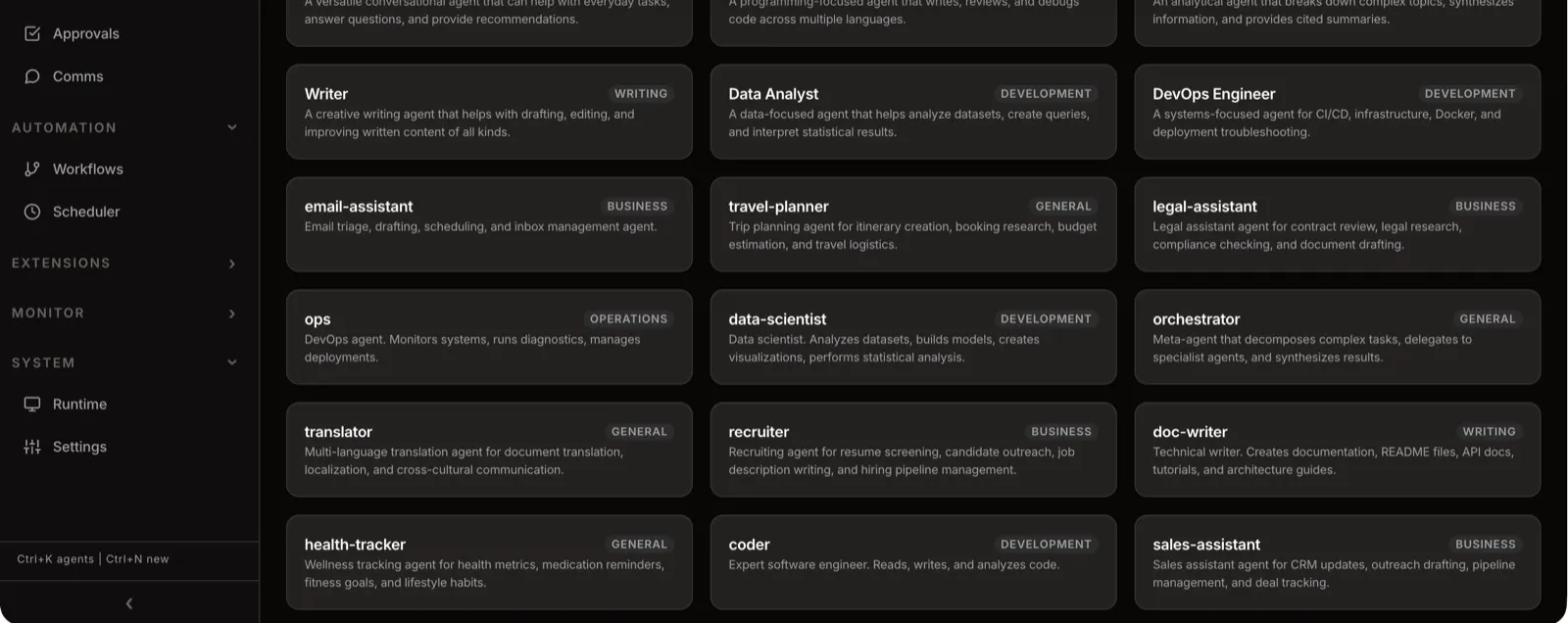
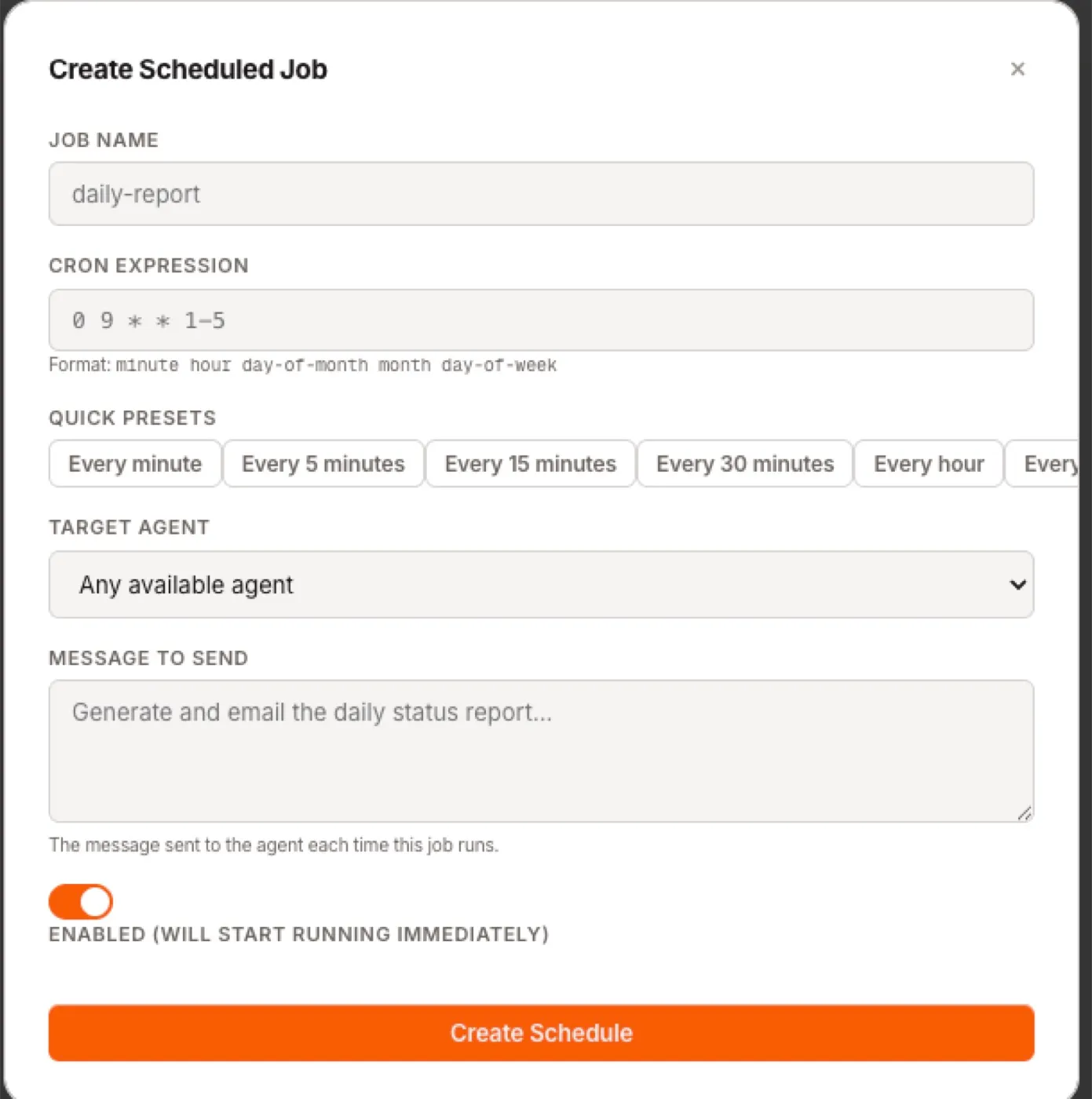
Around that sit the usual agent tools: web search and browsing, allowlisted shell commands, image generation, speech and transcription, SQLite memory with vector search, MCP servers, cron jobs and an OpenAI-compatible API. A browser dashboard on localhost covers agents, workflows, schedules and approvals.
Installing it
It installs as a single binary through a script, as a direct binary download, or as a desktop app for macOS, Windows and Linux on x86-64 or ARM (getting started). No Python or Node stack is needed for the core. Some Hands bring their own dependencies: the Browser Hand needs Python 3 and Chromium, and the Clip Hand needs FFmpeg and yt-dlp.
Docker is listed, but the documented image is not public yet, so Docker users have to build it themselves.
Isolation and defaults
OpenFang runs commands on your host, not in a container. The Docker sandbox is off by default, and the WASM sandbox only covers WASM tools and skills (security docs).
Within that, its defaults are more careful than many host-run agents. Per the config source, shell commands are limited to an allowlist of basic utilities, run without a shell and with a stripped environment, and sensitive Hand actions such as purchases or posts wait for approval. That is a sensible design. Its weakness is that any gap found in it now may stay open.
Telemetry and privacy
OpenFang sends no usage telemetry. The docs describe none and the code contains no analytics client; the dashboard’s Analytics page only shows your own token usage and costs, locally. Configuration, agents and memory live in SQLite under ~/.openfang. Prompts go to the model provider and chat platforms you configure.
Models and channels
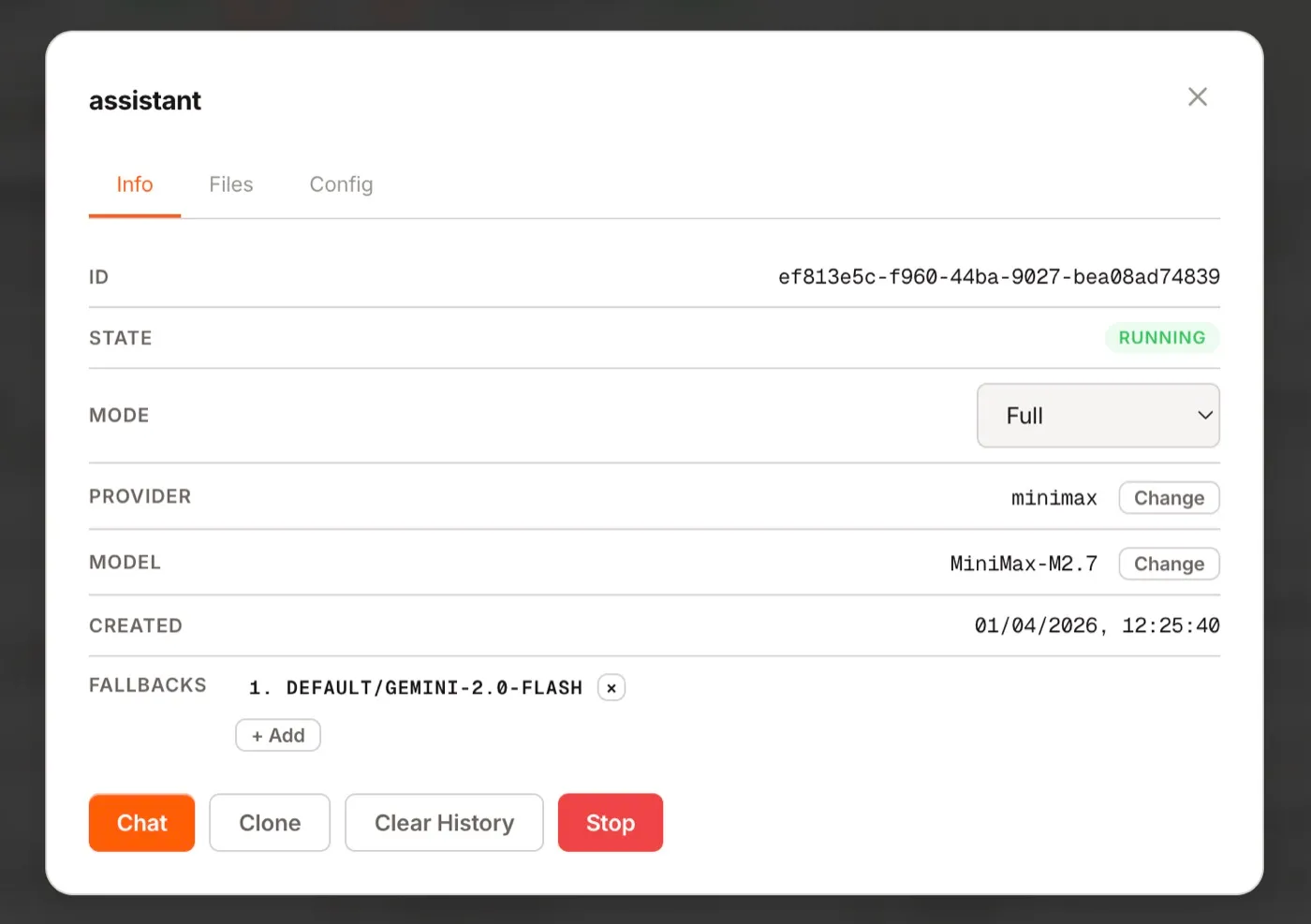
You can bring about 27 providers, including Anthropic, Gemini, OpenAI, Groq, DeepSeek, OpenRouter, Mistral, xAI and AWS Bedrock, or run local models through Ollama, vLLM or LM Studio. It is dual-licensed Apache-2.0 or MIT.
It has 40 channel adapters, including Telegram, Discord, Slack, WhatsApp, Signal, Matrix, Microsoft Teams and email (channel adapters). The built-in WhatsApp adapter uses Meta’s business Cloud API; linking a personal WhatsApp account needs a separate Node.js gateway.
Who should use it
OpenFang is worth trying if you are a tinkerer who wants scheduled research or monitoring agents and you are comfortable owning the code, or if you want to study its Hands design before evaluating LibreFang. We would not run it as a daily assistant connected to important accounts while it receives no fixes.
Maintained alternatives
- ZeroClaw is the closest match: also a single Rust binary, with cron and event triggers, and an OS sandbox on by default under its recommended profile.
- nanobot runs scheduled automations and long-running goals, with a heartbeat that reports results to your chat.
- Agent Zero runs scheduled tasks inside its own Docker workspace and ships releases frequently.
More options are on our best self-hosted AI agent and OpenClaw alternatives pages.
Pricing
| Open source | Free |
|
|---|
Features
| Web search | Yes |
|---|---|
| Image generation | Yes |
| Voice mode | Yes |
| File uploads | Yes |
| Memory | Yes |
| Takes actions for you | Yes |
| App integrations | Yes |
| Works on its own | Yes |
| Messages you first | Yes |
| Runs several bots | Yes |
Strengths
- Built for unattended work: Hands run on schedules as a daemon and deliver research, leads or monitoring alerts without being prompted
- One self-contained Rust binary or a native desktop app, with a browser dashboard for agents, workflows, schedules and approvals
- 40 channel adapters, including Telegram, Discord, Slack, WhatsApp, Signal, Matrix, Teams and email
- Cautious defaults for a host-run agent: shell commands are limited to an allowlist of basic utilities, run without a shell and with a stripped environment, and sensitive Hand actions such as purchases or posts wait for approval
- Works with local models through Ollama, vLLM or LM Studio, and dual-licensed Apache-2.0 or MIT
Weaknesses
- Looks unmaintained: no commits or releases since v0.6.9 on May 12, 2026, outside pull requests go unmerged, and a public question about the project's status has no reply from the maintainer
- Pre-1.0 by its own notice, with breaking changes between minor versions and some Hands less mature than others
- Commands run on the host, not in a container: the Docker sandbox is off by default and the WASM sandbox only covers WASM tools and skills
- The documented Docker image is not public yet, so Docker users must build it themselves
- Linking a personal WhatsApp account needs a separate Node.js gateway; the built-in adapter uses Meta's business Cloud API
Best for
- Tinkerers who want scheduled research, monitoring or lead-finding agents running on their own machine
- People who want one agent reachable from many chat apps without a Python or Node stack
- Evaluating alongside its community fork LibreFang, given the original's stalled development
Sources
- RightNow-AI/openfang on GitHub (README, v0.6.9)
- OpenFang documentation
- OpenFang Cargo.toml (license Apache-2.0 OR MIT)
- OpenFang releases (v0.1.0 on February 26, 2026; v0.6.9 on May 12, 2026)
- OpenFang issue: Project status / roadmap after v0.6.9
- OpenFang docs: Getting started (desktop app, installers, Docker)
- OpenFang docs: Channel adapters
- OpenFang docs: LLM providers (Ollama, vLLM, LM Studio)
- OpenFang docs: Security (WASM and subprocess sandboxes)
- OpenFang source: exec policy defaults to an allowlist, Docker sandbox off by default
- OpenFang source: built-in tools (web search, browser, image generation, speech, cron)
- OpenFang docker-compose.yml (GHCR image not yet public)
- LibreFang, a community fork of OpenFang